
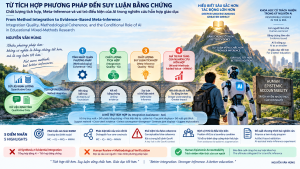
From Method Integration to Evidence-Based Meta-Inference: Integration Quality, Methodological Coherence, and the Conditional Role of AI in Educational Mixed-Methods Research
NGUYỄN VĂN HÙNG
HIGHLIGHTS
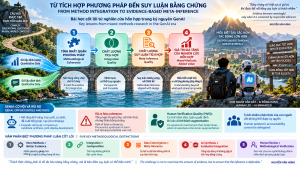
- Phát triển Integrated Evidence–Meta-Inference Model (IEMIM) theo chuỗi Methodological Coherence → Integration Quality → Meta-Inference Quality → Mixed-Methods Added Value.
- Phân biệt kiến trúc phương pháp, quá trình tích hợp, chất lượng suy luận tích hợp và giá trị gia tăng nhận thức luận của mixed-methods research.
- Khái niệm hóa false coherence như một rủi ro phương pháp luận đặc thù của tổng hợp bằng chứng có Generative AI hỗ trợ.
- Định vị Human Verification Quality (HVQ) như một điều kiện biên quyết định khi nào AI-assisted integration có thể chuyển thành epistemic augmentation.
- Xác lập AI Synthesis ≠ Evidential Integration và Human Review ≠ Methodological Verification.
- Đề xuất chương trình hai nghiên cứu gồm artifact-based validation và AI-assisted meta-inference experiment.
- Đặt human epistemic accountability ở vị trí bảo đảm cuối cùng của scientific inference trong hệ sinh thái nghiên cứu Người–AI.
TÓM TẮT
Bối cảnh. Nghiên cứu hỗn hợp ngày càng được sử dụng trong giáo dục để khảo sát những hiện tượng phức tạp mà một loại dữ liệu hoặc một truyền thống phương pháp riêng lẻ khó phản ánh đầy đủ. Tuy nhiên, sự hiện diện đồng thời của dữ liệu định lượng và định tính không mặc nhiên tạo ra bằng chứng khoa học mạnh hơn. Giá trị nhận thức luận của mixed-methods research phụ thuộc vào mức độ nhất quán giữa vấn đề nghiên cứu, lý do phối hợp phương pháp, thiết kế, chọn mẫu, trình tự và mức ưu tiên của các thành phần, chiến lược tích hợp và phạm vi suy luận mà bằng chứng thực sự cho phép.
Khoảng trống nghiên cứu. Scholarship về mixed methods đã phát triển đáng kể các nguyên tắc integration, joint displays và meta-inference. Tuy nhiên, bốn cấu trúc vẫn có nguy cơ bị chồng lấn về khái niệm và đo lường: Methodological Coherence (MC) như thuộc tính kiến trúc của nghiên cứu; Integration Quality (IQ) như chất lượng của quá trình tích hợp bằng chứng; Meta-Inference Quality (MIQ) như chất lượng và khả năng biện minh của suy luận tích hợp; và Mixed-Methods Added Value (MMAV) như giá trị nhận thức luận gia tăng vượt những gì từng strand có thể cung cấp riêng lẻ. Sự phát triển của trí tuệ nhân tạo tạo sinh (Generative Artificial Intelligence – GenAI) làm khoảng trống này trở nên cấp thiết hơn. AI có thể hỗ trợ truy xuất findings, đối chiếu các dòng bằng chứng, phát hiện hội tụ–phân kỳ, tạo joint displays, đề xuất explanations và dự thảo candidate meta-inferences; tuy nhiên, sự mạch lạc ngôn ngữ không tự thân chứng minh rằng một suy luận được bảo đảm bởi bằng chứng.
Mục tiêu. Bài viết phát triển Integrated Evidence–Meta-Inference Model (IEMIM), trong đó MC tạo điều kiện cho IQ; IQ tạo nền tảng cho MIQ; và MIQ tạo khả năng hình thành MMAV. AI Integration Assistance (AIA) được khái niệm hóa như mức độ GenAI tham gia vào những hoạt động tích hợp; trong khi Human Verification Quality (HVQ) được xem như điều kiện biên quyết định liệu AI assistance trở thành epistemic augmentation hay chủ yếu làm tăng tốc độ, linguistic fluency và nguy cơ false coherence.
Phương pháp đề xuất. Một chương trình hai nghiên cứu được đề xuất. Study 1 sử dụng artifact-based evaluation để kiểm định chuỗi MC → IQ → MIQ → MMAV trên các sản phẩm nghiên cứu mixed methods giáo dục. Study 2 sử dụng standardized evidence packages để so sánh ba điều kiện: Human-Only Integration, AI-Assisted Integration và AI-Assisted Integration + Evidence-Verification Protocol. Các cấu trúc được đánh giá bằng rubrics phân biệt về nội dung, unit of analysis và temporal position; raters độc lập được sử dụng và blinding được áp dụng khi khả thi. HVQ được vận hành hóa bằng các hành vi có thể quan sát như truy nguyên nguồn, kiểm tra mâu thuẫn, đánh giá giải thích cạnh tranh, hiệu chỉnh AI outputs và kiểm soát inferential boundaries.
Đóng góp. Bài viết xác lập năm phân biệt phương pháp luận: More Methods ≠ Better Evidence; Integration ≠ Juxtaposition; Data Convergence ≠ Meta-Inference; AI Synthesis ≠ Evidential Integration; Human Review ≠ Methodological Verification. Thách thức trung tâm của mixed-methods research trong kỷ nguyên AI không phải là tối đa hóa lượng bằng chứng có thể tổng hợp, mà bảo toàn methodological coherence, evidential traceability, inferential proportionality, substantive human verification và human epistemic accountability cần thiết để chuyển những dòng bằng chứng không đồng nhất thành defensible meta-inferences.
Từ khóa: nghiên cứu hỗn hợp; tính nhất quán phương pháp; chất lượng tích hợp; meta-inference; tích hợp bằng chứng; trí tuệ nhân tạo tạo sinh; xác minh của con người; false coherence; giá trị gia tăng của nghiên cứu hỗn hợp; nghiên cứu giáo dục.
ABSTRACT
Background. Mixed-methods research is increasingly used in education to investigate complex phenomena that cannot be adequately understood through a single form of evidence. However, the simultaneous inclusion of quantitative and qualitative data does not inherently produce stronger scientific evidence. The epistemic value of mixed-methods research depends on the coherence among the research problem, rationale for mixing methods, design, sampling strategy, sequencing and priority of methodological strands, integration strategy, and the scope of inference warranted by the evidence.
Research gap. Mixed-methods scholarship has substantially advanced principles of integration, joint displays, and meta-inference. Nevertheless, four constructs remain insufficiently differentiated at conceptual and measurement levels: Methodological Coherence (MC) as an architectural property of the study; Integration Quality (IQ) as the quality of the evidence-integration process; Meta-Inference Quality (MIQ) as the quality and defensibility of integrated inference; and Mixed-Methods Added Value (MMAV) as the incremental epistemic value generated beyond what either strand could reasonably provide independently. The rapid development of Generative Artificial Intelligence (GenAI) makes these distinctions increasingly consequential. AI systems can support cross-strand retrieval and comparison, detect candidate convergence and divergence, construct joint displays, propose explanatory relationships, and generate candidate meta-inferences. Yet linguistically coherent synthesis does not, by itself, establish that an inference is methodologically warranted.
Purpose. This article develops the Integrated Evidence–Meta-Inference Model (IEMIM), in which MC provides the methodological conditions for IQ, IQ supports MIQ, and MIQ provides the basis for MMAV. AI Integration Assistance (AIA) represents the extent to which GenAI participates in evidence-integration activities, whereas Human Verification Quality (HVQ) is theorized as a boundary condition determining whether AI assistance contributes to epistemic augmentation or primarily increases efficiency, linguistic fluency, and the risk of false coherence.
Proposed method. A two-study research program is proposed. Study 1 employs artifact-based evaluation to test the MC → IQ → MIQ → MMAV pathway in educational mixed-methods research products. Study 2 uses standardized evidence packages and compares Human-Only Integration, AI-Assisted Integration, and AI-Assisted Integration + Evidence-Verification Protocol conditions. Construct-specific rubrics distinguish architecture, integration process, integrated inference, and incremental epistemic value. HVQ is assessed through observable verification behaviors, including source tracing, contradiction checking, consideration of competing explanations, revision of AI outputs, and inferential-boundary checking.
Contribution. The article advances five methodological distinctions: More Methods ≠ Better Evidence; Integration ≠ Juxtaposition; Data Convergence ≠ Meta-Inference; AI Synthesis ≠ Evidential Integration; and Human Review ≠ Methodological Verification. The central methodological challenge of mixed-methods research in the AI era is therefore not to maximize the volume of evidence that can be synthesized, but to preserve the methodological coherence, evidential traceability, inferential proportionality, substantive human verification, and epistemic accountability required to transform heterogeneous evidence into defensible meta-inferences.
Keywords: mixed-methods research; methodological coherence; integration quality; meta-inference quality; evidence integration; generative artificial intelligence; human verification; false coherence; mixed-methods added value; educational research.
- GIỚI THIỆU
1.1. Nghịch lý của “nhiều phương pháp”
Những vấn đề giáo dục đương đại thường mang tính đa tầng, phụ thuộc bối cảnh và khó được giải thích đầy đủ bằng một loại dữ liệu duy nhất. Một chương trình can thiệp có thể cải thiện điểm kiểm tra trung bình, nhưng kết quả định lượng đó chưa tự nó giải thích vì sao sự cải thiện xảy ra, nhóm người học nào hưởng lợi nhiều nhất, cơ chế nào tạo ra thay đổi hoặc điều kiện tổ chức nào làm tăng hay hạn chế hiệu quả. Ngược lại, phỏng vấn chuyên sâu có thể làm rõ trải nghiệm, nhận thức và cơ chế nhưng không tự thân cho phép ước lượng đáng tin cậy về độ lớn, phân bố hoặc mức phổ biến của hiện tượng.
Nhu cầu kết nối các loại bằng chứng bổ sung tạo nền tảng cho mixed-methods research. Fetters et al. (2013) hệ thống hóa integration thông qua connecting, building, merging và embedding, cho thấy mixed methods không được định nghĩa đơn thuần bởi sự đồng hiện của quantitative và qualitative components. Bazeley (2018) cũng nhấn mạnh integration như quá trình thiết lập relationships giữa các analytic components thay vì chỉ hoàn thành song song nhiều analyses. Creswell và Plano Clark (2025) đặt integration và metainference ở vị trí trung tâm của toàn bộ mixed-methods process, từ câu hỏi nghiên cứu đến interpretation.
Từ nền tảng này có thể xác lập phát biểu học thuật thứ nhất: giá trị của mixed-methods research không phát sinh từ số lượng phương pháp được sử dụng, mà từ cách các phương pháp được phối hợp để tạo ra hiểu biết mà từng thành phần riêng lẻ khó cung cấp một cách hợp lý (Bazeley, 2018; Creswell & Plano Clark, 2025; Fetters et al., 2013).
Do đó, phép cộng trực giác:
Quantitative + Qualitative = Better Research
không phải một nguyên tắc phương pháp luận đầy đủ.
Một nghiên cứu có survey quy mô lớn và hàng chục interviews chưa chắc tạo ra kết luận khoa học tốt hơn một monomethod study được thiết kế chặt chẽ. Việc thêm một strand có thể làm tăng chi phí, thời gian và complexity nhưng chưa chắc tạo thêm epistemic value.
Luận đề phù hợp hơn là:
More Methods ≠ Better Evidence.
Nhiều phương pháp chỉ tạo ra bằng chứng tốt hơn khi chúng được lựa chọn, kết nối và diễn giải theo một logic có thể biện minh.
1.2. Từ multiple methods đến integrated evidence
Cần phân biệt ba cấp độ: multiple methods, mixed methods và integrated evidence.
Ở cấp độ thứ nhất, nhiều phương pháp có thể cùng tồn tại nhưng hoạt động tương đối độc lập. Một nghiên cứu có questionnaire và focus groups nhưng phân tích, diễn giải và báo cáo chúng tách biệt chưa chắc đã tạo substantive mixed-method integration.
Ở cấp độ thứ hai, quantitative và qualitative strands được phối hợp theo một mixed-methods design có chủ đích. Tuy nhiên, việc sử dụng nhãn convergent, explanatory sequential hay exploratory sequential chỉ xác định design architecture; nó không chứng minh actual integration đã được thực hiện tốt.
Ở cấp độ thứ ba, evidence streams được kết nối theo cách làm thay đổi điều researcher có thể hiểu hoặc suy luận.
Có thể biểu diễn:
MULTIPLE METHODS → MIXED METHODS → INTEGRATED EVIDENCE
Peters và Fàbregues (2024) cho thấy explicit integration vẫn là một điểm yếu đáng kể trong educational-technology mixed-methods studies và nhấn mạnh vai trò của visual joint displays trong việc tạo cơ hội cho deeper integration.
Điều này củng cố phát biểu học thuật thứ hai: việc quantitative và qualitative findings cùng xuất hiện trong một manuscript không đồng nghĩa chúng đã trở thành integrated evidence; integration đòi hỏi một relationship phân tích hoặc diễn giải có thể giải thích giữa các dòng bằng chứng.
Vì vậy:
Integration ≠ Juxtaposition.
Việc đặt regression results trong một section và qualitative themes trong section khác chưa phải integration. Researcher phải chỉ ra bằng chứng này bổ sung, giải thích, giới hạn, mâu thuẫn hoặc làm thay đổi cách hiểu bằng chứng kia như thế nào.
1.3. Meta-inference như phép thử của integration
Integration thực sự có giá trị khi nó làm thay đổi inferential space:
QUANTITATIVE EVIDENCE → QUANTITATIVE INFERENCE
QUALITATIVE EVIDENCE → QUALITATIVE INFERENCE
↓
INTEGRATION
↓
META-INFERENCE
Meta-inference không phải một đoạn văn tóm tắt hai strands. Nó là một scientific claim mới được hình thành thông qua việc liên kết strand-specific inferences.
Giả sử survey cho thấy sinh viên sử dụng GenAI thường xuyên hơn có self-reported engagement cao hơn, nhưng interviews cho thấy một nhóm sử dụng AI chủ yếu để giảm thời gian và effort trong problem solving. Một juxtaposition report chỉ cần trình bày cả hai findings. Một meta-inference defensible phải đi xa hơn: frequency of AI use có thể tương quan với một số biểu hiện engagement nhưng không đồng nhất với cognitive engagement; mục đích sử dụng, task demands và self-regulation có thể giải thích apparent discrepancy.
Từ đó hình thành phát biểu học thuật thứ ba: meta-inference có giá trị không phải vì nó chứa findings của cả hai strands, mà vì nó xây dựng một suy luận mới từ mối quan hệ có thể biện minh giữa các strand-specific inferences.
Do đó:
Quantitative Finding + Qualitative Theme ≠ Meta-Inference.
Một defensible meta-inference phải giải quyết ít nhất các câu hỏi: evidence hội tụ ở đâu; evidence phân kỳ ở đâu; constructs có tương thích hay không; samples có cho phép comparison không; một strand giải thích hoặc giới hạn strand kia như thế nào; competing explanations nào còn tồn tại; và combined evidence thực sự cho phép claim mạnh đến mức nào.
1.4. Từ presence of integration đến integration quality
Một bước phát triển quan trọng của mixed-methods literature là chuyển từ câu hỏi nhị phân “có integration hay không?” sang câu hỏi “integration có chất lượng đến mức nào?”. Fàbregues et al. (2024) phát triển Mixed Methods Integration Quality Framework để đánh giá integration theo rigor và consistency thay vì chỉ presence/absence.
Distinction này quan trọng vì Methodological Coherence, Integration Quality và Meta-Inference Quality đại diện cho những stages khác nhau.
Nếu MC và IQ bị gộp, researcher không thể xác định integration yếu vì architecture ngay từ đầu không tạo điều kiện hay vì execution kém. Nếu IQ và MIQ bị gộp, process quality và inference quality trở thành hai tên gọi cho cùng một criterion; structural relationship giữa chúng có thể bị inflated bởi measurement design.
Bài viết vì vậy đề xuất chuỗi:
Methodological Coherence → Integration Quality → Meta-Inference Quality → Mixed-Methods Added Value
Đây là xương sống của IEMIM.
Phát biểu học thuật thứ tư là: quality of integration phải được đánh giá bằng rigor, transparency, traceability và consistency của quá trình tích hợp, chứ không thể suy ra từ việc một study đơn giản tuyên bố mình là mixed methods.
1.5. GenAI làm thay đổi bài toán integration
GenAI mở rộng đáng kể khả năng xử lý evidence streams. Các systems hiện nay có thể đọc quantitative summaries, qualitative themes, quotations và tables; tìm candidate convergence; phát hiện apparent divergence; tạo draft joint displays; đề xuất explanatory relationships; sinh alternative explanations và dự thảo candidate meta-inferences.
Combrinck (2024) sử dụng dữ liệu thực để minh họa GenAI trong quantitative, qualitative và mixed-methods analysis, đồng thời xem xét reliability và validity của outputs. Công trình này cho thấy GenAI có thể tham gia đáng kể vào mixed-method analysis nhưng vẫn đòi hỏi researcher evaluation.
Từ đó hình thành phát biểu học thuật thứ năm: GenAI có thể mở rộng speed, breadth và generativity của evidence synthesis, nhưng computational và linguistic capability không tự động chuyển hóa thành methodological validity.
AI còn tạo một rủi ro tinh vi hơn factual hallucination: false coherence.
False coherence xuất hiện khi synthesis có vẻ logic và nhất quán nhưng relationship giữa evidence streams thiếu evidential warrant. AI có thể xem semantic similarity như construct equivalence, hợp nhất findings từ samples không tương thích, biến association thành causal explanation, làm mất negative cases, bỏ qua temporal ordering hoặc generalize vượt sampling design.
False coherence nguy hiểm vì output có thể sử dụng factual statements đúng. Lỗi không nằm ở từng fact riêng lẻ mà nằm ở inferential architecture nối chúng lại.
Do đó:
AI Synthesis ≠ Evidential Integration.
Synthesis là computational–linguistic capability. Integration là methodological achievement.
1.6. Human oversight: từ hiện diện đến kiểm soát có ý nghĩa
Việc đưa con người vào workflow không tự giải quyết vấn đề false coherence. Literature gần đây về human control of AI nhấn mạnh rằng control hiệu quả không nên được giản lược thành supervisory presence. Tsamados et al. (2025) lập luận rằng human control trong hệ thống AI hiện đại cần được hiểu trong architecture của collaborative agency, thay vì chỉ như quyền giám sát từ bên ngoài. Các nghiên cứu thực nghiệm về meaningful human control cũng cho thấy configuration của human–AI teaming ảnh hưởng đến mức control có thể thực sự được thực hiện.
Các nghiên cứu về automation bias bổ sung một cảnh báo khác: con người có thể quá phụ thuộc vào automation khi perceived trust vượt actual reliability. Do đó, trust tốt không phải trust tối đa mà là calibrated reliance—rely khi system đáng tin và challenge/reject khi system không đáng tin.
Một hướng tiếp cận gần đây đặc biệt phù hợp với IEMIM phân biệt AI operative agency với human evaluative agency: AI có thể “làm” task, nhưng con người phải giữ khả năng đánh giá, contest, steer và substitute output dựa trên external criteria và domain knowledge.
Từ đây hình thành một theoretical warrant quan trọng cho HVQ: human verification không phải một bước governance phụ trợ mà là mechanism giúp duy trì evaluative agency của researcher trong human–AI evidence integration.
1.7. Khoảng trống nghiên cứu
Bốn gaps liên kết hình thành research problem.
Coherence gap. Literature thừa nhận vai trò của rationale, design, sampling và timing, nhưng relationship giữa overall methodological coherence và actual integration quality vẫn cần empirical testing.
Integration-quality gap. Presence of integration không tương đương integration quality; downstream relationship giữa IQ và final MIQ cần được tách và kiểm định.
Meta-inference gap. Integration process và final inference thường bị chồng lấn về scoring, tạo nguy cơ common criterion contamination.
AI-verification gap. GenAI có thể tăng synthesis capacity nhưng chưa rõ dạng behavioral verification nào giúp AI involvement chuyển thành defensible meta-inference thay vì false coherence.
Câu hỏi trung tâm của bài là:
Trong những điều kiện nào về tính nhất quán phương pháp và xác minh của con người, tích hợp có AI hỗ trợ có thể tạo ra những meta-inferences có thể biện minh và giá trị gia tăng thực chất của nghiên cứu hỗn hợp?
Đây không phải câu hỏi “AI có tốt hay không?”. Câu hỏi khoa học thích hợp hơn là: AI hữu ích ở khâu nào, dưới verification architecture nào, đối với loại inference nào và với những giới hạn gì?
- KIẾN TRÚC LẬP LUẬN PHỐI HỢP BẢY BƯỚC
Bài viết sử dụng một coordinated argument architecture gồm bảy bước: Luận điểm → Cơ sở lý thuyết → Bằng chứng → Đối chiếu–tương phản → Phản biện/qualification → Suy luận tích hợp → Hệ quả.
Bước 1 – Luận điểm. Nhiều methods không tự tạo better evidence. Luận điểm nền tảng là More Methods ≠ Better Evidence.
Bước 2 – Cơ sở lý thuyết. Mixed-methods theory xác lập integration, không phải method accumulation, là mechanism tạo epistemic value.
Bước 3 – Bằng chứng. Research về integration quality, joint displays và meta-inference cung cấp methodological evidence rằng explicit linking, traceability và handling divergence có vai trò quan trọng.
Bước 4 – Đối chiếu. Một study chỉ juxtapose strands được đối chiếu với substantive integration; một fluent AI synthesis được đối chiếu với traceable evidential integration.
Bước 5 – Phản biện và qualification. Divergence không mặc định là failure; convergence không mặc định là validation; AI assistance không mặc định là beneficial; human review không mặc định là methodological verification.
Bước 6 – Suy luận tích hợp. Những luận cứ trên được tổng hợp thành:
MC → IQ → MIQ → MMAV
với HVQ như boundary condition của AI-supported inference.
Bước 7 – Hệ quả. Bài viết xác lập:
AI may synthesize evidence; humans remain accountable for warranting the inference.
Đây là phát biểu học thuật thứ sáu: AI có thể tham gia sâu vào retrieval, comparison và synthesis, nhưng responsibility đối với việc biện minh rằng evidence thực sự warrant final scientific claim vẫn thuộc về researcher.
Kiến trúc bảy bước giúp tránh hai lỗi phổ biến: citation stacking, trong đó nguồn được xếp cạnh nhau mà không giải thích chúng hỗ trợ argument như thế nào; và conceptual stacking, trong đó nhiều constructs được đề xuất mà không xác lập theoretical ordering.
- NGHIÊN CỨU HỖN HỢP NHƯ MỘT KIẾN TRÚC BẰNG CHỨNG
Mixed methods không nên được định nghĩa bằng inventory of techniques. Questionnaire, interviews, observations và learning analytics có thể cùng xuất hiện nhưng vẫn không hình thành integrated inquiry nếu chúng không có analytic relationship.
Bài viết vì vậy đề xuất kiến trúc:
DESIGN ARCHITECTURE → EVIDENCE INTEGRATION → INTEGRATED INFERENCE
Design Architecture xác định research problem được phân bổ cho các strands như thế nào và vì sao nhiều dạng evidence cần thiết. Evidence Integration xác định các strands được liên kết ở điểm nào, bằng procedure nào và theo logic nào. Integrated Inference xác định combined evidence cuối cùng cho phép researcher hiểu hoặc kết luận điều gì.
Ba tầng tương ứng lần lượt với MC, IQ và MIQ.
Mixed methods còn phải vượt qua Added-Value Test:
Sau khi integration, chúng ta biết hoặc hiểu thêm điều gì mà từng strand không thể cung cấp hợp lý khi đứng riêng?
Nếu câu trả lời là “không có gì đáng kể”, complexity của mixed methods chưa được biện minh.
Phát biểu học thuật thứ bảy là: justification của mixed methods phải dựa trên incremental epistemic value, không phải methodological complexity.
- METHODOLOGICAL COHERENCE
4.1. Định nghĩa
Methodological Coherence (MC) là mức độ nhất quán có thể biện minh giữa research problem, rationale for mixing, design, sampling, data generation, priority và timing của strands, integration strategy và loại meta-inference dự kiến.
MC là thuộc tính của research architecture và về temporal ordering xuất hiện trước actual integration.
Sáu domains gồm: Problem–Design Coherence; Rationale–Mixing Coherence; Sampling–Integration Coherence; Timing–Purpose Coherence; Strand–Integration Coherence; Meta-Inference–Evidence Coherence.
Một research question chỉ nhằm estimating prevalence không tự biện minh cho interviews. Tương tự, explanatory sequential design chỉ coherent khi qualitative sampling và questioning có khả năng giải thích quantitative patterns.
Phát biểu học thuật thứ tám là: meaningful integration bắt đầu trước thời điểm findings được kết hợp; nó được chuẩn bị trong cách problem, design, samples và strands được kiến tạo để có thể tương tác.
4.2. MC khác IQ
Methodological Coherence ≠ Integration Quality.
MC hỏi: Architecture có tạo điều kiện cho meaningful integration không?
IQ hỏi: Researcher đã thực hiện actual integration tốt đến đâu?
Một design coherent có thể được triển khai kém. Một elaborate integration procedure cũng không thể sửa hoàn toàn incoherent sampling hoặc construct architecture.
4.3. Measurement ontology
MC trước hết nên được xem như multidimensional rubric-based architecture profile, không mặc nhiên là reflective latent construct. Problem–design coherence và sampling–integration coherence cùng đóng góp vào architecture nhưng không nhất thiết là interchangeable manifestations của một hidden trait.
Do đó, domain-level reporting cần được ưu tiên. Một overall MC score chỉ được sử dụng nếu theoretical scoring rule và empirical evidence hỗ trợ.
- INTEGRATION QUALITY
Integration Quality (IQ) là mức độ quantitative và qualitative evidence thực tế được liên kết, đối chiếu, giải thích và tổng hợp minh bạch, có thể truy nguyên và phù hợp với mixed-methods purpose.
Sáu domains gồm Integration Timing, Integration Transparency, Cross-Strand Linking, Convergence–Divergence Handling, Joint Interpretation và Evidential Traceability.
Integration quality không đồng nghĩa càng nhiều integration points càng tốt. Một điểm integration có methodological rationale có thể giá trị hơn nhiều superficial links.
Joint displays có thể đưa findings vào cùng một visual structure và thúc đẩy integrated interpretation (Guetterman et al., 2015). Tuy nhiên:
Joint Display ≠ Integration Quality.
Một display đẹp có thể chỉ juxtapose evidence. Ngược lại, integration mạnh không nhất thiết cần elaborate graphics.
Phát biểu học thuật thứ chín là: joint display là phương tiện hỗ trợ reasoning, không phải quality certificate; giá trị của nó phụ thuộc vào inference mà researcher tạo ra thông qua structure đó.
Về measurement, IQ cũng nên bắt đầu như domain-based rubric profile. Nếu total score được dùng, scoring function phải được preregistered.
- META-INFERENCE QUALITY
Meta-Inference Quality (MIQ) là mức độ integrated inference được hỗ trợ bởi multiple evidence streams, có khả năng truy nguyên, xử lý convergence và divergence hợp lý, xem xét competing explanations, tương xứng với design và nhận diện inferential boundaries.
Sáu domains gồm Cross-Strand Synthesis, Evidential Traceability, Contradiction Resolution, Inferential Proportionality, Explanatory Integration và Boundary Recognition.
Data Convergence ≠ Meta-Inference.
Convergence mô tả relationship giữa findings. Meta-inference là reasoned claim về ý nghĩa của relationship đó.
Nếu survey và interviews cùng cho thấy sinh viên đánh giá AI hữu ích, researcher vẫn phải kiểm tra “hữu ích” là construct nào, samples có tương thích không, negative cases tồn tại ở đâu và perceived utility có thể được suy thành learning effectiveness hay không.
Phát biểu học thuật thứ mười là: meta-inference mạnh không chỉ kết hợp findings; nó phải giải thích cách evidence hỗ trợ, giới hạn, phản biện hoặc làm phức tạp final claim.
Divergence cũng không mặc định là failure. Nó có thể phản ánh subgroup heterogeneity, measurement mismatch, contextual moderation, temporal change, different levels of analysis hoặc construct ambiguity.
Một researcher có thể hợp lý khi kết luận: evidence remains partially discordant. Duy trì uncertainty đôi khi khoa học hơn ép synthesis.
MIQ nên được xử lý như structured inference-quality profile. Nếu overall scoring được sử dụng, không nên mặc nhiên cho phép excellent linguistic synthesis bù hoàn toàn cho serious boundary-recognition failure.
- MIXED-METHODS ADDED VALUE
Mixed-Methods Added Value (MMAV) là mức độ integration tạo ra explanatory, interpretive, confirmatory, contextual hoặc problem-solving value vượt những gì từng strand có thể cung cấp một cách hợp lý.
Các forms gồm Complementarity, Expansion, Convergence-Based Confidence, Divergence-Based Insight, Mechanism Elaboration và Contextualization.
MIQ ≠ MMAV.
MIQ hỏi: Suy luận tích hợp có được biện minh tốt không?
MMAV hỏi: Việc mixing tạo thêm understanding gì?
Một meta-inference có thể sound nhưng added value thấp nếu chỉ nhắc lại điều một strand đã cho biết.
Phát biểu học thuật thứ mười một là: methodological complexity của mixed methods chỉ được biện minh khi integration tạo incremental epistemic value.
MMAV không nên mặc nhiên được mô hình hóa như reflective latent variable. Các domains có thể đại diện cho nhiều dạng added value thay thế hoặc bổ sung nhau. Do đó, MMAV nên được xem ban đầu như multidimensional epistemic-value profile, với total score chỉ khi scoring ontology được biện minh.
- AI INTEGRATION ASSISTANCE, FALSE COHERENCE VÀ HUMAN VERIFICATION QUALITY
8.1. AI Integration Assistance
AI Integration Assistance (AIA) là mức độ GenAI tham gia vào cross-strand retrieval, comparison, convergence/divergence detection, joint-display drafting, explanatory linking, alternative-explanation generation và candidate meta-inference drafting.
AIA không được đo bằng số prompts hoặc frequency of ChatGPT use. Frequency không cho biết AI đã tham gia vào decision-critical steps nào.
Do đó, AIA nên được operationalize như task-involvement profile, bao gồm scope, depth và decision relevance của AI participation.
8.2. False coherence
False coherence là tình trạng synthesis có vẻ logic và nhất quán nhưng relationship giữa evidence streams thiếu evidential warrant.
Nó có thể xuất hiện qua false convergence, construct conflation, context stripping, causal overinterpretation, suppression of contradiction, premature closure và unwarranted generalization.
False coherence khác hallucination. Hallucination liên quan đến factual fabrication hoặc factual error. False coherence có thể sử dụng facts đúng nhưng tổ chức chúng trong inferential architecture sai.
Điều này làm false coherence trở thành một threat đặc biệt đối với mixed methods vì chính nhiệm vụ của integration là tạo relationship giữa heterogeneous evidence.
8.3. Human Verification Quality
Human Verification Quality (HVQ) là mức độ researcher chủ động kiểm tra AI-generated integration hoặc candidate meta-inference với source evidence, mixed-methods design logic, contradictory evidence, competing explanations và inferential boundaries trước khi chấp nhận final claim.
HVQ gồm sáu domains:
Source Verification – researcher quay lại original evidence thay vì chỉ đánh giá fluency của output.
Cross-Strand Traceability – researcher xác định được mỗi component của claim dựa trên evidence stream nào.
Contradiction Checking – negative cases và divergent findings được chủ động tìm kiếm.
Alternative Explanation Testing – AI-generated explanation không được chấp nhận nếu chưa xem xét competing accounts.
Inferential Boundary Checking – researcher kiểm tra causal, generalization và temporal claims có vượt design không.
Final Human Accountability – researcher có thể giải trình vì sao output được chấp nhận, sửa đổi hoặc bác bỏ.
8.4. HVQ và meaningful human oversight
HVQ tương thích với một chuyển dịch quan trọng trong human–AI literature: meaningful human control không thể giảm thành việc một con người có quyền “bấm nút cuối cùng”. Human control có ý nghĩa khi con người duy trì evaluative capacity để hiểu khi nào cần challenge, steer, contest hoặc override system output.
Điều này đặc biệt phù hợp với scientific research. AI có thể có operative capacity rất cao trong synthesis, nhưng researcher vẫn cần evaluative agency đối với epistemic warrant.
Các nghiên cứu về automation bias cũng cho thấy overreliance có thể xảy ra khi trust không được calibration với actual system reliability. Vì vậy, mục tiêu không phải maximum trust vào AI mà là appropriate reliance.
HVQ cung cấp một bridge giữa meaningful control và mixed-methods methodology: kiểm soát có ý nghĩa trong research được biểu hiện bằng concrete verification behaviors.
8.5. Measurement ontology của HVQ
HVQ không nên mặc nhiên được coi là reflective latent construct. Source verification, contradiction checking và boundary checking là những hành vi khác nhau nhưng cùng cấu thành verification quality.
Giai đoạn đầu nên xem HVQ như behavioral profile hoặc theoretically specified composite.
Scoring cần xử lý câu hỏi compensability. Ví dụ, một researcher có source tracing xuất sắc nhưng hoàn toàn không kiểm tra causal overreach có nên vẫn đạt HVQ tổng cao không? Một phương án phù hợp là báo cáo domain scores cùng overall index và xem một số domains như minimum safeguards thay vì cho phép hoàn toàn bù trừ.
Weighting cần được xác định a priori dựa trên theory/expert judgment hoặc sử dụng equal weighting như transparent baseline; không nên chọn trọng số tối ưu chỉ để maximize association với MIQ.
8.6. Human review khác methodological verification
Human Review ≠ Methodological Verification.
Human review có thể chỉ là đọc output và chỉnh wording. Methodological verification đòi hỏi active interrogation:
Evidence nào hỗ trợ claim? Evidence nào chống lại? AI có bỏ qua negative cases? Constructs có tương thích? Sampling có cho phép comparison? Claim có vượt design? Alternative explanations nào vẫn tồn tại?
Phát biểu học thuật thứ mười hai là: human oversight chỉ tạo giá trị nhận thức luận khi nó tạo independent methodological checks đối với AI output; human presence không tự động đồng nghĩa với verification.
- MA TRẬN PHÂN BIỆT CÁC CẤU TRÚC
| Cấu trúc | Unit of evaluation | Temporal position | Câu hỏi cốt lõi | Không phải | Dạng đo lường ưu tiên |
| MC | Research architecture | Trước integration | Thiết kế có tạo điều kiện cho meaningful integration không? | Actual integration performance | Multidimensional rubric/profile |
| IQ | Integration process | Trong analysis/integration | Evidence được liên kết tốt đến đâu? | Final inference quality | Process rubric/profile |
| MIQ | Integrated inference | Sau integration | Meta-inference được warrant tốt đến đâu? | Mere convergence hoặc presentation quality | Inference-quality rubric/profile |
| MMAV | Incremental epistemic outcome | Sau MIQ | Mixing tạo thêm understanding gì? | MIQ hoặc overall research quality | Multidimensional added-value profile |
| AIA | AI task involvement | Trong integration workflow | AI tham gia sâu đến đâu vào evidence integration? | Prompt frequency | Task-involvement profile/log |
| HVQ | Human verification behavior | Trong và sau AI assistance | Researcher kiểm chứng AI synthesis tốt đến đâu? | Human presence/self-reported review | Behavioral verification profile/composite |
Ma trận này có hai chức năng. Về theory, nó bảo vệ discriminant validity của model. Về methods, nó giảm common criterion contamination bằng cách tách source material, temporal position và scoring logic.
- INTEGRATED EVIDENCE–META-INFERENCE MODEL
10.1. Mô hình trung tâm
METHODOLOGICAL COHERENCE (MC)
↓ H1
INTEGRATION QUALITY (IQ)
↓ H2
META-INFERENCE QUALITY (MIQ)
↓ H3
MIXED-METHODS ADDED VALUE (MMAV)
Bên cạnh pathway chính:
AI INTEGRATION ASSISTANCE (AIA) → MIQ
với:
HUMAN VERIFICATION QUALITY (HVQ) điều tiết AIA → MIQ
và một risk pathway:
High AIA + Low HVQ → FALSE COHERENCE → Lower/Distorted MIQ
Logic tổng thể:
Architecture → Integration Process → Integrated Inference → Added Epistemic Value
và:
AI Capability × Human Verification → Quality of AI-Supported Inference
10.2. H1
Một coherent design tạo điều kiện cho integration vì research questions, sampling structures, sequencing và outputs đã được kiến tạo để có relationship.
H1. Methodological Coherence is positively associated with Integration Quality.
H1 không cho rằng coherence là sufficient condition. Nó chỉ xác lập MC như enabling architecture.
10.3. H2
Meta-inference chất lượng cao khó được tạo ra từ integration thiếu transparency, traceability hoặc contradiction handling.
H2. Integration Quality is positively associated with Meta-Inference Quality.
10.4. H3
Meta-inference có evidential traceability, inferential proportionality và boundary recognition tốt có nhiều khả năng tạo incremental epistemic value.
H3. Meta-Inference Quality is positively associated with Mixed-Methods Added Value.
Tuy nhiên, high MIQ được xem là necessary but not sufficient cho high MMAV. Một inference có thể sound nhưng không tạo added value nếu một strand đã đủ để đưa ra essentially same understanding.
10.5. H4
Design architecture phải được chuyển hóa thành actual integration trước khi ảnh hưởng đến final inference.
H4. Integration Quality mediates the positive association between Methodological Coherence and Meta-Inference Quality.
Trong Study 1 observational artifacts, effect này được diễn giải là indirect association, không phải causal mechanism đã được chứng minh.
10.6. H5
AI involvement không được giả định positive tự thân.
H5. Human Verification Quality moderates the relationship between AI Integration Assistance and Meta-Inference Quality, such that AI Integration Assistance is more positively associated with Meta-Inference Quality when Human Verification Quality is high, whereas this association weakens or may become non-beneficial when Human Verification Quality is low.
Tức là:
High AIA + High HVQ → Potential Augmentation
High AIA + Low HVQ → False-Coherence Risk
10.7. H6
H6. Methodological Coherence has a positive serial indirect association with Mixed-Methods Added Value through Integration Quality and Meta-Inference Quality.
H6 là secondary structural hypothesis và chỉ được kiểm định nếu number of independent artifacts, measurement reliability và statistical power hỗ trợ.
- CÂU HỎI NGHIÊN CỨU VÀ STUDY–HYPOTHESIS MAPPING
RQ1. Researchers tích hợp quantitative và qualitative evidence như thế nào khi xây dựng meta-inferences trong educational mixed-methods research?
RQ2. GenAI làm thay đổi cách convergence, divergence, complementarity và contradiction được phát hiện, diễn giải và giải quyết như thế nào?
RQ3. Trong những điều kiện nào AI-assisted synthesis củng cố hoặc làm suy yếu evidential traceability và inferential proportionality?
RQ4. Researchers xác minh, sửa đổi, bác bỏ và chịu trách nhiệm đối với AI-generated integrations và candidate meta-inferences như thế nào?
Mapping được preregistered về logic:
Study 1 → H1, H2, H3, H4, H6 + RQ1
Study 2 → H5 + RQ2, RQ3, RQ4
Cách phân vai này giúp Study 1 tập trung vào ecological structural relations còn Study 2 tạo causal leverage đối với AI assistance và verification scaffold.
- PHƯƠNG PHÁP
12.1. Thiết kế tổng thể
Một survey-only design không đủ mạnh để kiểm định IEMIM. Nếu researchers tự đánh giá coherence, integration, meta-inference và added value của chính studies của mình, common-method bias và self-enhancement có thể làm relationships inflated.
Do đó, hai studies bổ trợ được đề xuất:
Study 1 – Artifact-Based Validation Study
Study 2 – AI-Assisted Meta-Inference Experiment
Study 1 ưu tiên ecological relevance. Study 2 ưu tiên internal validity và mechanism testing.
12.2. Study 1 – Artifact-Based Validation Study
12.2.1. Artifact population
Population gồm educational mixed-methods research artifacts có đủ information để đánh giá architecture, integration process và final meta-inference.
Peer-reviewed journal articles nên là primary artifact class. Dissertations, theses hoặc research reports có thể được thêm nếu mục tiêu nghiên cứu yêu cầu nhưng phải mã hóa publication type.
12.2.2. Sample size
Planning range có thể là khoảng 150–250 artifacts nhưng không được trình bày như N đã được biện minh.
Final N phải dựa trên primary estimands, minimum effect of interest, rating reliability, number of parameters, covariates, missingness và Monte Carlo simulation hoặc power analysis phù hợp.
12.2.3. Inclusion criteria
Artifacts phải có quantitative strand, qualitative strand, explicit mixed-methods rationale/design, methodological detail đủ để đánh giá MC, observable integration, integrated interpretation và information đủ để đánh giá MMAV.
Một paper không nên được đưa vào chỉ vì self-label “mixed methods” nếu actual evidence integration không thể được xác định.
12.2.4. Artifact segmentation
Để giảm criterion contamination:
Methods/Design Zone → MC
Integration/Results Zone → IQ
Integrated Discussion/Conclusion Zone → MIQ/MMAV
Nếu khả thi, raters chấm MIQ/MMAV không được biết MC/IQ scores.
12.3. Rubric development
MC, IQ, MIQ, MMAV và HVQ hiện là proposed theoretical constructs, không phải validated scales.
Quy trình gồm:
Construct Definition → Domain Specification → Indicator Generation → Expert Content Review → Pilot Rating → Rater Calibration → Reliability Assessment → Dimensionality/Structure Evidence → Convergent and Discriminant Evidence
Construct labels không được giữ bằng mọi giá. Nếu empirical evidence cho thấy domains không phân biệt, model cần được hiệu chỉnh.
12.4. Rater procedures
Ít nhất hai raters độc lập chấm mỗi artifact hoặc một overlapping sample đủ lớn.
Protocol gồm training, behavioral anchors, calibration, independent rating, blinding và predefined adjudication.
Continuous ratings sử dụng ICC phù hợp với rater model. Ordinal ratings sử dụng weighted κ khi thích hợp.
Rater disagreement không chỉ là noise. Nếu disagreement có hệ thống ở một domain, đó có thể là signal rằng construct definition hoặc anchor chưa rõ.
12.5. Study 2 – AI-Assisted Meta-Inference Experiment
12.5.1. Standardized evidence package
Participants nhận cùng một package:
Study Context + Quantitative Results + Qualitative Findings + Negative Cases + Uncertainty + Contextual Qualifiers
Package phải chứa clear convergence, partial convergence và meaningful divergence.
Nếu mọi evidence đều hội tụ, task không đủ nhạy để đo contradiction checking hoặc false-coherence detection.
Package cũng nên chứa ít nhất một AI trap opportunity: một synthesis nghe hợp lý nhưng vi phạm construct equivalence, sampling compatibility hoặc inferential boundary.
12.5.2. Experimental conditions
Condition A – Human-Only Integration. Participant xây meta-inference không dùng GenAI.
Condition B – AI-Assisted Integration. Participant sử dụng một specified GenAI system.
Condition C – AI-Assisted Integration + Evidence-Verification Protocol. Participant sử dụng AI nhưng phải hoàn thành:
Source Trace → Convergence Check → Divergence Check → Alternative Explanation → Boundary Check → Final Justification
Condition C operationalizes verification behavior; nó không chỉ là instruction chung “please review AI output carefully”.
12.5.3. Participants
Participants có thể gồm postgraduate students, doctoral researchers, early-career researchers và faculty researchers có exposure với mixed methods.
Baseline measures nên gồm mixed-methods competence, research experience, AI literacy, GenAI experience và discipline.
Expertise có thể được dùng làm stratification variable hoặc secondary moderator nếu sample size hỗ trợ.
12.5.4. Unit of randomization
Participant là primary randomization unit trừ khi design sử dụng teams.
Nếu mỗi participant xử lý multiple scenarios, data có repeated-measures structure và model phải account for nesting.
Scenario order cần randomized/counterbalanced.
12.6. Outcomes
Primary outcomes: MIQ và MMAV.
Secondary outcomes: completion time, workload, cross-strand links, contradictions identified, alternative explanations generated, source-return behavior, AI suggestions accepted/rejected, revision depth và false-coherence detection.
Primary outcomes và contrasts phải được preregistered.
12.7. AI provenance
Mọi AI interaction được lưu:
PROVIDER → MODEL → VERSION → ACCESS DATE → INTERFACE/API → SETTINGS → PROMPT → OUTPUT → HUMAN DECISION → VERIFICATION EVIDENCE → REVISION → FINAL USE
Chuỗi này thiết lập:
AI Suggested ≠ Researcher Accepted ≠ Methodologically Verified
Nếu system có web retrieval, memory, personalization hoặc hidden tool use, điều đó cần được standardized hoặc disclosed.
12.8. HVQ behavioral indicators
Potential indicators gồm source-return rate, claim-to-evidence tracing, contradiction detection, AI-output rejection, revision depth, alternative explanation generation và boundary correction.
Một verification behavior chỉ được tính nếu có observable evidence.
Ví dụ, participant đọc lại AI text không được tính là source verification nếu không quay lại source evidence.
Scoring nên báo cáo domain profiles. Nếu overall HVQ score được dùng, weighting phải preregistered.
Một sensitivity analysis nên so sánh equal-weighted index với non-compensatory hoặc minimum-domain approaches.
- STATISTICAL ANALYSIS PLAN
13.1. Study 1
Analysis gồm artifact characteristics, rater reliability, measurement evidence, MC → IQ, IQ → MIQ, MIQ → MMAV, indirect MC → IQ → MIQ, serial MC → IQ → MIQ → MMAV và robustness analyses.
Primary estimands là associations giữa adjacent constructs trong IEMIM.
SEM chỉ được sử dụng nếu number of independent units và measurement properties hỗ trợ. Nếu không, observed-score path modeling hoặc appropriately specified regression models có thể hợp lý hơn.
Nguyên tắc:
Sophisticated Analysis ≠ Appropriate Analysis.
H4/H6 từ observational artifacts phải được diễn giải thận trọng như indirect associations.
Robustness analyses xem xét publication type, discipline, design type và manuscript length/reporting completeness.
13.2. Study 2
Hai planned contrasts:
C1: AI-assisted conditions vs. Human-Only.
C2: AI + Verification vs. AI Alone.
C2 là confirmatory contrast trung tâm đối với verification intervention.
Primary report gồm mean differences, 95% confidence intervals và standardized effects khi appropriate.
Nếu MIQ và MMAV đều được coi là primary, multiplicity strategy phải được định trước. Một phương án ưu tiên C2–MIQ là primary confirmatory test, còn MMAV và các contrasts còn lại là secondary hoặc multiplicity-adjusted.
Exclusion rules phải preregistered: technical failure, incomplete task hoặc major protocol violation. Output kém không phải lý do loại participant.
Missing-data handling phải phù hợp với mechanism và study design. Sensitivity analyses kiểm tra alternative scoring, missingness và exclusion assumptions.
Power analysis/simulation dựa trên minimum effect of interest, randomization structure và repeated measures nếu có.
- QUALITATIVE PROCESS ANALYSIS VÀ MIXED-METHOD INTEGRATION
AI logs, think-aloud data hoặc post-task interviews được dùng để nhận diện mechanisms như productive AI challenge, AI anchoring, false convergence, premature closure, evidence tracing, contradiction recovery, boundary correction và trust calibration.
Qualitative analysis không chỉ minh họa quantitative effects. Nó phải trả lời:
Why did condition effects emerge?
Coding có thể kết hợp deductive categories từ IEMIM với inductive mechanisms.
Negative cases phải được giữ trong analysis.
Bài nghiên cứu về integration phải tự thể hiện high-quality integration. Study 2 vì vậy nên tạo joint displays nối:
Condition → MIQ/MMAV → HVQ Behaviors → Process Patterns → Integrated Explanation
Final empirical meta-inferences phải traceable về cả quantitative và qualitative process evidence.
- KHUNG BÁO CÁO KẾT QUẢ
Bản thảo hiện tại là theoretical-development/research-protocol article; chưa có empirical dataset.
Do đó, không trình bày β, p, CI, effect sizes, factor loadings, ICCs hoặc fit indices giả định.
Study 1 tương lai báo cáo artifact characteristics, rater reliability, measurement evidence, structural associations, indirect associations và robustness.
Study 2 báo cáo participant characteristics, protocol adherence, MIQ/MMAV by condition, planned contrasts, HVQ behavior, false-coherence detection, qualitative process mechanisms và integrated mixed-method findings.
Nguyên tắc:
No Data → No Empirical Effect Claim.
- THẢO LUẬN
16.1. More Methods ≠ Better Evidence
Đóng góp đầu tiên của IEMIM là chuyển mixed-methods quality khỏi method accumulation sang evidence architecture.
Mixed methods không mạnh vì có nhiều datasets. Nó mạnh khi evidence streams được thiết kế và tích hợp để tạo complementary, explanatory, contextual hoặc discordant insights có ý nghĩa.
16.2.Coherence là antecedent của integration
Một sophisticated integration procedure không thể hoàn toàn cứu incoherent architecture.
Một beautiful joint display không sửa sampling mismatch. Một polished AI synthesis không sửa construct mismatch.
Do đó:
Sophisticated Integration Cannot Fully Compensate for Methodological Incoherence.
16.3. Integration quality khác meta-inference quality
Một researcher có thể thực hiện connecting, merging và joint displays đầy đủ nhưng vẫn đưa ra meta-inference quá mạnh.
Do đó:
Integration Quality ≠ Meta-Inference Quality.
Nếu same indicators được sử dụng cho IQ và MIQ, structural path có thể bị inflated.
16.4. Divergence là evidence
Mixed methods không chỉ thành công khi strands xác nhận nhau.
Convergence có thể tăng confidence. Divergence có thể phát hiện heterogeneity, construct mismatch, contextual effects hoặc limitations của theory.
Phát biểu học thuật thứ mười ba là: contradiction không mặc định là lỗi cần loại bỏ; đôi khi việc duy trì uncertainty chính là kết luận khoa học phù hợp nhất.
16.5. Từ output evaluation đến warrant evaluation
GenAI có lợi thế đặc biệt trong coherent language generation. Chính khả năng này cũng tạo risk.
AI-supported mixed methods vì vậy phải chuyển từ:
OUTPUT EVALUATION
sang:
WARRANT EVALUATION
Question không chỉ là:
AI nói gì?
mà:
Evidence nào cho phép claim đó?
16.6. HVQ như epistemic mechanism
HVQ không phải governance checkbox.
Khi researcher truy nguyên evidence, kiểm tra contradictions, tạo competing explanations và giới hạn claims, AI có thể tăng analytic reach.
Khi verification vắng mặt, AI có thể chỉ làm tăng speed và fluency.
Do đó:
Human Review ≠ Methodological Verification.
16.7. Trust calibration và automation bias
Một implication quan trọng là higher trust không phải mục tiêu cuối cùng của human–AI collaboration.
Nếu trust vượt actual reliability, automation bias và overreliance có thể xảy ra. Nếu distrust quá cao, useful AI assistance bị bỏ qua.
HVQ vì vậy nên được hiểu như một mechanism hỗ trợ calibrated reliance: researcher accept AI suggestion khi evidence warrant nó, nhưng reject hoặc revise khi output không phù hợp.
Điều này làm model tránh được cả technological optimism lẫn blanket skepticism.
16.8. Automation theatre
Một workflow có thể khai báo “AI output was reviewed by a human”, nhưng review thực tế chỉ là chỉnh wording.
Đây là automation theatre: human presence tồn tại ở hình thức nhưng epistemic control thấp.
Cần phân biệt:
Human Presence → Human Review → Human Methodological Verification → Human Epistemic Accountability
Disclosure “AI was used” vì vậy chưa đủ. Reader cần biết AI đã làm gì, human kiểm tra điều gì và decision trail nào dẫn tới final claim.
16.9. MMAV như phép thử cuối
Ngay cả MIQ cao vẫn chưa chứng minh mixed methods cần thiết.
MMAV đặt câu hỏi:
Why was mixing necessary?
Nếu integration không tạo explanation, expansion, contextualization, mechanism elaboration hoặc divergence-based discovery, study có thể rigorous nhưng unnecessarily mixed.
16.10. Conditional theory of AI
IEMIM không coi AI là universal positive predictor.
High AIA + High HVQ → Potential Augmentation
High AIA + Low HVQ → False-Coherence Risk
Low AIA + High Expertise → Potentially High MIQ
Đây là một conditional theory of AI-supported evidence integration.
- ĐÓNG GÓP LÝ THUYẾT
Bài viết tạo sáu đóng góp chính.
Integrated Architecture. IEMIM nối architecture với final epistemic value qua MC → IQ → MIQ → MMAV.
Process–Inference Distinction. IQ và MIQ được phân biệt về unit, timing và theoretical role.
Added-Value Criterion. MMAV tạo final test đối với justification của mixed methods.
Conditional AI Theory. AI assistance không mặc định cải thiện inference; effect phụ thuộc HVQ.
False Coherence. Bài viết đề xuất một risk construct mô tả synthesis mạch lạc nhưng thiếu evidential warrant.
Human Epistemic Accountability. AI có thể tạo solutions/syntheses, nhưng researcher duy trì evaluative agency và accountability đối với final inference.
Ba signature contributions nổi bật nhất là:
IEMIM
False Coherence
HVQ as a Boundary Condition
- HÀM Ý ĐỐI VỚI PHƯƠNG PHÁP, ĐÀO TẠO VÀ PEER REVIEW
Mixed-methods papers nên báo cáo rationale for mixing, integration timing, cross-strand links, convergence/divergence, joint displays khi phù hợp, meta-inference justification, evidential boundaries và AI-use provenance.
Peer reviewers nên hỏi: Why mix? Where did integration occur? What new inference resulted? Can it be traced to evidence? What added value was generated? Was AI involved? How was its output verified?
Mixed-methods education cần chuyển từ:
Learn Quantitative + Learn Qualitative
sang:
Learn to Integrate Evidence → Learn to Warrant Meta-Inference
Trong kỷ nguyên AI:
AI-Supported Synthesis → Human Methodological Verification → Human Scientific Accountability
Epistemic AI literacy vì vậy phải bao gồm source tracing, construct checking, contradiction detection, causal restraint, boundary recognition, trust calibration, provenance và verification.
Prompt engineering không đủ.
- TRÁCH NHIỆM NHẬN THỨC LUẬN CỦA CON NGƯỜI
AI có thể tìm candidate relationships, tạo joint displays, đề xuất alternative explanations và draft candidate meta-inferences.
Nhưng AI participation không chuyển scholarly accountability khỏi researcher.
Trước final meta-inference, researcher phải giải trình được:
Bằng chứng nào hỗ trợ claim? Evidence nào chống lại? Strands hội tụ ở đâu? Phân kỳ ở đâu? Constructs và samples có tương thích không? AI đề xuất điều gì? Điều gì được chấp nhận, sửa đổi hay bác bỏ? Tại sao? Alternative explanations nào vẫn tồn tại? Design không cho phép kết luận điều gì?
Chuỗi trách nhiệm là:
EVIDENCE → INTEGRATION → VERIFICATION → WARRANT → META-INFERENCE → HUMAN ACCOUNTABILITY
Nguyên tắc cuối:
AI may synthesize evidence; humans remain accountable for warranting the inference.
Đây không phải lập luận chống AI. Nó là cách phân bổ đúng epistemic roles trong human–AI research system.
- HẠN CHẾ VÀ HƯỚNG NGHIÊN CỨU TIẾP THEO
IEMIM có một số giới hạn cần được kiểm định.
Thứ nhất, artifact ratings phụ thuộc reporting quality. Một project có thể integration tốt nhưng manuscript mô tả kém.
Thứ hai, publication types có reporting constraints khác nhau.
Thứ ba, MC, IQ, MIQ, MMAV và HVQ chưa phải validated measures.
Thứ tư, AI-model heterogeneity và model updates ảnh hưởng reproducibility.
Thứ năm, scenario experiment tăng internal control nhưng giảm ecological richness.
Thứ sáu, mediation trong observational Study 1 không chứng minh causal mechanism.
Thứ bảy, AI effect có thể phụ thuộc expertise, AI literacy, task complexity và discipline.
Thứ tám, false coherence hiện là proposed theoretical construct và cần discriminant validation với hallucination, automation bias, confirmation bias và ordinary analytic error.
Future studies nên replicate across disciplines; so sánh novice với expert researchers; kiểm tra nhiều GenAI models; phát triển false-coherence detection tasks; nghiên cứu longitudinal AI reliance; kiểm tra alternative verification protocols và đánh giá generalization của HVQ.
Một experimental design bốn điều kiện đặc biệt có giá trị:
Human Only vs. AI Assisted vs. AI Assisted + Evidence Verification vs. AI First + Human Review
Điều kiện cuối kiểm tra AI anchoring và distinction:
Human Review ≠ Human Methodological Control.
- KẾT LUẬN
Nghiên cứu hỗn hợp không tạo ra bằng chứng tốt hơn chỉ vì quantitative và qualitative methods cùng xuất hiện trong một project. Giá trị khoa học hình thành khi research architecture tạo điều kiện cho meaningful integration; integration được thực hiện minh bạch và có thể truy nguyên; integrated evidence tạo ra meta-inference tương xứng với design; và meta-inference đó tạo understanding vượt những gì từng strand có thể cung cấp riêng lẻ.
IEMIM tổng hợp logic này:
METHODOLOGICAL COHERENCE → INTEGRATION QUALITY → META-INFERENCE QUALITY → MIXED-METHODS ADDED VALUE
GenAI mở rộng khả năng cross-strand retrieval, comparison, candidate synthesis, alternative-explanation generation và joint-display development. Nhưng khả năng tạo ngôn ngữ mạch lạc cũng làm tăng nguy cơ false coherence—một synthesis thuyết phục về hình thức nhưng thiếu evidential warrant.
Vì vậy, Human Verification Quality không nên được hiểu như formal safeguard hoặc generic human-in-the-loop requirement. Nó là epistemic mechanism quyết định khi nào AI assistance có khả năng trở thành augmentation.
Năm distinctions cô đọng contribution của article:
More Methods ≠ Better Evidence
Integration ≠ Juxtaposition
Data Convergence ≠ Meta-Inference
AI Synthesis ≠ Evidential Integration
Human Review ≠ Methodological Verification
Luận đề cuối cùng là: thách thức phương pháp luận của nghiên cứu hỗn hợp có AI hỗ trợ không phải tối đa hóa lượng bằng chứng được kết hợp, mà bảo toàn methodological coherence, evidential traceability, inferential proportionality, substantive human verification và human epistemic accountability cần thiết để chuyển các dòng bằng chứng không đồng nhất thành những meta-inferences có thể biện minh.
Trong kỷ nguyên GenAI, researcher có thể không còn trực tiếp thực hiện mọi thao tác synthesis. Tuy nhiên, một trách nhiệm khoa học vẫn không thể được ủy quyền: biện minh tại sao bằng chứng thực sự cho phép đi đến kết luận khoa học được công bố.
DECLARATIONS
Data Availability Statement
Bản thảo hiện tại phát triển mô hình lý thuyết và research protocol; chưa báo cáo empirical dataset. Data Availability Statement cần được cập nhật sau khi các nghiên cứu đề xuất được triển khai.
Ethics Statement
Study 1 sử dụng published research artifacts; yêu cầu ethics review cần được xác định theo quy định của cơ sở thực hiện và nature of information collected. Study 2 có người tham gia phải được institutional ethics body có thẩm quyền phê duyệt hoặc xác nhận miễn trừ trước recruitment khi được yêu cầu. Manuscript thực nghiệm phải báo cáo informed consent, data-protection procedures và safeguards liên quan đến AI processing.
Declaration of Generative AI and AI-Assisted Technologies in the Manuscript Preparation Process
Trong quá trình chuẩn bị bản thảo, tác giả/nhóm tác giả phải khai báo chính xác mọi AI-assisted process được sử dụng theo chính sách của journal đích. Sau khi sử dụng AI, tác giả/nhóm tác giả có trách nhiệm phản biện, kiểm chứng độc lập và hiệu chỉnh nội dung khi cần thiết, đồng thời chịu hoàn toàn trách nhiệm về accuracy, integrity, interpretations, citations và final manuscript.
Khi GenAI được sử dụng như một thành phần của empirical research methodology—chẳng hạn để hỗ trợ evidence integration, tạo joint displays hoặc candidate meta-inferences—model/provider, version, access date, relevant settings, prompting protocol, interaction architecture, output-selection procedures, human modifications và human-verification procedures cần được báo cáo trong Methods ở mức hỗ trợ transparency và reproducibility.
AI-generated outputs không được coi là independently validated research evidence nếu chưa qua methodological verification phù hợp.
Conflict of Interest
Tác giả/nhóm tác giả phải khai báo mọi financial và non-financial competing interests. Nếu không có, statement cuối cùng cần tuân theo wording của journal được lựa chọn.
Funding
Funding Statement chỉ được hoàn thiện dựa trên nguồn tài trợ thực tế. Không suy đoán hoặc tạo funding source khi chưa được xác nhận.
TÀI LIỆU THAM KHẢO
Bazeley, P. (2018). Integrating analyses in mixed methods research. SAGE.
Calvert, S. C. (2025). Principles and framework for the operationalisation of meaningful human control over autonomous systems. Science and Engineering Ethics, 31, Article 27.
Combrinck, C. (2024). A tutorial for integrating generative AI in mixed methods data analysis. Discover Education, 3, Article 116. https://doi.org/10.1007/s44217-024-00214-7
Creamer, E. G. (2018). An introduction to fully integrated mixed methods research. SAGE.
Creswell, J. W., & Plano Clark, V. L. (2025). Designing and conducting mixed methods research (4th ed.). SAGE.
Fàbregues, S., Younas, A., Escalante-Barrios, E. L., Molina-Azorín, J. F., & Vázquez-Miraz, P. (2024). Toward a framework for appraising the quality of integration in mixed methods research. Journal of Mixed Methods Research, 18(3), 270–280. https://doi.org/10.1177/15586898241257555
Fetters, M. D., Curry, L. A., & Creswell, J. W. (2013). Achieving integration in mixed methods designs—Principles and practices. Health Services Research, 48(6 Pt 2), 2134–2156. https://doi.org/10.1111/1475-6773.12117
Guetterman, T. C., Fetters, M. D., & Creswell, J. W. (2015). Integrating quantitative and qualitative results in health science mixed methods research through joint displays. The Annals of Family Medicine, 13(6), 554–561. https://doi.org/10.1370/afm.1865
Johnson, R. B., Onwuegbuzie, A. J., & Turner, L. A. (2007). Toward a definition of mixed methods research. Journal of Mixed Methods Research, 1(2), 112–133.
Lazar, J., Feng, J. H., & Hochheiser, H. (2017). Research methods in human-computer interaction (2nd ed.). Morgan Kaufmann.
Maxwell, J. A. (2013). Qualitative research design: An interactive approach (3rd ed.). SAGE.
Morgan, D. L. (2014). Integrating qualitative and quantitative methods: A pragmatic approach. SAGE.
Onwuegbuzie, A. J., & Johnson, R. B. (Eds.). (2021). The Routledge reviewer’s guide to mixed methods analysis. Routledge.
Peters, M., & Fàbregues, S. (2024). Missed opportunities in mixed methods EdTech research? Visual joint display development as an analytical strategy for achieving integration in mixed methods studies. Educational Technology Research and Development, 72, 2477–2497. https://doi.org/10.1007/s11423-023-10234-z
Robbins, S. (2025). What machines shouldn’t do. AI & Society, 40, 4093–4104.
Romeo, G., & Conti, D. (2026). Exploring automation bias in human–AI collaboration: A review and implications for explainable AI. AI & Society, 41, 259–278. https://doi.org/10.1007/s00146-025-02422-7
Teddlie, C., & Tashakkori, A. (2009). Foundations of mixed methods research: Integrating quantitative and qualitative approaches in the social and behavioral sciences. SAGE.
Tsamados, A., Floridi, L., & Taddeo, M. (2025). Human control of AI systems: From supervision to teaming. AI and Ethics, 5, 1535–1548. https://doi.org/10.1007/s43681-024-00489-4
Van den Bosch, K., Van Diggelen, J., Verdult, S., Haije, T., et al. (2025). Measuring meaningful human control in human–AI teaming: Effects of team design in AI-assisted pandemic triage. AI and Ethics, 5, 3329–3353. https://doi.org/10.1007/s43681-024-00647-8
Younas, A., & Durante, A. (2023). Decision tree for identifying pertinent integration procedures and joint displays in mixed methods research. Journal of Advanced Nursing, 79(7), 2750–2763.
Younas, A., Fàbregues, S., & Creswell, J. W. (2023). Generating metainferences in mixed methods research: A worked example in convergent mixed methods designs. International Journal of Qualitative Methods, 22.
Zhu, L., Lu, Q., Ding, M., Lee, S. U., et al. (2026). Designing meaningful human oversight in AI. AI and Ethics, 6, Article 286.
