
From Methodological Knowledge to Valid Scientific Inference: The Roles of Methodological Fit, Research Design Quality, and AI Literacy in Quantitative Research
NGUYỄN VĂN HÙNG
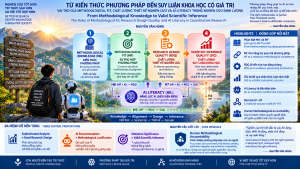
HIGHLIGHTS
- Phân biệt Methodological Knowledge (MK) với Methodological Fit (MF), qua đó chuyển trọng tâm từ knowing methods sang judging methodological appropriateness.
- Khái niệm hóa MF như một relational methodological competence kết nối câu hỏi nghiên cứu, mục tiêu suy luận, construct, đo lường, tổng thể, chọn mẫu, thiết kế, phân tích, bằng chứng và scientific claim.
- Định vị Research Design Quality (RDQ) như cơ chế chuyển methodological judgment thành một evidence-generating architecture.
- Xác lập Scientific Inference Quality (SIQ) như epistemic outcome tách biệt với statistical significance, computational correctness và analytical sophistication.
- Lý thuyết hóa AI Literacy (AIL) như một boundary condition của quan hệ MF → RDQ, thay vì một predictor trực tiếp mặc nhiên có lợi cho research quality.
- Đề xuất mô hình conditional-process gồm H1–H7 với cơ chế trung tâm Knowledge → Alignment → Design → Inference.
- Phát triển nguyên tắc Human Methodological Accountability nhằm duy trì quyền quyết định, nghĩa vụ biện minh và trách nhiệm kiểm chứng của con người trong AI-supported quantitative research.
TÓM TẮT
Bối cảnh. Trí tuệ nhân tạo, đặc biệt là trí tuệ nhân tạo tạo sinh (Generative Artificial Intelligence – GenAI), đang làm giảm nhanh các rào cản kỹ thuật của nghiên cứu định lượng. Những nhiệm vụ từng đòi hỏi kinh nghiệm thống kê hoặc năng lực lập trình tương đối cao—lựa chọn kỹ thuật phân tích, tạo mã R/Python, hỗ trợ tính cỡ mẫu, kiểm tra giả định, trực quan hóa dữ liệu và diễn giải statistical output—ngày càng có thể được thực hiện với sự hỗ trợ của AI. Tuy nhiên, analytical accessibility không đồng nghĩa methodological appropriateness. Một phân tích có thể chính xác về mặt tính toán nhưng vẫn không phù hợp về khoa học nếu không tương thích với câu hỏi nghiên cứu, construct, measurement, sampling mechanism, research design, data structure, estimand hoặc phạm vi suy luận mà evidence cho phép.
Vấn đề nghiên cứu. Thách thức trung tâm của nghiên cứu định lượng trong kỷ nguyên AI do đó không còn chỉ là liệu researcher có thể thực hiện một statistical procedure hay không, mà là liệu họ có thể lựa chọn, kết nối, biện minh, kiểm chứng và giới hạn các methodological decisions theo scientific problem hay không. Bài viết lập luận rằng methodological knowledge là điều kiện cần nhưng không đủ; research quality phụ thuộc vào khả năng chuyển knowledge thành context-sensitive methodological judgment, chuyển judgment thành credible evidence-generating architecture và chuyển evidence thành epistemically calibrated conclusions.
Mục tiêu. Bài viết phát triển mô hình tích hợp Methodological Knowledge (MK) → Methodological Fit (MF) → Research Design Quality (RDQ) → Scientific Inference Quality (SIQ), trong đó AI Literacy (AIL) được lý thuyết hóa như điều kiện biên của MF → RDQ. AIL không được xem như nguồn methodological competence độc lập mà như một capability có thể làm thay đổi hiệu quả chuyển sound methodological judgment thành research design quality trong môi trường có AI hỗ trợ.
Phương pháp đề xuất. Một multi-method observational design được phát triển, kết hợp structured measures với performance-based assessments. MK được đánh giá bằng conceptual, scenario-based, error-detection và inference-boundary tasks. MF, RDQ và SIQ được đánh giá từ research artifacts bằng behaviorally anchored rubrics bởi raters độc lập và được làm mù. AIL được đo bằng instrument có validity evidence phù hợp và được khuyến nghị bổ sung bằng performance indicators về đánh giá AI recommendations, source verification, assumption checking và statistical-code validation. Structural equation modeling và conditional-process analysis được đề xuất để kiểm định H1–H7. Cỡ mẫu cuối cùng phải được xác định bằng a priori power analysis hoặc Monte Carlo simulation phù hợp với primary estimand, measurement reliability, latent interaction và model complexity.
Đóng góp. Nghiên cứu chuyển trọng tâm từ statistical competence sang methodological alignment competence và đề xuất ba mệnh đề nền tảng: Sophisticated Analysis ≠ Good Research Design; AI Recommendation ≠ Methodological Justification; Statistical Significance ≠ Valid Scientific Inference. Human Methodological Accountability được phát triển như nguyên tắc quản trị xuyên suốt, theo đó AI có thể tham gia generation, comparison và execution nhưng final decision authority, justification obligation và verification responsibility vẫn thuộc human researcher.
Từ khóa: methodological knowledge; methodological fit; research design quality; scientific inference quality; AI literacy; generative AI; methodological judgment; quantitative research; human oversight.
ABSTRACT
Background. Generative artificial intelligence is rapidly lowering the technical barriers to quantitative research. Contemporary AI systems can recommend research designs and statistical procedures, generate executable code, assist with sample-size planning and assumption checking, visualize data, and support preliminary interpretation. However, increased analytical accessibility should not be conflated with methodological appropriateness. A computationally correct analysis may remain scientifically inappropriate when it is misaligned with the research question, construct representation, measurement structure, sampling mechanism, data-generating design, estimand, or warranted scope of inference.
Purpose. This article develops an integrated framework linking Methodological Knowledge (MK), Methodological Fit (MF), Research Design Quality (RDQ), and Scientific Inference Quality (SIQ). AI Literacy (AIL) is theorized as a boundary condition affecting the translation of methodological fit into research design quality. The framework distinguishes methodological repertoire from context-sensitive methodological judgment, the quality of the resulting evidence-generating architecture, and the epistemic quality of scientific conclusions.
Proposed method. A multi-method observational design combining structured measurement and performance-based assessment is proposed. MK is assessed through conceptual, scenario-based, error-detection, and inference-boundary tasks. MF, RDQ, and SIQ are assessed from research artifacts using behaviorally anchored rubrics scored by independent blinded raters. AIL is assessed with an instrument supported by appropriate validity evidence and may be supplemented by performance indicators of AI recommendation evaluation, source verification, assumption checking, and code validation. Structural equation modeling and conditional-process analysis are proposed to evaluate direct, indirect, moderating, and conditional indirect associations.
Contribution. The framework shifts the conceptual focus from statistical competence toward methodological alignment competence. It advances three propositions: Sophisticated Analysis ≠ Good Research Design; AI Recommendation ≠ Methodological Justification; Statistical Significance ≠ Valid Scientific Inference. AI Literacy is positioned not as an inherently beneficial predictor of research quality but as a conditional capability that may influence the translation of sound methodological judgment into high-quality research design. Human Methodological Accountability is proposed to preserve decision authority, justification, verification, and epistemic responsibility in AI-supported research.
Keywords: methodological knowledge; methodological fit; research design quality; scientific inference quality; AI literacy; quantitative research; generative AI; methodological judgment.
1. GIỚI THIỆU
1.1. Từ tự động hóa phân tích đến tái cấu trúc năng lực nghiên cứu
GenAI đang làm thay đổi sâu sắc phân công lao động giữa con người và công nghệ trong quantitative research. Một researcher hiện có thể sử dụng natural-language interaction để yêu cầu hệ thống đề xuất research design, lựa chọn statistical test, viết R/Python code, kiểm tra assumptions, tạo visualization, tính effect sizes và hỗ trợ diễn giải statistical outputs. Những hoạt động từng được xem là biểu hiện của technical expertise vì vậy đang trở nên dễ tiếp cận hơn.
Schwarz (2025) cho thấy GenAI có thể tạo thuận lợi cho statistical analysis, đặc biệt thông qua code generation, nhưng đồng thời chỉ ra sự tuân thủ chưa hoàn toàn đối với standard analytical procedures và vai trò tiếp tục thiết yếu của statistical knowledge cùng human oversight. Vấn đề lý thuyết quan trọng do đó không nằm ở việc AI có “làm được thống kê” hay không. Vấn đề nằm ở chỗ sự giảm mạnh chi phí thực thi đang chuyển nơi methodological competence tạo ra giá trị.
Khi syntax có thể được sinh trong vài giây, khả năng viết syntax không còn đủ để đại diện cho quantitative research competence. Khi AI có thể đưa ra nhiều analytical alternatives gần như tức thời, năng lực phân biệt phương án phù hợp với phương án chỉ có vẻ phức tạp trở nên quan trọng hơn.
Từ đó hình thành phát biểu học thuật thứ nhất:
Khi AI làm giảm rào cản thực hiện phân tích, năng lực lựa chọn, đánh giá và biện minh phân tích trở nên quan trọng hơn chứ không kém quan trọng hơn.
Đây không phải lập luận chống automation. Automation có thể tạo ra efficiency gain thực sự. Nhưng efficiency và epistemic quality thuộc hai tầng khác nhau.
1.2. Nghịch lý của “correct analysis”
Một statistical analysis có thể đúng về mặt computation nhưng vẫn sai về mặt methodology. Regression code có thể chạy hoàn hảo nhưng không trả lời causal question. Một SEM có thể tạo acceptable fit indices trong khi construct representation còn yếu. Một large sample có thể tạo narrow confidence intervals nhưng không sửa selection bias. Một predictive model có thể đạt accuracy cao nhưng không tự cung cấp causal explanation.
Những trường hợp này cho thấy:
Correct Analysis ≠ Appropriate Analysis.
Creswell và Creswell (2023) đặt method choice trong quan hệ với research question và design. Edmondson và McManus (2007) phát triển methodological fit trên cơ sở consistency giữa research question, prior work, research design và theoretical contribution. Hai hướng này cùng nhấn mạnh một nguyên tắc: không thể đánh giá method chỉ bằng mức độ sophistication của bản thân technique.
Từ đó hình thành phát biểu học thuật thứ hai:
Mức độ tinh vi của phương pháp không thể bù đắp cho methodological misfit.
Mệnh đề trung tâm là:
Sophisticated Analysis ≠ Good Research Design.
1.3. Methodological Knowledge không đồng nhất với Methodological Fit
Đào tạo quantitative methods thường được cấu trúc theo repertoire: descriptive statistics, t-tests, ANOVA, regression, factor analysis, SEM và các methods nâng cao. Cấu trúc này hữu ích nhưng có thể vô tình tạo assumption rằng người biết nhiều methods hơn tất yếu là researcher giỏi hơn.
Trong thực tế, knowledge và judgment không đồng nhất. Một sinh viên có thể thuộc assumptions của regression nhưng vẫn chọn regression cho một problem không phù hợp. Một researcher có thể hiểu representative sampling nhưng vẫn generalize từ convenience sample. Một người có thể biết reliability nhưng sử dụng một instrument không đại diện đầy đủ cho construct.
Do đó:
Methodological Knowledge (MK) là repertoire về concepts, methods, assumptions và alternatives.
Methodological Fit (MF) là năng lực lựa chọn, kết nối và biện minh methodological decisions phù hợp với scientific problem cụ thể.
Nếu MK trả lời:
What methodological options exist?
MF trả lời:
Which option is justified here, and why?
Sự phân biệt này là nền tảng cho toàn bộ theoretical model.
1.4. AI Literacy: direct predictor hay boundary condition?
AI Literacy ngày càng được nghiên cứu trong higher education. Tuy nhiên, construct này dễ bị giản lược thành prompt skills, frequency of use hoặc self-confidence.
Laupichler et al. (2022) cho thấy AI literacy trong higher and adult education là một lĩnh vực còn đang phát triển về conceptualization và assessment. Laupichler et al. (2023) sử dụng Delphi ba vòng với 53 experts để phát triển một item set cho non-experts’ AI literacy. Lintner (2024) tổng hợp 22 validation studies với 16 AI literacy scales và chỉ ra những khoảng trống đáng kể trong measurement evidence.
Điều đó dẫn đến phát biểu học thuật thứ ba:
AI Literacy là construct đa chiều; measurement phải phù hợp với competence cần suy luận thay vì đồng nhất AI Literacy với AI-use frequency.
Quan trọng hơn, bài viết không giả định:
High AIL → High Research Quality.
Một researcher có AI fluency cao nhưng methodological judgment yếu có thể tạo một proposal nhanh hơn và phức tạp hơn nhưng vẫn misaligned. Ngược lại, researcher có MF cao và AIL cao có thể sử dụng AI để generate alternatives, challenge recommendations, verify code và identify assumptions.
AIL vì vậy được lý thuyết hóa như boundary condition của MF → RDQ.
1.5. Research gaps
Năm gaps cấu thành research problem.
Knowledge–Judgment Gap: biết methods không đồng nghĩa biết lựa chọn method phù hợp.
Alignment Gap: methodological fit được công nhận về nguyên lý nhưng ít được operationalize như researcher competence.
Design–Inference Gap: measurement, sampling, design, analysis và inference thường được dạy riêng trong khi scientific validity phụ thuộc coherence toàn hệ thống.
AI Boundary-Condition Gap: AI literacy thường được xem như direct predictor hơn là một điều kiện làm thay đổi conversion từ judgment sang design.
Measurement Gap: MF, RDQ và SIQ khó được đo thỏa đáng bằng self-report.
Năm gaps hội tụ vào câu hỏi:
Methodological knowledge được chuyển thành defensible scientific inference như thế nào trong môi trường nghiên cứu ngày càng có AI hỗ trợ?
2. TỪ STATISTICAL COMPETENCE ĐẾN METHODOLOGICAL ALIGNMENT COMPETENCE
Statistical competence là thành phần quan trọng nhưng không bao phủ toàn bộ research competence. Trước khi statistical analysis được thực hiện, researcher đã phải đưa ra nhiều quyết định có tính epistemic: construct nào cần được quan sát; population nào là đối tượng suy luận; sampling mechanism nào phù hợp; design nào tạo loại evidence cần thiết; estimand nào trả lời research question.
Aguinis và Vandenberg (2014) nhấn mạnh tầm quan trọng của việc nâng research quality trước data collection. Điều này có implication lớn đối với AI-supported research: downstream computational sophistication không thể sửa mọi upstream design error.
Từ đó hình thành phát biểu học thuật thứ tư:
Một phần quan trọng của research quality được quyết định trước data collection; post hoc analysis không thể sửa mọi design error.
Research competence vì vậy cần được mô hình hóa theo:
Knowledge → Selection → Alignment → Design → Inference.
Đây chính là methodological alignment competence: năng lực không chỉ biết methods mà còn làm cho question, construct, measurement, population, design, analysis và claims hoạt động như một evidence system thống nhất.
3. METHODOLOGICAL KNOWLEDGE
MK phản ánh methodological repertoire cần thiết để researcher nhận diện alternatives và assumptions.
Nội hàm có thể gồm:
research designs;
sampling mechanisms;
measurement;
validity;
statistical assumptions;
model selection;
uncertainty;
causal versus associational inference;
limits of generalization.
MK là necessary but insufficient.
Nếu researcher không biết alternatives, họ không thể thực hiện meaningful comparison. Nhưng việc biết alternatives không đảm bảo lựa chọn đúng.
Do đó MK nên được đo bằng performance hơn là perceived competence. Một assessment có thể gồm:
Conceptual items: nhận diện principles.
Scenario items: lựa chọn method trong context.
Error-detection items: phát hiện methodological flaws.
Inference-boundary items: xác định claims nào được hoặc không được phép.
MK vì vậy cung cấp option space mà MF phải xử lý.
4. METHODOLOGICAL FIT
4.1. Định nghĩa MF
MF được định nghĩa là năng lực thiết lập và biện minh sự nhất quán giữa research question, intended inference, construct, measurement, target population, sampling mechanism, research design, data structure, analytical strategy và scientific claim.
MF là một relational competence.
Không có method nào “fit” trong chân không.
Regression, experiment, SEM hoặc machine learning chỉ có thể được đánh giá là phù hợp trong quan hệ với một problem cụ thể.
4.2. Question–Design Fit
Research question xác định evidence requirements.
Descriptive question cần evidence khác causal question. Predictive question khác explanatory question. Associational design không tự động đáp ứng causal question.
Từ logic research-design literature hình thành phát biểu học thuật thứ năm:
Research question đặt ra evidence requirements mà research design phải đáp ứng.
Question–design fit vì vậy là cổng đầu tiên của methodological alignment.
4.3. Construct–Measurement Fit
Construct không đồng nhất với indicator.
Internal consistency cao không tự chứng minh construct representation đầy đủ. Measurement quality phải được đánh giá theo evidence hỗ trợ interpretation và use của scores.
Theo AERA, APA, và NCME (2014), validity được hiểu trong quan hệ với interpretations và uses của scores. Từ đó hình thành phát biểu học thuật thứ sáu:
Validity không phải một nhãn cố định của scale; nó liên quan evidence hỗ trợ interpretation và use của scores trong context cụ thể.
Điều này có implication trực tiếp cho AIL: một AI-literacy instrument đã được validation ở population này không tự động bảo đảm inference ở population khác.
4.4. Population–Sampling Fit
Sampling nối observed units với target population.
Large N không tự tạo representativeness.
Một convenience sample lớn có thể tạo precise sample estimates nhưng vẫn không hỗ trợ population-wide generalization.
Do đó:
Precision ≠ Representativeness.
Population–sampling fit đòi hỏi xác định target population, sampling frame, selection mechanism, nonresponse và justified scope of generalization.
4.5. Design–Analysis Fit
Analysis phải phù hợp với data-generating architecture.
Repeated observations tạo dependence.
Nested observations tạo clustering.
Latent variables tạo measurement uncertainty.
Nonrandom treatment allocation tạo confounding.
Do đó analytical choice phải xuất phát từ:
Question + Design + Data Structure + Estimand + Assumptions.
Một manuscript về methodological fit sẽ tự mâu thuẫn nếu chọn SEM chỉ vì SEM có vẻ sophisticated.
4.6. Evidence–Claim Fit
Evidence–claim fit kiểm soát strength của conclusion.
Correlation ≠ Causality.
Nonsignificance ≠ Equivalence.
Statistical Significance ≠ Practical Importance.
Model Fit ≠ Unique Explanation.
Nguyên tắc:
Claim Strength ≤ Evidence Strength.
4.7. Sáu miền MF
MF được operationalize thành:
MF1 – Question–Design Fit
MF2 – Construct–Measurement Fit
MF3 – Population–Sampling Fit
MF4 – Design–Analysis Fit
MF5 – Evidence–Claim Fit
MF6 – Inference–Design Fit
Cấu trúc này cho phép chuyển methodological fit từ một principle thành measurable researcher competence.
5. RESEARCH DESIGN QUALITY
5.1. Từ judgment đến architecture
RDQ là chất lượng của evidence-generating research architecture được tạo ra nhằm trả lời research question.
Phân biệt trung tâm:
MF = quality of alignment decisions.
RDQ = quality of resulting evidence-generating architecture.
MF đánh giá reasoning giữa các methodological components.
RDQ đánh giá quality của research plan đã hình thành.
Distinction này ngăn H2 trở thành tautology.
5.2. Các miền RDQ
RDQ gồm:
RDQ1 – Research Architecture Completeness
RDQ2 – Design Appropriateness
RDQ3 – Sampling Rigor
RDQ4 – Measurement Quality
RDQ5 – Analysis Architecture
RDQ6 – Validity and Bias Control
RDQ7 – Feasibility and Reproducibility
Một researcher có thể đưa ra một số alignment decisions đúng nhưng proposal vẫn có RDQ thấp nếu architecture thiếu feasibility, bias control hoặc reproducibility.
5.3. Design precedes analysis
Scientific conclusion là downstream product của chuỗi:
Question → Construct → Measurement → Population → Sampling → Design → Data → Analysis → Evidence → Claim.
Nếu measurement không đại diện construct, sophisticated model không tự tạo content validity.
Nếu sampling mechanism không hỗ trợ generalization, larger N không tự mở rộng population.
Nếu design không hỗ trợ causal identification, regression không biến association thành causal effect.
Do đó:
Good Scientific Inference Begins Before Statistical Analysis.
5.4. Sample-size justification
Lakens (2022) lập luận rằng sample-size justification phải gắn với mục tiêu nghiên cứu thay vì một arbitrary rule.
Từ đó hình thành phát biểu học thuật thứ bảy:
Cỡ mẫu có ý nghĩa phương pháp khi được biện minh theo mục tiêu suy luận, không phải chỉ vì sample được gọi là “large”.
Trong study đề xuất, 500–700 chỉ là feasibility range. Final N phải được xác định theo primary hypothesis, smallest effect of interest, measurement reliability, latent interaction, desired power, estimator, missingness và model complexity.
6. SCIENTIFIC INFERENCE QUALITY
6.1. SIQ như epistemic outcome
SIQ là mức độ scientific conclusions:
tương xứng với evidence;
phù hợp với design;
phản ánh uncertainty;
không vượt causal identification;
không vượt population coverage;
xem xét alternative explanations;
nhận diện boundaries.
SIQ không phải statistical output.
Nó là epistemic calibration.
6.2. Evidence–Claim Proportionality
Scientific inference có chất lượng khi conclusion không mạnh hơn evidence.
Evidence hạn chế không đồng nghĩa nghiên cứu vô giá trị. Nó chỉ đòi hỏi claim hạn chế tương ứng.
6.3. Uncertainty
Scientific reasoning không xóa bỏ uncertainty.
Sampling variability, measurement error, model uncertainty, missingness, design assumptions và external-validity limitations là các nguồn bất định khác nhau.
Wasserstein và Lazar (2016) cảnh báo việc biến p-value thành cơ chế quyết định nhị phân cho scientific conclusion.
Từ đó hình thành phát biểu học thuật thứ tám:
Scientific inference tốt không loại bỏ uncertainty; nó làm uncertainty trở nên minh bạch.
6.4. Statistical significance
Một p < .05 không tự cho biết:
effect magnitude;
substantive importance;
model adequacy;
causal identification;
replicability;
population generalizability.
Do đó:
Statistical Significance ≠ Valid Scientific Inference.
6.5. Causal restraint
Causal restraint là khả năng không sử dụng causal language khi design không hỗ trợ causal identification.
Trong AI-supported writing, năng lực này đặc biệt quan trọng vì fluent text có thể tạo cảm giác certainty lớn hơn evidence thực tế.
6.6. Generalization restraint
Researcher phải phân biệt sample inference với population inference.
Một association quan sát được trong một convenience sample không tự hỗ trợ claim về toàn bộ population.
6.7. Alternative explanations
SIQ cao đòi hỏi researcher xem xét competing explanations.
Một association có thể liên quan confounding.
Group difference có thể phản ánh baseline imbalance.
AIL có thể covary với prior digital literacy hoặc research experience.
6.8. Sáu miền SIQ
SIQ1 – Evidence–Claim Proportionality
SIQ2 – Uncertainty Recognition
SIQ3 – Causal Restraint
SIQ4 – Generalization Appropriateness
SIQ5 – Alternative Explanation Consideration
SIQ6 – Boundary Recognition
Nguyên tắc:
Claim Strength ≈ Evidence Strength.
7. AI LITERACY NHƯ BOUNDARY CONDITION
7.1. Không đồng nhất AIL với AI use
AIL không nên được đo chỉ bằng:
usage frequency;
prompt confidence;
self-perceived competence.
Từ AI-literacy measurement literature hình thành phát biểu học thuật thứ chín:
Valid AI-literacy measurement đòi hỏi construct definition rõ; AI-use frequency không phải proxy đầy đủ cho competence.
7.2. Validated scale và validity argument
Validated instrument cung cấp starting point mạnh hơn ad hoc items. Nhưng validity evidence luôn gắn với interpretation, population và purpose.
Phát biểu học thuật thứ mười:
Validated scale là điểm khởi đầu mạnh hơn, nhưng validity evidence phải được xem xét lại khi population hoặc intended inference thay đổi.
Trong bối cảnh Việt Nam, một instrument đã được validation trên university students có thể có contextual advantage. Tuy nhiên, nếu target population là postgraduate quantitative researchers, cần tiếp tục kiểm tra measurement structure và construct relevance.
7.3. Generic AI Literacy và Evaluative Methodological AI Capability
Để H6 có theoretical proximity tốt hơn, nghiên cứu cần phân biệt:
Generic AI Literacy
với:
Research-Oriented Evaluative AI Capability.
Năng lực thứ hai gồm:
evaluation of methodological recommendations;
source verification;
assumption checking;
statistical-code validation;
comparison of alternatives;
uncertainty detection;
inferential restraint.
Điều này giải quyết một nguy cơ construct mismatch: nếu moderator chỉ đo generic AI knowledge, nó có thể quá xa mechanism MF → RDQ.
7.4. Performance-based AI Literacy
Self-report có lợi thế về feasibility nhưng có thể chịu ảnh hưởng confidence và self-perception.
Vì vậy, nghiên cứu nên bổ sung performance-based evidence. Một task có thể đưa ra AI-generated methodological recommendation và yêu cầu participant:
phát hiện errors;
kiểm tra assumptions;
đánh giá source;
sửa code;
đề xuất alternative;
giới hạn conclusion.
Điều này giúp measurement gần hơn với mechanism của H6.
7.5. Responsible AI competence
Phát biểu học thuật thứ mười một:
Responsible AI competence bao gồm duy trì human judgment và đánh giá consequences, không chỉ khả năng vận hành AI system.
Researcher phải có khả năng từ chối recommendation dù AI tạo câu trả lời rất thuyết phục.
7.6. Vì sao AIL là moderator?
Nếu researcher có MF cao, họ đã sở hữu sound methodological judgment. AIL có thể giúp chuyển judgment đó thành design hiệu quả hơn thông qua generation, comparison và verification.
Do đó:
MF × AIL → RDQ.
Nhưng AIL không tự tạo methodological fit.
7.7. AIL có thể khuếch đại cả sai lầm
Một possibility quan trọng là high AI fluency + low MF có thể làm misaligned design được triển khai nhanh hơn.
Vì vậy AIL không phải “positive resource” theo định nghĩa.
Nó là capability whose value depends on methodological judgment.
7.8. Verification
Từ evidence về GenAI và statistical analysis hình thành phát biểu học thuật thứ mười hai:
Khả năng sử dụng AI không loại bỏ nhu cầu hiểu phương pháp; khả năng kiểm tra output quyết định AI trở thành hỗ trợ hay nguồn khuếch đại sai lệch.
Nguyên tắc:
AI Recommendation ≠ Methodological Justification.
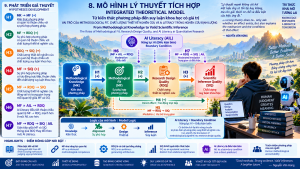
8. MÔ HÌNH LÝ THUYẾT TÍCH HỢP
Mô hình gồm:
METHODOLOGICAL KNOWLEDGE — MK
↓ H1
METHODOLOGICAL FIT — MF
↓ H2
RESEARCH DESIGN QUALITY — RDQ
↓ H3
SCIENTIFIC INFERENCE QUALITY — SIQ
Direct path:
MF → SIQ — H4
Mediation:
MF → RDQ → SIQ — H5
Moderation:
MF × AIL → RDQ — H6
Moderated mediation:
MF → RDQ → SIQ | AIL — H7
Cơ chế:
Knowledge → Alignment → Design → Inference
với:
AIL = Boundary Condition.
9. PHÁT TRIỂN GIẢ THUYẾT
9.1. H1: MK → MF
Methodological fit đòi hỏi repertoire đủ để researcher nhận diện alternatives. Knowledge không bảo đảm judgment, nhưng thiếu knowledge làm meaningful methodological comparison khó xảy ra.
H1: Methodological Knowledge có quan hệ thuận chiều với Methodological Fit.
9.2. H2: MF → RDQ
Researcher có khả năng alignment tốt hơn giữa question, construct, measurement, population, design và analysis có cơ sở tạo research architecture tốt hơn.
H2: Methodological Fit có quan hệ thuận chiều với Research Design Quality.
9.3. H3: RDQ → SIQ
Research architecture quyết định evidence có thể được tạo. Architecture tốt không bảo đảm interpretation hoàn hảo, nhưng cung cấp nền tảng tốt hơn cho warranted inference.
H3: Research Design Quality có quan hệ thuận chiều với Scientific Inference Quality.
9.4. H4: MF → SIQ
Methodological judgment có thể trực tiếp hỗ trợ inferential restraint.
Researcher hiểu giới hạn design có thể chủ động giới hạn claim.
H4: Methodological Fit có quan hệ thuận chiều với Scientific Inference Quality.
9.5. H5: RDQ như mechanism
Core mechanism là:
Fit → Design → Inference.
H5: Research Design Quality đóng vai trò trung gian trong mối quan hệ giữa Methodological Fit và Scientific Inference Quality.
Với observational data, H5 phải được diễn giải là indirect association consistent with the hypothesized mechanism, không phải causal mediation.
9.6. H6: AIL moderation
AIL có thể tăng hiệu quả chuyển methodological judgment thành design thông qua comparison, verification và implementation.
H6: AI Literacy điều tiết thuận chiều quan hệ MF → RDQ, sao cho quan hệ này mạnh hơn ở mức AIL cao hơn.
9.7. H7: Conditional indirect association
Nếu AIL làm thay đổi MF → RDQ, indirect association qua RDQ cũng thay đổi.
H7: Indirect association giữa MF và SIQ thông qua RDQ thay đổi theo mức AI Literacy.
Hay:
MF → RDQ → SIQ | AIL.
Từ conditional-process logic hình thành phát biểu học thuật thứ mười ba:
Theory mạnh không chỉ hỏi một effect có tồn tại hay không mà còn giải thích mechanism và conditions của effect đó.
10. PHƯƠNG PHÁP NGHIÊN CỨU ĐỀ XUẤT
10.1. Thiết kế
Nghiên cứu sử dụng multi-method observational design.
“Multi-method” ở đây chỉ việc kết hợp nhiều measurement modalities; không tự động đồng nghĩa mixed methods.
Hai nguồn chính:
Structured measures: MK, AIL.
Performance assessments: MF, RDQ, SIQ.
Cấu trúc này giảm dependence vào common-source self-report.
10.2. Population
Primary population được khuyến nghị:
Postgraduate students undertaking quantitative research training.
Có thể mở rộng sang final-year undergraduate thesis students hoặc early-stage doctoral researchers, nhưng cần justification và subgroup analysis phù hợp.
10.3. Sampling
Multi-institution sampling được ưu tiên.
Nếu convenience sampling được sử dụng, external-validity claims phải bị giới hạn.
Discipline, study level, prior statistics training, prior research experience và prior AI experience cần được ghi nhận.
10.4. Sample-size justification
Final N không được chọn bằng heuristic đơn giản.
Cần căn cứ:
primary estimand;
smallest effect of interest;
measurement reliability;
latent interaction;
desired power;
model complexity;
estimator;
missingness.
Monte Carlo simulation được ưu tiên cho latent moderated mediation.
10.5. Temporal architecture
T1 – Baseline: demographics, MK, AIL.
T2 – Design Performance: Quantitative Research Proposal → MF + RDQ.
T3 – Inference Performance: Standardized Results Package → SIQ.
Temporal ordering tăng coherence của proposed mechanism nhưng không tự thiết lập causality.
10.6. Quantitative Research Proposal
Participants viết proposal khoảng 1.500–2.000 từ gồm:
research question;
hypotheses;
population;
sampling;
constructs;
measurement;
design;
data collection;
analysis;
assumptions;
validity threats;
intended inference;
AI-use declaration.
Scenario phải cho phép nhiều defensible solutions.
10.7. MK assessment
MK test gồm:
conceptual knowledge;
scenario reasoning;
error detection;
inference boundaries.
Self-rated methodological competence không được sử dụng như primary MK measure.
10.8. MF assessment
MF rubric:
MF1 Question–Design Fit
MF2 Construct–Measurement Fit
MF3 Population–Sampling Fit
MF4 Design–Analysis Fit
MF5 Evidence–Claim Fit
MF6 Inference–Design Fit.
Rubric sử dụng behavioral anchors.
10.9. RDQ assessment
RDQ rubric:
RDQ1 Architecture Completeness
RDQ2 Design Appropriateness
RDQ3 Sampling Rigor
RDQ4 Measurement Quality
RDQ5 Analysis Architecture
RDQ6 Validity/Bias Control
RDQ7 Feasibility/Reproducibility.
10.10. SIQ assessment
Participants nhận standardized results package và viết conclusion.
SIQ rubric:
SIQ1 Evidence–Claim Proportionality
SIQ2 Uncertainty Recognition
SIQ3 Causal Restraint
SIQ4 Generalization Appropriateness
SIQ5 Alternative Explanations
SIQ6 Boundary Recognition.
10.11. AIL assessment
AIL nên sử dụng validated instrument có contextual relevance.
Đồng thời bổ sung Evaluative AI Performance Task để đo:
recommendation verification;
source checking;
assumption detection;
code validation;
overclaim detection.
10.12. Construct–Measurement Matrix
| Construct | Core meaning | Primary evidence | Major contamination risk |
| MK | Methodological repertoire | Knowledge/performance test | Self-confidence |
| MF | Alignment judgment | Alignment rubric | RDQ |
| RDQ | Resulting research architecture | Design-quality rubric | MF |
| SIQ | Epistemic calibration | Inference task | Statistical knowledge alone |
| AIL | AI-related competence | Validated scale + performance | Usage frequency |
10.13. AI-use protocol
Nếu AI được phép:
model/version;
date;
web access;
file access;
time;
external-source policy
phải được standardized.
AI log gồm:
prompt;
AI recommendation;
follow-up;
accept/reject decision;
verification action.
Nguyên tắc:
AI Suggested ≠ Researcher Accepted ≠ Methodologically Appropriate.
10.14. Human Methodological Accountability
HMA gồm ba thành phần:
Decision Authority
Justification Obligation
Verification Responsibility.
Researcher phải ghi lại:
| Decision | AI Suggested? | Human Final Decision | Rationale | Verification |
| Design | Yes/No | Required | Required | Required |
| Sampling | Yes/No | Required | Required | Required |
| Measurement | Yes/No | Required | Required | Required |
| Analysis | Yes/No | Required | Required | Required |
| Inference | Yes/No | Required | Required | Required |
AI có thể có generation capacity nhưng không mặc nhiên có epistemic authority.
10.15. Blinding
Artifacts được de-identify.
Raters không biết participant identity, MK hoặc AIL scores.
Nếu AI condition có thể được nhận biết qua writing style, formatting nên được standardized trước scoring.
10.16. Rater calibration
Tối thiểu hai raters có expertise về quantitative methodology.
Quy trình:
rubric manual;
anchor cases;
practice scoring;
calibration;
adjudication.
Continuous composites có thể đánh giá bằng ICC phù hợp với rater design; ordinal ratings có thể dùng weighted κ.
10.17. Content validity
Expert panel đánh giá:
relevance;
clarity;
representativeness;
redundancy;
construct boundaries.
MF đặc biệt cần strong content-validity argument vì construct đang được mở rộng từ methodological property sang researcher competence.
10.18. MF–RDQ discriminant validity
Đây là measurement challenge quan trọng nhất.
Nếu MF và RDQ dùng indicators gần như giống nhau, H2/H5 có nguy cơ tautological.
Giải pháp:
MF = alignment reasoning.
RDQ = resulting architecture.
Thêm:
separate scoring manuals;
different artifact sections;
independent raters;
factor-level discriminant testing;
multitrait–multimethod reasoning.
Nếu data không hỗ trợ distinction, theoretical model phải được sửa.
11. DATA-ANALYSIS STRATEGY
11.1. Measurement model before structural model
Trước H1–H7 cần đánh giá:
factor structure;
reliability;
convergent evidence;
discriminant evidence;
cross-loadings;
factor correlations;
measurement invariance khi cần.
Không gọi instrument “validated” chỉ vì Cronbach’s alpha cao.
11.2. Structural model
Primary model:
MK → MF
MF → RDQ
RDQ → SIQ
MF → SIQ
MF × AIL → RDQ.
11.3. Hypothesis–Estimand–Analysis Matrix
| H | Estimand | Analysis |
| H1 | MK → MF conditional association | SEM |
| H2 | MF → RDQ conditional association | SEM |
| H3 | RDQ → SIQ conditional association | SEM |
| H4 | MF → SIQ direct association | SEM |
| H5 | MF → RDQ → SIQ indirect association | Bootstrap CI |
| H6 | MF × AIL → RDQ interaction | Latent moderation |
| H7 | Conditional indirect association | Moderated mediation |
11.4. CB-SEM hay PLS-SEM?
Technique selection phải tự đáp ứng methodological fit.
Nếu mục tiêu là theory testing với latent constructs và prespecified measurement models, CB-SEM có logic phù hợp hơn.
PLS-SEM chỉ nên được sử dụng nếu prediction/composite orientation và research conditions biện minh.
Không chọn PLS vì model “phức tạp”.
11.5. Mediation
H5 báo cáo:
path a;
path b;
direct association;
indirect association;
total association;
bootstrap CI.
Không yêu cầu total effect significant như điều kiện máy móc.
11.6. Moderation
H6 báo cáo:
interaction coefficient;
CI;
conditional effects;
visualization.
Simple slopes phải được đánh giá tại theoretically meaningful AIL values.
11.7. Conditional indirect effect
H7 phải được kiểm định trực tiếp.
Không suy ra H7 chỉ vì H5 và H6 riêng lẻ significant.
11.8. Competing models
Các alternatives:
AIL → RDQ
AIL → MF
MK → RDQ
MK → SIQ
MF → RDQ → SIQ without MF → SIQ.
Nếu alternative model tốt hơn, interpretation phải thay đổi.
11.9. Robustness
Robustness analyses:
alternative scoring;
alternative AIL operationalization;
different rater combinations;
models with/without controls;
subgroup models;
robust estimators;
AI-use intensity;
removal of overlapping MF/RDQ indicators.
11.10. Preregistration
Preregister:
H1–H7;
primary estimand;
sample-size procedure;
measurement model;
scoring rules;
exclusion criteria;
controls;
mediation;
moderation;
conditional indirect effects;
competing models;
robustness analyses.
Confirmatory và exploratory analyses phải được phân biệt.
12. FALSIFIABILITY VÀ THEORETICAL BOUNDARIES
Model phải có khả năng bị bác bỏ.
H1 bị suy yếu nếu MK gần như không liên hệ MF.
H2 bị suy yếu nếu MF không dự báo RDQ sau khi bảo đảm discriminant validity.
H3 bị suy yếu nếu RDQ không liên hệ SIQ.
H5 bị suy yếu nếu indirect association không được hỗ trợ.
H6 bị bác bỏ nếu interaction MF × AIL không tồn tại hoặc ngược hướng.
H7 bị bác bỏ nếu conditional indirect association không thay đổi theo AIL.
AIL boundary condition cũng có giới hạn. Nếu AI không được sử dụng trong task, hoặc task không yêu cầu AI evaluation, moderator effect có thể nhỏ vì capability không được kích hoạt.
MF có thể quan trọng hơn trong ill-structured research problems so với tasks có một đáp án đúng.
Discipline cũng có thể là boundary: methodological-fit criteria trong experimental sciences có thể khác social-science survey research.
Những boundaries này làm theory có khả năng kiểm định hơn.
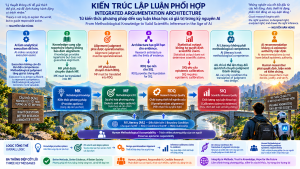
13. KIẾN TRÚC LẬP LUẬN PHỐI HỢP
Mười ba phát biểu học thuật phải được hiểu như các mắt xích, không phải quotations độc lập.
Luận điểm 1: AI làm analytical execution dễ hơn.
↓
Do đó execution không còn đủ đại diện competence.
↓
Methodological judgment tăng giá trị tương đối.
Luận điểm 2: Knowledge cung cấp repertoire nhưng không bảo đảm alignment.
↓
MK phải được chuyển thành MF.
Luận điểm 3: Alignment judgment phải được operationalize.
↓
MF phải được chuyển thành RDQ.
Luận điểm 4: Architecture tạo giới hạn cho evidence.
↓
RDQ tạo nền cho SIQ.
Luận điểm 5: Statistical output không tự quyết định scientific claim.
↓
SIQ yêu cầu epistemic calibration.
Luận điểm 6: AI Literacy không phải methodological competence.
↓
AIL chỉ có thể làm thay đổi quá trình chuyển judgment thành design.
Luận điểm 7: AI recommendation không có epistemic authority mặc định.
↓
Human researcher phải quyết định, biện minh và kiểm chứng.
Toàn bộ architecture:
Knowledge provides options.
Fit selects and aligns options.
Design operationalizes alignment.
Inference calibrates claims to evidence.
AI Literacy conditions the translation of judgment into design.
Human Methodological Accountability preserves epistemic responsibility.
14. THẢO LUẬN
14.1. Từ knowing methods sang judging methods
Nếu H1 được hỗ trợ, implication không chỉ là knowledge matters. Điểm quan trọng hơn là knowledge được chuyển thành judgment đến mức nào.
Nếu MK cao nhưng MF thấp hoặc trung bình, research-methods education có thể đang đào tạo:
Knowers of Methods
nhiều hơn:
Judges of Methods.
Curriculum vì vậy cần chuyển từ chỉ hỏi:
“What is regression?”
sang:
“When is regression warranted, when is it not, and why?”
14.2. MF như missing mechanism
Nếu H2 được hỗ trợ, research story không còn là:
Knowledge → Research Quality
mà là:
Knowledge → Judgment → Architecture.
MF trở thành mechanism giải thích cách methodological knowledge tạo giá trị.
14.3. RDQ như evidence mechanism
Nếu H3 được hỗ trợ, scientific inference phải được hiểu như downstream product của research design.
Điều này củng cố:
Good Inference Begins Before Analysis.
14.4. Ý nghĩa của H4
Nếu MF vẫn liên hệ SIQ sau khi RDQ được đưa vào, methodological judgment có thể có direct relevance đối với inferential restraint.
Nếu MF → SIQ giảm mạnh, RDQ có thể là mechanism chủ yếu.
Cả hai patterns đều theoretically informative.
14.5. Ý nghĩa của H5
H5 mạnh sẽ cho thấy methodological judgment tạo giá trị một phần thông qua research architecture.
Tuy nhiên, với observational data, không được chuyển statistical indirect effect thành causal process claim.
14.6. AIL như capability amplifier
Nếu H6 được hỗ trợ, interpretation phải là:
AIL strengthens the translation of MF into RDQ under the observed conditions.
Không phải:
AIL causes research quality.
14.7. Nếu H6 không được hỗ trợ
Null moderation có thể phản ánh:
generic AIL quá xa mechanism;
task không kích hoạt AI capability;
MF đủ mạnh để AI không tạo incremental benefit;
hoặc AIL hoạt động qua pathway khác.
Null result vì vậy có theoretical value.
14.8. Nếu moderation âm
Negative interaction có thể gợi ý automation reliance hoặc overconfidence, nhưng chỉ được đưa ra như explanation khi process evidence hỗ trợ.
Không được tạo post hoc narrative chỉ từ interaction sign.
14.9. Ba failure pathways
Pathway A:
High MK → Low MF → Weak RDQ → Weak SIQ.
Biết nhiều nhưng chọn sai.
Pathway B:
High MF → Weak Implementation → Weak RDQ.
Phán đoán đúng nhưng triển khai kém.
Pathway C:
High RDQ → Overclaimed SIQ.
Design tốt nhưng conclusion vượt evidence.
Ba pathways cho thấy research competence không thể được đại diện bằng một điểm statistical knowledge duy nhất.
15. ĐÓNG GÓP HỌC THUẬT
Đóng góp thứ nhất – Repertoire–Judgment Distinction.
MK được tách khỏi MF.
Đóng góp thứ hai – Methodological Fit as Researcher Competence.
MF được tái khái niệm hóa như performance capability.
Đóng góp thứ ba – Mechanism.
RDQ giải thích cách methodological judgment được chuyển thành evidence-generating architecture.
Đóng góp thứ tư – Epistemic Outcome.
SIQ chuyển tiêu điểm từ computational correctness sang defensible scientific inference.
Đóng góp thứ năm – Boundary Condition.
AIL được đặt như conditional capability thay vì direct beneficial predictor.
Đóng góp thứ sáu – Measurement Architecture.
Performance-based assessment được ưu tiên cho MF, RDQ và SIQ.
Đóng góp thứ bảy – Human Methodological Accountability.
AI participation được tách khỏi epistemic responsibility.
16. HÀM Ý ĐỐI VỚI GIÁO DỤC PHƯƠNG PHÁP
Research-methods curriculum cần chuyển từ tool-first sang alignment-first.
Thay vì:
t-test → ANOVA → Regression → SEM
nên nhấn mạnh:
Question → Intended Inference → Construct → Measurement → Population → Sampling → Design → Analysis → Evidence → Claim.
Assessment cũng phải thay đổi.
Không chỉ:
Can the student run the analysis?
mà:
Can the student justify why this analysis is warranted?
Người học cần trả lời:
Why this design?
Why this measure?
Why this sample?
Why this analysis?
What assumptions?
What alternatives?
What claims are not warranted?
How was AI advice verified?
Khi AI có thể tạo statistical output, assessment chỉ dựa trên output có nguy cơ đo automation-assisted execution nhiều hơn methodological competence.
17. HÀM Ý ĐỐI VỚI AI-SUPPORTED RESEARCH
AI nên được sử dụng như methodological challenger thay vì chỉ answer generator.
Researcher có thể yêu cầu AI:
đưa ra competing designs;
liệt kê assumptions;
đề xuất failure conditions;
phát hiện methodological mismatches;
kiểm tra code;
đề xuất sensitivity analyses;
phản biện causal claims;
xác định generalization limits.
Nhưng AI output phải được xem là:
Candidate Reasoning
không phải:
Authoritative Evidence.
Nguyên tắc:
Generation Authority ≠ Epistemic Authority.
18. HUMAN METHODOLOGICAL ACCOUNTABILITY
AI-supported research làm xuất hiện một distinction quan trọng giữa task delegation và responsibility delegation.
Researcher có thể giao cho AI:
search support;
code generation;
alternative generation;
drafting assistance;
error detection.
Nhưng không thể vì thế chuyển final scientific accountability sang AI.
HMA gồm:
Decision Authority: human researcher sở hữu final methodological decision.
Justification Obligation: mỗi quyết định quan trọng phải có methodological rationale.
Verification Responsibility: researcher chịu trách nhiệm kiểm tra sources, assumptions, code, calculations và claims.
Do đó:
AI Assistance ≠ Transfer of Scientific Responsibility.
HMA không phải restriction nhằm giảm lợi ích AI. Nó là governance mechanism giúp AI được sử dụng mà không làm mất epistemic traceability.
19. HẠN CHẾ
Thứ nhất, observational design không chứng minh causal mediation.
Thứ hai, MF là construct cần validation program riêng.
Thứ ba, MF–RDQ contamination là measurement threat quan trọng nhất.
Thứ tư, generic self-report AIL có thể phản ánh perceived competence.
Thứ năm, proposal task không hoàn toàn tương đương authentic research.
Thứ sáu, rater preferences có thể ảnh hưởng scores.
Thứ bảy, disciplinary heterogeneity có thể thay đổi methodological standards.
Thứ tám, AI models thay đổi nhanh, tạo temporal external-validity challenge.
Thứ chín, AIL có thể correlate với digital literacy và prior competence.
Thứ mười, standardized AI access tạo trade-off giữa internal và ecological validity.
20. HƯỚNG NGHIÊN CỨU TIẾP THEO
Experimental extension:
No AI
↓
AI Only
↓
AI + Methodological Fit Matrix
↓
AI + Methodological Fit Matrix + Verification Protocol
Thiết kế này cho phép tách:
AI effect;
alignment-scaffold effect;
verification effect.
Longitudinal extension:
T0: MK + AIL
T1: Alignment Training
T2: MF + RDQ
T3: SIQ
T4: Unscaffolded Transfer.
Nếu performance duy trì ở T4 sau khi scaffold được rút, evidence về internalized methodological competence sẽ mạnh hơn evidence về task compliance.
Một hướng khác là experimentally manipulate AI recommendation quality: correct, partially correct và misleading recommendations. Thiết kế này có thể kiểm tra trực tiếp liệu AIL và MF giúp researcher phát hiện methodological error hay chỉ giúp họ sử dụng AI nhanh hơn.
21. KẾT LUẬN
GenAI đang tái cấu trúc division of labor trong quantitative research. Những hoạt động từng được xem là biểu hiện của technical expertise—viết code, lựa chọn statistical procedure, tạo visualization và hỗ trợ diễn giải output—ngày càng có thể được tự động hóa.
Nhưng automation không làm methodological judgment ít quan trọng hơn. Nó làm distinction giữa execution và justification trở nên rõ hơn.
Bài viết phát triển architecture:
METHODOLOGICAL KNOWLEDGE
↓
METHODOLOGICAL FIT
↓
RESEARCH DESIGN QUALITY
↓
SCIENTIFIC INFERENCE QUALITY
với:
AI LITERACY = BOUNDARY CONDITION của MF → RDQ.
MK cung cấp methodological repertoire.
MF chuyển repertoire thành context-sensitive judgment.
RDQ chuyển judgment thành evidence-generating architecture.
SIQ xác định conclusion có được calibration theo evidence hay không.
AIL có thể làm quá trình chuyển judgment thành design hiệu quả hơn, nhưng không thay thế methodological knowledge hoặc methodological fit.
Ba signature propositions tóm lược architecture:
Sophisticated Analysis ≠ Good Research Design.
Mệnh đề này đặt giới hạn cho technical sophistication.
AI Recommendation ≠ Methodological Justification.
Mệnh đề này đặt giới hạn cho algorithmic recommendation.
Statistical Significance ≠ Valid Scientific Inference.
Mệnh đề này đặt giới hạn cho statistical output.
Ba giới hạn hội tụ vào một nguyên tắc:
Scientific inference có giá trị đòi hỏi methodological alignment, credible evidence-generating architecture và human methodological accountability.
Trong môi trường AI, researcher không cần cạnh tranh với machine về tốc độ sinh code. Năng lực khoa học có giá trị cao hơn nằm ở việc xác định đúng scientific problem, lựa chọn design phù hợp, biện minh assumptions, kiểm chứng AI recommendations, đánh giá uncertainty, xem xét alternative explanations và giới hạn claims theo strength của evidence.
Nói cách khác:
AI may make sophisticated analysis easier; it does not make methodological fit automatic.
Vì vậy, câu hỏi trung tâm của quantitative research trong kỷ nguyên AI không phải:
“Phương pháp nào hiện đại hoặc phức tạp nhất mà chúng ta có thể sử dụng?”
mà là:
“Phương pháp nào tạo ra loại bằng chứng cần thiết để trả lời câu hỏi này, và bằng chứng đó thực sự cho phép chúng ta kết luận điều gì?”
Đó là điểm methodological knowledge trở thành methodological judgment; judgment trở thành credible research design; và research design trở thành defensible scientific inference.
DECLARATIONS
CRediT Author Statement
Nguyễn Văn Hùng: Conceptualization; Methodology; Investigation; Writing – Original Draft; Writing – Review & Editing.
Data Availability Statement
Bản thảo hiện tại là nghiên cứu phát triển lý thuyết và thiết kế nghiên cứu (theoretical-development/research-design manuscript); do đó, chưa có bộ dữ liệu thực nghiệm (empirical dataset) được báo cáo. Sau khi nghiên cứu được triển khai, tuyên bố về khả năng tiếp cận dữ liệu sẽ được cập nhật phù hợp với quy trình nghiên cứu và chính sách của tạp chí. Trong phạm vi được sự đồng thuận của người tham gia, phê duyệt đạo đức, yêu cầu bảo vệ dữ liệu và quy định của cơ quan liên quan cho phép, các tài liệu có thể được chia sẻ bao gồm dữ liệu đã khử định danh (de-identified data), codebook, scoring rubrics, analytical syntax và các research artifacts cần thiết để hỗ trợ tính minh bạch, khả năng kiểm chứng và tái lập phân tích. Mọi hình thức chia sẻ dữ liệu sẽ tuân thủ các giới hạn về quyền riêng tư, bảo mật và quản trị dữ liệu nghiên cứu.
TÀI LIỆU THAM KHẢO
- Aguinis, H., & Vandenberg, R. J. (2014). An ounce of prevention is worth a pound of cure: Improving research quality before data collection. Annual Review of Organizational Psychology and Organizational Behavior, 1, 569–595.
- American Educational Research Association, American Psychological Association, & National Council on Measurement in Education. (2014). Standards for educational and psychological testing. American Educational Research Association.
- Creswell, J. W., & Creswell, J. D. (2023). Research design: Qualitative, quantitative, and mixed methods approaches (6th ed.). SAGE.
- Edmondson, A. C., & McManus, S. E. (2007). Methodological fit in management field research. Academy of Management Review, 32(4), 1155–1179.
- Hayes, A. F. (2022). Introduction to mediation, moderation, and conditional process analysis: A regression-based approach (3rd ed.). Guilford Press.
- Lakens, D. (2022). Sample size justification. Collabra: Psychology, 8(1), Article 33267.
- Laupichler, M. C., Aster, A., Schirch, J., & Raupach, T. (2022). Artificial intelligence literacy in higher and adult education: A scoping literature review. Computers and Education: Artificial Intelligence, 3, Article 100101.
- Laupichler, M. C., Aster, A., & Raupach, T. (2023). Delphi study for the development and preliminary validation of an item set for the assessment of non-experts’ AI literacy. Computers and Education: Artificial Intelligence, 4, Article 100126.
- Lintner, T. (2024). A systematic review of AI literacy scales. npj Science of Learning, 9, Article 50.
- Podsakoff, P. M., MacKenzie, S. B., Lee, J.-Y., & Podsakoff, N. P. (2003). Common method biases in behavioral research: A critical review of the literature and recommended remedies. Journal of Applied Psychology, 88(5), 879–903.
- Schwarz, J. (2025). The use of generative AI in statistical data analysis and its impact on teaching statistics at universities of applied sciences. Teaching Statistics, 47(2), 118–128.
- Wasserstein, R. L., & Lazar, N. A. (2016). The ASA statement on p-values: Context, process, and purpose. The American Statistician, 70(2), 129–133.
