
From Coding Assistance to Interpretive Authority: Generative AI, Researcher Reflexivity, and Human Agency in Qualitative Analysis
Nguyễn Văn Hùng
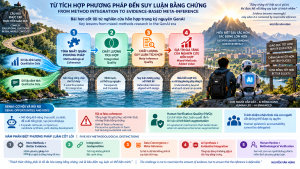
HIGHLIGHTS
- Phát triển Dual-Pathway Model of AI-Mediated Interpretive Agency (DPM-AIA) nhằm giải thích hai cơ chế cạnh tranh của GenAI trong phân tích định tính: interpretive augmentation và interpretive displacement.
- Xác định AI sequencing—đặc biệt câu hỏi ai thiết lập khung diễn giải ban đầu—là biến phương pháp luận và nhận thức luận quan trọng trong phân tích định tính có AI hỗ trợ.
- Khái niệm hóa Reflexive Engagement như cơ chế trung gian có thể quan sát nối cấu hình cộng tác Người–AI với Interpretive Depth và Interpretive Researcher Agency.
- Phân biệt Analytical Efficiency, Automation Dependence, Reflexive Engagement, Interpretive Depth, Interpretive Researcher Agency và Interpretive Authority.
- Đề xuất kiến trúc quản trị: Human Presence → Human Oversight → Human Agency → Meaningful Human Interpretive Control → Interpretive Authority.
- Xác lập nguyên tắc trung tâm: Human-in-the-Loop ≠ Human-in-Control-of-the-Loop.
TÓM TẮT
Bối cảnh
Generative artificial intelligence (GenAI) đang mở rộng phạm vi tự động hóa trong nghiên cứu định tính từ những chức năng hỗ trợ kỹ thuật sang các hoạt động nằm gần trung tâm của quá trình kiến tạo ý nghĩa, bao gồm tạo mã, nhóm phạm trù, phát triển chủ đề, so sánh trường hợp, truy xuất bằng chứng và đề xuất diễn giải. Khả năng này có thể làm giảm đáng kể chi phí thời gian và tải nhận thức của nhà nghiên cứu. Tuy nhiên, tốc độ xử lý cao hơn không tự động tạo ra diễn giải sâu hơn, có căn cứ hơn hoặc đáng tin cậy hơn. Khi AI tham gia trước khi nhà nghiên cứu hình thành cấu trúc phân tích độc lập, vấn đề không còn đơn thuần là độ chính xác của output mà trở thành vấn đề về phân bổ quyền kiểm soát nhận thức luận.
Khoảng trống nghiên cứu
Nghiên cứu hiện tại chủ yếu đánh giá khả năng GenAI tạo mã, chủ đề hoặc kết quả tương đồng với phân tích của con người. Cách tiếp cận này chưa giải thích đầy đủ cách trình tự tham gia của con người và AI định hình tính phản tư, sự phụ thuộc tự động hóa, chiều sâu diễn giải và quyền chủ thể của nhà nghiên cứu. Đặc biệt, việc con người xuất hiện ở bước rà soát cuối cùng thường được xem như bằng chứng của human oversight, mặc dù researcher có thể chỉ sửa hoặc phê duyệt một kiến trúc diễn giải đã được AI thiết lập.
Mục tiêu
Bài viết phát triển Dual-Pathway Model of AI-Mediated Interpretive Agency (DPM-AIA). Trong augmentation pathway, Human-First AI Augmentation tạo productive epistemic friction, thúc đẩy Reflexive Engagement, mở rộng interpretive search và nâng cao Interpretive Depth, từ đó củng cố Interpretive Researcher Agency và Interpretive Authority. Trong displacement pathway, AI-First Framing có thể tạo Interpretive Anchoring và Automation Dependence, làm suy giảm Reflexive Engagement, Interpretive Depth và quyền kiểm soát diễn giải thực chất.
Phương pháp đề xuất
Nghiên cứu sử dụng mixed-method comparative experimental design với ba điều kiện: Human-Only Coding, Human-First AI-Augmented Coding và AI-First Human-Reviewed Coding. Analytical Efficiency, Automation Dependence, Reflexive Engagement, Interpretive Depth, Interpretive Researcher Agency và Interpretive Authority được đo bằng sản phẩm phân tích, think-aloud protocols, nhật ký phản tư, version histories, AI interaction logs, phỏng vấn sau nhiệm vụ và đánh giá độc lập của chuyên gia.
Đóng góp
Bài viết chuyển câu hỏi từ “AI có thể mã hóa dữ liệu định tính hay không?” sang vấn đề nhận thức luận sâu hơn: quyền khởi tạo, chất vấn, sửa đổi, bác bỏ, biện minh và chịu trách nhiệm cho diễn giải được phân bổ như thế nào khi GenAI tham gia vào quy trình phân tích? Từ đó, bài viết phân biệt human review với human agency, agency với interpretive authority, và đề xuất rằng nghiên cứu định tính có AI hỗ trợ cần bảo đảm không chỉ human-in-the-loop mà còn meaningful human interpretive control throughout the loop.
Từ khóa: Generative AI; qualitative analysis; thematic analysis; researcher reflexivity; technological reflexivity; interpretive depth; researcher agency; interpretive authority; automation dependence; human oversight; epistemic control.
ABSTRACT
Background
Generative artificial intelligence is extending automation in qualitative research from technical assistance toward activities increasingly close to the core of interpretive work, including coding, category development, theme generation, evidence retrieval, case comparison, and preliminary interpretation. Although these capabilities may substantially increase analytical efficiency, faster processing does not necessarily produce deeper, more contextually grounded, or more defensible interpretation. When AI participates before researchers establish an independent analytical frame, the methodological issue extends beyond output accuracy to the allocation of epistemic control.
Research gap
Existing research largely evaluates whether GenAI can code qualitative material, identify themes, or produce outputs comparable with those of human analysts. Less is known about how the sequencing of human and AI participation redistributes reflexivity, automation dependence, interpretive depth, researcher agency, and interpretive authority. Human review at the final stage may constitute procedural oversight without demonstrating that substantive human agency was maintained throughout the analytical process.
Purpose
This article develops the Dual-Pathway Model of AI-Mediated Interpretive Agency (DPM-AIA). The augmentation pathway proposes that Human-First AI Augmentation can generate productive epistemic friction, stimulate Reflexive Engagement, expand interpretive search, and strengthen Interpretive Depth and Interpretive Researcher Agency. The displacement pathway proposes that AI-First Framing can produce Interpretive Anchoring and Automation Dependence, thereby reducing Reflexive Engagement, Interpretive Depth, and substantive human control.
Proposed method
A mixed-method comparative experimental design is proposed across three conditions: Human-Only Coding, Human-First AI-Augmented Coding, and AI-First Human-Reviewed Coding. Analytical Efficiency, Automation Dependence, Reflexive Engagement, Interpretive Depth, Interpretive Researcher Agency, and Interpretive Authority are assessed through analytical artifacts, think-aloud protocols, reflexive journals, version histories, AI interaction logs, post-task interviews, and blinded expert ratings.
Contribution
The article shifts the central research question from whether AI can perform qualitative coding to how authority to initiate, challenge, modify, justify, and assume responsibility for interpretation is distributed within human–AI analytical systems. It distinguishes human presence, human oversight, human agency, meaningful human interpretive control, and interpretive authority, and argues that responsible AI-assisted qualitative inquiry requires not merely a human in the loop but meaningful human interpretive control throughout the loop.
Keywords: generative AI; qualitative research; thematic analysis; researcher reflexivity; technological reflexivity; automation dependence; interpretive depth; interpretive researcher agency; interpretive authority; epistemic control.
- GIỚI THIỆU
1.1. Sự dịch chuyển từ hỗ trợ kỹ thuật sang tham gia nhận thức
Công nghệ số không phải yếu tố mới trong nghiên cứu định tính. CAQDAS đã hỗ trợ researcher tổ chức, truy xuất, mã hóa, liên kết và trực quan hóa dữ liệu trong nhiều thập niên. Tuy nhiên, GenAI tạo ra một thay đổi về chất. Những hệ thống dựa trên large language models không chỉ thực hiện thao tác do researcher xác định mà còn có thể tạo candidate codes, nhóm excerpts thành categories, đề xuất themes, tóm tắt cases, nhận diện similarities và contradictions, cũng như tạo những đoạn văn mang hình thức của interpretation.
Nghiên cứu gần đây cho thấy khả năng này là thực chất nhưng không đồng đều. Nguyen-Trung (2025) phát triển Guided AI Thematic Analysis và cho thấy GenAI có thể hỗ trợ nhiều bước trong thematic analysis khi được đặt dưới sự dẫn dắt liên tục của researcher. Goyanes et al. (2025) cũng xây dựng protocol sáu bước, trong đó review, validation và human interpretation vẫn giữ vai trò thiết yếu. Các nghiên cứu đánh giá LLM gần đây tiếp tục cho thấy GenAI hữu ích đối với theme identification và basic narrative nhưng còn hạn chế ở contextual understanding, quotation fidelity và deeper scrutiny.
Điều này tạo một ranh giới mới:
Technical assistance → analytical participation → interpretive participation.
Khi công nghệ chỉ giúp tìm một đoạn transcript, quyền diễn giải tương đối dễ xác định. Khi hệ thống đề xuất theme, giải thích latent meaning hoặc tạo theoretical narrative, ranh giới giữa “tool use” và “participation in knowledge production” trở nên khó phân định hơn.
Vì vậy:
AI analytical capability ≠ epistemic legitimacy.
Khả năng tạo ra interpretation không tự động trao cho output đó địa vị của một interpretation khoa học.
1.2. Từ câu hỏi năng lực sang câu hỏi phân bổ công việc nhận thức
Literature ban đầu về GenAI và qualitative analysis có lý do chính đáng để hỏi:
AI có thể mã hóa không?
AI có thể nhận diện theme không?
AI có tạo kết quả giống researcher không?
Tuy nhiên, khi systems trở nên mạnh hơn, những câu hỏi capability không còn đủ.
Một câu hỏi có giá trị lý thuyết cao hơn là:
Khi AI có thể thực hiện một nhiệm vụ, công việc nhận thức nào vẫn phải được researcher thực hiện để interpretation giữ được tính phản tư, chiều sâu và trách nhiệm giải trình?
Đây là sự dịch chuyển từ capability question sang allocation question.
Nếu AI tạo 100 candidate codes và researcher chọn 20 codes, researcher có agency ở mức nào?
Nếu AI tạo thematic map và researcher chỉ đổi tên themes, đó có phải co-analysis không?
Nếu researcher đọc toàn bộ dữ liệu, phát triển interpretation trước, sau đó sử dụng AI để tìm counterexamples và competing explanations, AI đang thay thế hay mở rộng reasoning?
Ba workflow đều có thể được gọi là “AI-assisted qualitative analysis”, nhưng cấu trúc nhận thức luận khác nhau căn bản.
1.3. Nghịch lý efficiency–interpretation
Lợi ích dễ quan sát nhất của GenAI là tốc độ.
Nhưng tốc độ tạo output và chất lượng interpretation là hai đại lượng khác nhau.
Jowsey et al. (2025) cho thấy Copilot có thể hoàn thành thematic analysis nhanh nhưng gặp những vấn đề đáng kể về theme overlap, quotation accuracy và coverage của corpus. Những findings này đặc biệt quan trọng vì chúng cho thấy một workflow có thể có high efficiency nhưng low evidentiary reliability.
Ở chiều ngược lại, Xu (2026) cho thấy GenAI có thể được tích hợp vào reflexive thematic analysis nếu researcher duy trì critical reflexivity, chú ý algorithmic bias, bảo vệ contextual nuance và giữ vai trò quyết định trong interpretation.
Hai bằng chứng không mâu thuẫn.
Chúng cho thấy:
AI effect is conditional on human–AI analytical architecture.
Từ đó:
Analytical Efficiency ≠ Interpretive Depth.
1.4. Vấn đề researcher reflexivity trong môi trường AI
Trong qualitative inquiry, researcher không phải một thiết bị đo trung tính. Positionality, theoretical commitments, disciplinary training, prior experience và relationship with participants đều ảnh hưởng đến knowledge production. Reflexivity vì vậy là phương tiện để researcher làm rõ và kiểm tra ảnh hưởng của chính mình.
GenAI tạo thêm một lớp mediation.
Researcher giờ không chỉ hỏi:
“Tôi đã mang giả định nào vào dữ liệu?”
mà còn phải hỏi:
“AI đã mang cấu trúc salience, category, linguistic convention hoặc framing nào vào cách tôi nhìn dữ liệu?”
Điều này mở rộng researcher reflexivity thành technological reflexivity.
Technological reflexivity không có nghĩa researcher phải hiểu toàn bộ mathematics của LLM. Nó có nghĩa researcher phải nhận thức được rằng output không trung tính, biết kiểm tra ảnh hưởng của hệ thống đối với reasoning, nhận diện limitations và ghi lại cách AI participation thay đổi analytical trajectory.
1.5. Khoảng trống thứ nhất: performance–process gap
Hai analyses có thể tạo final themes gần giống nhau nhưng reasoning processes hoàn toàn khác.
Trajectory A:
Raw Data
→ Independent Human Interpretation
→ AI Counter-Interpretation
→ Evidence Return
→ Human Revision
→ Final Interpretation.
Trajectory B:
Raw Data
→ AI Theme Architecture
→ Human Review
→ Wording Revision
→ Approval.
Nếu chỉ so final output, khác biệt về researcher agency bị che khuất.
Do đó:
Output similarity ≠ Process equivalence.
1.6. Khoảng trống thứ hai: review–agency gap
Human review thường được dùng như safeguard.
Nhưng review có thể dao động từ substantive scrutiny đến nominal approval.
Researcher có thể “review” một theme mà:
- không tự tạo alternative;
- không kiểm tra raw excerpts;
- không phát hiện omitted cases;
- không hiểu reasoning tạo theme;
- không thử bác bỏ interpretation;
- không biết suggestion nào của AI đã định hình structure.
Vì vậy:
Human Review ≠ Human Agency.
1.7. Khoảng trống thứ ba: agency–authority gap
Ngay cả human agency cũng cần được phân biệt với interpretive authority.
Agency mô tả researcher làm gì trong quá trình.
Authority liên quan đến researcher có đủ căn cứ để xác lập, bảo vệ và chịu trách nhiệm cho final interpretation hay không.
Một researcher có thể có formal authority vì là tác giả bài báo nhưng substantive interpretive agency rất thấp.
Do đó, nominal authorship không thể được dùng như proxy cho epistemic authority.
1.8. Mục tiêu và đóng góp
Bài viết có bốn mục tiêu.
Thứ nhất, phát triển DPM-AIA để giải thích hai pathways cạnh tranh của AI-mediated qualitative analysis.
Thứ hai, xác định AI sequencing là một biến phương pháp luận quan trọng.
Thứ ba, operationalize Reflexive Engagement, Automation Dependence, Interpretive Depth, Interpretive Researcher Agency và Interpretive Authority thành những constructs có thể quan sát và kiểm định.
Thứ tư, phát triển một nguyên tắc governance mạnh hơn human-in-the-loop: Meaningful Human Interpretive Control.
- PHÂN TÍCH ĐỊNH TÍNH NHƯ MỘT THỰC HÀNH DIỄN GIẢI
2.1. Coding là phương tiện, không phải đích đến
Coding giúp researcher giảm, tổ chức và tái cấu trúc complexity của qualitative data. Tuy nhiên, coding không đồng nhất với interpretation.
Saldaña xem coding như một heuristic process. Miles et al. đặt coding trong một chuỗi rộng hơn gồm data condensation, display, conclusion drawing và verification. Braun và Clarke đặc biệt nhấn mạnh trong reflexive thematic analysis rằng themes không đơn thuần “emerge” như vật thể đã tồn tại trong data.
Theme được developed through analytic engagement.
Vì vậy, một system phát hiện cluster không có nghĩa nó đã thực hiện toàn bộ interpretive work.
Pattern Detection ≠ Meaning Construction.
2.2. Semantic similarity và latent meaning
LLMs rất mạnh trong semantic similarity.
Nhưng qualitative interpretation thường quan tâm tới những điều không thể giản lược thành similarity.
Hai statements dùng từ hoàn toàn khác nhau có thể biểu đạt cùng underlying tension.
Ngược lại, hai statements có lexical similarity cao có thể mang ý nghĩa khác vì:
- irony;
- power relations;
- cultural context;
- speaker identity;
- chronology;
- interactional setting.
Do đó, semantic competence là điều kiện hữu ích nhưng chưa đủ cho interpretive competence.
2.3. Interpretation cần warrant
Một interpretation khoa học không chỉ cần plausibility.
Nó cần warrant.
Warrant bao gồm khả năng trả lời:
- evidence nào hỗ trợ claim?
- evidence nào chống lại claim?
- alternative explanation nào đã được xem xét?
- context nào giới hạn interpretation?
- theoretical concept được dùng vì sao?
- inference nào vượt description và có hợp lý không?
LLM có thể tạo language của justification. Nhưng language of justification không đồng nhất với actual epistemic justification.
Do đó:
AI-generated Interpretation ≠ Justified Interpretation.
3.REFLEXIVITY VÀ TECHNOLOGICAL REFLEXIVITY
3.1. Reflexivity như continuous practice
Reflexivity cần được thực hiện xuyên suốt:
question formulation → data generation → coding → theme development → interpretation → writing.
Nếu reflexivity chỉ xuất hiện trong một positionality paragraph, nó có nguy cơ trở thành ritual disclosure.
Trong AI-assisted analysis, reflexivity phải được mở rộng tới tool-mediated influence.
3.2. Technological reflexivity
Technological reflexivity yêu cầu researcher xem xét:
- model limitations;
- training-data bias;
- prompt influence;
- context-window constraints;
- output instability;
- hallucination;
- linguistic/cultural flattening;
- framing effects;
- confidentiality implications.
Điểm cốt lõi không phải xem AI như một “bias source” bên ngoài con người. Cả human và AI đều có thể tạo bias.
Vấn đề là tạo accountable analytical relations giữa researcher, data, method và technology.
3.3. Reflexive Engagement
Bài viết định nghĩa Reflexive Engagement (RE) là:
Mức độ researcher chủ động kiểm tra giả định, framing, evidence, alternatives, positionality và ảnh hưởng của AI trong quá trình tạo, đánh giá và biện minh interpretation.
RE được biểu hiện qua:
- assumption identification;
- evidence return;
- alternative generation;
- AI challenge;
- rejection behaviour;
- substantive modification;
- negative-case examination;
- justification logging.
Điểm mới nằm ở từ engagement.
Researcher có thể “có nhận thức về reflexivity” nhưng không thực hiện reflexive behaviour trong task.
RE đo enacted reflexivity.
4.PRODUCTIVE EPISTEMIC FRICTION
4.1. Friction không phải luôn là inefficiency
Automation thường hướng đến friction reduction.
Nhưng trong science, một số friction có giá trị.
Peer review tạo friction.
Replication tạo friction.
Preregistration tạo friction.
Counterargument tạo friction.
Những mechanisms này làm chậm quá trình nhưng có thể tăng epistemic quality.
4.2. AI như epistemic challenger
AI có thể được sử dụng để tạo productive friction bằng các prompts:
- “Hãy đưa ra ba interpretation cạnh tranh.”
- “Evidence nào không phù hợp theme này?”
- “Hãy tìm deviant cases.”
- “Giả định nào đang ẩn trong coding framework?”
- “Nếu theoretical framework này sai, dữ liệu có thể được đọc theo cách nào khác?”
Trong cấu hình này, AI không đơn giản làm công việc thay researcher.
AI làm tăng cognitive demand for justification.
Đây là mechanism cốt lõi của augmentation pathway.
- AI SEQUENCING VÀ INTERPRETIVE ANCHORING
5.1. Who interprets first?
DPM-AIA đề xuất sequencing là một biến có ý nghĩa hơn simple AI-use intensity.
Câu hỏi trung tâm:
Who establishes the initial interpretive frame?
Nếu researcher hình thành initial frame trước, AI suggestion được so với một independent reference structure.
Nếu AI frame xuất hiện trước, subsequent human reasoning có thể diễn ra bên trong cấu trúc đó.
5.2. Human-first architecture
Human-first không có nghĩa human-only.
Nó có nghĩa:
Human Interpretation First → AI Intervention Second.
Researcher:
- familiarizes with data;
- develops preliminary codes;
- creates initial themes;
- writes interpretive memo;
- then interacts with AI.
AI được dùng để challenge, expand và test.
5.3. AI-first architecture
AI-first:
Familiarization → AI Analytical Proposal → Human Review.
Researcher vẫn đọc data trước, nhưng không tự xây initial analytical architecture.
Điều này tạo khả năng anchoring.
5.4. Interpretive Anchoring
Interpretive Anchoring là sự thu hẹp không gian tìm kiếm diễn giải do researcher tiếp xúc sớm với một cấu trúc có sẵn.
Sau khi AI trình bày:
Theme 1
Theme 2
Theme 3
Theme 4,
researcher dễ chuyển sang hỏi:
“Theme nào giữ?”
thay vì:
“Data có thể được cấu trúc theo những cách hoàn toàn khác nào?”
Đây là khác biệt giữa evaluation mode và generation mode.
- AUTOMATION DEPENDENCE
6.1. Định nghĩa
Automation Dependence (AD) là mức độ researcher dựa vào AI-generated framing, selection hoặc interpretation theo cách làm giảm independent analytical generation, verification và justification.
AD không đồng nghĩa frequency of use.
6.2. High-use/high-agency
Researcher có thể dùng AI nhiều nhưng agency cao nếu họ:
- challenge frequently;
- reject outputs;
- generate independent alternatives;
- return to raw data;
- restructure themes;
- document rationale.
6.3. Low-use/high-dependence
Ngược lại, một single AI-generated codebook có thể tạo dependence mạnh nếu researcher giữ gần nguyên structure.
Vì vậy:
AI Use ≠ AI Dependence.
- INTERPRETIVE DEPTH
7.1. Định nghĩa
Interpretive Depth (ID) là mức độ analysis tạo ra account có tính bối cảnh, nuance, ambiguity sensitivity, contradiction handling, cross-case differentiation và theoretical integration trong giới hạn evidence.
7.2. Sáu dimensions
Contextual Sensitivity
Ý nghĩa được đọc trong relation với context thay vì như isolated text.
Latent Meaning
Analysis có khả năng đi vượt explicit statement khi evidence cho phép.
Ambiguity Recognition
Researcher không ép uncertainty thành false certainty.
Contradictory Evidence
Disconfirming cases được sử dụng để refine interpretation.
Cross-Case Differentiation
Variation được bảo toàn thay vì homogenized.
Theoretical Integration
Theory mở rộng interpretation nhưng không thay thế data.
7.3. AI và chiều sâu
Bằng chứng mới cho thấy limitation này vẫn hiện hữu ở các model mạnh. Một nghiên cứu đánh giá LLM trong qualitative research năm 2025 kết luận GPT-4o hữu ích như aid cho themes, keywords và basic narrative nhưng chưa đạt contextual understanding và deeper scrutiny tương đương experienced qualitative researchers.
Điều đó không tạo kết luận rằng human analysis mặc nhiên tốt hơn.
Nó cho thấy interpretive depth phải được đo trực tiếp thay vì suy ra từ technology condition.
8.INTERPRETIVE RESEARCHER AGENCY
8.1. Định nghĩa
Interpretive Researcher Agency (IRA) là năng lực được thực thi của researcher để khởi tạo, lựa chọn, thách thức, sửa đổi, bác bỏ và biện minh các quyết định diễn giải.
8.2. Sáu dimensions
Initiation: researcher có tự tạo interpretation không?
Selection: researcher lựa chọn dựa trên evidence hay convenience?
Challenge: researcher có chất vấn AI/human assumptions không?
Modification: researcher có substantive restructuring không?
Justification: researcher giải thích reasoning được không?
Accountability: researcher có nhận responsibility cho claim không?
8.3. Agency là process construct
IRA không được suy ra từ final authorship.
Nó cần process traces.
Nếu researcher chỉ ký tên cuối cùng, authorship không chứng minh agency.
- INTERPRETIVE AUTHORITY
9.1. Tại sao cần construct riêng?
Reviewer có thể đặt câu hỏi: IRA và Interpretive Authority khác nhau ở đâu?
Sự khác biệt phải được xác định rõ.
IRA = enacted capacity during interpretation.
Interpretive Authority = warranted epistemic standing over the final interpretation.
Agency thuộc process.
Authority thuộc legitimacy của final claim.
9.2. Nominal và substantive authority
Có thể phân biệt:
Nominal Interpretive Authority: authority do role/authorship.
Substantive Interpretive Authority: authority có căn cứ từ evidence engagement, reasoning, justification và accountability.
DPM-AIA quan tâm loại thứ hai.
9.3. Quan hệ IRA → IA
Researcher có IRA cao có nhiều khả năng:
- hiểu genealogy của claim;
- reconstruct reasoning;
- defend decisions;
- identify limitations;
- explain AI contribution.
Do đó:
IRA → Interpretive Authority.
Nhưng relationship không tautological vì authority còn phụ thuộc methodological competence và quality of warrant.
- DUAL-PATHWAY MODEL OF AI-MEDIATED INTERPRETIVE AGENCY
10.1. Augmentation Pathway
Human-First AI Augmentation
↓
Productive Epistemic Friction
↓
Reflexive Engagement ↑
↓
Interpretive Depth ↑
↓
Interpretive Researcher Agency ↑
↓
Interpretive Authority ↑
AI trong pathway này là interlocutor/challenger, không phải default interpreter.
10.2. Displacement Pathway
AI-First Framing
↓
Interpretive Anchoring
↓
Automation Dependence ↑
↓
Reflexive Engagement ↓
↓
Interpretive Depth ↓
↓
Interpretive Researcher Agency ↓
↓
Interpretive Authority suy yếu
Displacement không ngụ ý AI có intentional agency.
Nó mô tả functional redistribution của epistemic work.
10.3. Parallel Efficiency Pathway
AI Assistance → Analytical Efficiency ↑
Pathway này có thể cùng tồn tại với cả augmentation và displacement.
Do đó có bốn configurations:
| Cấu hình | Efficiency | Agency | Diễn giải |
| Productive augmentation | Cao | Cao | Mục tiêu tối ưu |
| Efficient displacement | Cao | Thấp | Rủi ro nhận thức luận |
| Human-intensive interpretation | Thấp | Cao | Có thể chất lượng nhưng tốn nguồn lực |
| Low-value configuration | Thấp | Thấp | Không tạo lợi ích rõ |
Khái niệm Efficient Displacement là đặc biệt quan trọng.
Một workflow có thể đạt productivity metrics xuất sắc nhưng làm suy giảm interpretive agency.
- CÂU HỎI NGHIÊN CỨU
RQ1. Ba điều kiện Human-Only Coding, Human-First AI-Augmented Coding và AI-First Human-Reviewed Coding khác nhau như thế nào về Analytical Efficiency?
RQ2. AI sequencing ảnh hưởng như thế nào đến Reflexive Engagement và Automation Dependence?
RQ3. Automation Dependence liên quan như thế nào đến Reflexive Engagement?
RQ4. Reflexive Engagement liên quan như thế nào đến Interpretive Depth?
RQ5. Interpretive Depth liên quan như thế nào đến Interpretive Researcher Agency?
RQ6. Interpretive Researcher Agency liên quan như thế nào đến Interpretive Authority?
RQ7. Những reasoning processes nào phân biệt augmentation với displacement trong human–AI qualitative analysis?
- GIẢ THUYẾT
H1. Hai điều kiện có GenAI hỗ trợ sẽ đạt Analytical Efficiency cao hơn Human-Only Coding.
H2. Human-First AI-Augmented Coding sẽ tạo Reflexive Engagement cao hơn AI-First Human-Reviewed Coding.
H3. AI-First Human-Reviewed Coding sẽ tạo Automation Dependence cao hơn Human-First AI-Augmented Coding.
H4. Automation Dependence sẽ liên hệ nghịch với Reflexive Engagement.
H5. Reflexive Engagement sẽ liên hệ thuận với Interpretive Depth.
H6. Interpretive Depth sẽ liên hệ thuận với Interpretive Researcher Agency.
H7. Interpretive Researcher Agency sẽ liên hệ thuận với Interpretive Authority.
H8. Reflexive Engagement sẽ trung gian hóa ảnh hưởng của Human-First versus AI-First sequencing lên Interpretive Depth.
H9. Interpretive Depth sẽ trung gian hóa mối quan hệ giữa Reflexive Engagement và Interpretive Researcher Agency.
Exploratory serial pathway:
AI-First → AD ↑ → RE ↓ → ID ↓ → IRA ↓.
Pathway này nên được preregister là exploratory nếu sample size không đủ cho confirmatory serial mediation.
- PHƯƠNG PHÁP
13.1. Thiết kế
Nghiên cứu đề xuất mixed-method comparative experimental design.
Quantitative component kiểm định differences, associations và mediation.
Qualitative component giải thích reasoning mechanisms.
Mixed-method integration diễn ra ở:
design → data collection → analysis → interpretation.
13.2. Participants
Target population:
- postgraduate students;
- doctoral candidates;
- early-career researchers.
Participants phải có foundational training về qualitative analysis.
Baseline variables gồm:
- qualitative-method experience;
- prior thematic-analysis experience;
- GenAI frequency;
- GenAI self-efficacy;
- epistemic AI literacy.
13.3. Sample-size justification
Sample size phải được xác định từ primary estimand.
Primary confirmatory contrast:
Human-First AI-Augmented vs AI-First Human-Reviewed → Reflexive Engagement.
Power analysis phải công bố:
- assumed effect size;
- α;
- desired power;
- allocation ratio;
- exclusion allowance;
- statistical model.
Không nên dùng convenience rule như “30 người mỗi nhóm” mà không biện minh.
13.4. Randomization
Participants được random assignment:
Condition A — Human-Only Coding
Condition B — Human-First AI-Augmented Coding
Condition C — AI-First Human-Reviewed Coding
Nếu sample đủ lớn, stratified randomization theo prior qualitative experience được khuyến nghị.
13.5. Corpus
Corpus cần có:
- contextual richness;
- ambiguity;
- latent meaning;
- contradictions;
- deviant cases;
- participant variation;
- multiple plausible interpretations.
Một corpus quá rõ ràng sẽ biến task thành classification thay vì interpretation.
13.6. Familiarization control
Tất cả participants phải đọc corpus trước analysis.
Điều này đặc biệt quan trọng với Condition C.
Nếu AI-first group không đọc data trước, treatment sẽ confound sequencing với familiarization.
13.7. AI standardization
B và C sử dụng cùng:
- model;
- version;
- system configuration;
- interface;
- corpus representation;
- core prompt constraints.
Model/date phải được recorded.
AI interaction logs được giữ làm process data.
13.8. Condition A
Familiarization → Human Coding → Theme Development → Interpretation → Final Report.
Không sử dụng GenAI trong analytical process.
13.9. Condition B
Familiarization → Independent Human Coding → Preliminary Themes → Interpretive Memo → AI Challenge → Verification → Revision → Final Interpretation.
AI chỉ xuất hiện sau khi independent frame đã được lưu.
13.10. Condition C
Familiarization → AI-generated Codes/Themes → Human Review → Verification → Revision → Final Interpretation.
Participants không được tạo formal coding architecture trước AI output.
- MEASUREMENT AND CONSTRUCT VALIDATION
Đây là phần được bổ sung trực tiếp sau phản biện.
14.1. Analytical Efficiency
Định nghĩa: nguồn lực cần thiết để hoàn thành analytical task ở mức output được quy định.
Indicators:
- completion time;
- time-to-first-code;
- time-to-theme architecture;
- verification time;
- perceived workload.
AE là performance outcome, không phải epistemic quality.
14.2. Automation Dependence
Định nghĩa: mức reliance vào AI-generated analytical structure làm giảm independent generation, verification hoặc challenge.
Indicators:
- AI suggestion retention;
- unverified acceptance;
- independent alternatives;
- challenge rate;
- substantive modification;
- return-to-data frequency.
Evidence source:
AI logs + version history + think-aloud + final artifacts.
14.3. Reflexive Engagement
Định nghĩa: enacted critical engagement với assumptions, evidence, alternatives và AI influence.
Dimensions:
- assumption checking;
- evidence return;
- alternative generation;
- AI challenge;
- negative-case examination;
- justification.
Evidence:
think-aloud + reflexive journal + interaction logs.
14.4. Interpretive Depth
Định nghĩa: chất lượng interpretation về context, latent meaning, ambiguity, contradiction, variation và theoretical integration.
Dimensions:
- contextual sensitivity;
- latent meaning;
- ambiguity recognition;
- contradictory evidence;
- cross-case differentiation;
- theoretical integration.
Evidence:
blinded expert rating of analytical output.
14.5. Interpretive Researcher Agency
Định nghĩa: enacted capacity để định hình và kiểm soát substantive interpretive decisions.
Dimensions:
- initiation;
- selection;
- challenge;
- modification;
- justification;
- accountability.
Evidence:
process traces + artifacts + interview.
14.6. Interpretive Authority
Định nghĩa: warranted epistemic standing để xác lập, bảo vệ và chịu trách nhiệm cho final interpretation.
Indicators:
- claim traceability;
- reasoning reconstruction;
- alternative awareness;
- evidentiary defense;
- limitation recognition;
- responsibility attribution.
IA phải được rated độc lập với IRA.
14.7. Construct distinction matrix
| Construct | Câu hỏi cốt lõi |
| AE | Nhanh/hiệu quả đến mức nào? |
| AD | Researcher phụ thuộc AI đến mức nào? |
| RE | Researcher phản tư và chất vấn đến mức nào? |
| ID | Interpretation sâu đến mức nào? |
| IRA | Researcher thực sự kiểm soát reasoning đến mức nào? |
| IA | Researcher có đủ căn cứ để nắm quyền diễn giải cuối cùng không? |
Bảng này giúp chống construct contamination.
14.8. Content validity
Expert panel đánh giá:
- relevance;
- clarity;
- representativeness;
- overlap.
Experts nên bao gồm:
- qualitative-method specialists;
- AI-assisted research specialists;
- measurement specialists.
14.9. Pilot validation
Pilot kiểm tra:
- manipulation fidelity;
- construct observability;
- scoring feasibility;
- inter-rater agreement;
- task difficulty;
- ceiling/floor effects.
14.10. Discriminant validity
Bốn constructs dễ overlap nhất:
RE – ID – IRA – IA.
Theoretical distinctions:
RE: reasoning behaviour.
ID: quality of resulting interpretation.
IRA: researcher control over process.
IA: legitimacy over final claim.
Nếu empirical measurement không phân biệt chúng, DPM-AIA phải được revised thay vì ép data phù hợp model.
- DATA COLLECTION
Sáu nguồn dữ liệu được triangulate.
Analytical artifacts
Codebooks, theme maps, memos và final narrative.
Think-aloud protocols
Ghi reasoning khi participants coding/reviewing.
Reflexive journals
Ghi uncertainty, assumptions, decision rationale.
Version histories
Cho phép reconstruct change trajectory.
AI interaction logs
Ghi prompts, outputs, accept/reject/modification.
Post-task interviews
Khám phá perceived influence, agency và dependence.
Triangulation là thiết yếu vì không một nguồn nào đủ để suy ra agency.
- KẾ HOẠCH PHÂN TÍCH
16.1. Data integrity
Trước hypothesis testing:
- missingness;
- protocol deviations;
- manipulation fidelity;
- outliers;
- distribution;
- rater reliability.
Exclusion rules phải preregister.
16.2. Manipulation checks
Condition B phải chứng minh independent human frame được tạo trước AI exposure.
Condition C phải chứng minh AI frame xuất hiện trước formal human coding architecture.
Nếu manipulation không thành công, causal interpretation bị suy yếu.
16.3. H1
So sánh AE giữa A, B, C.
B và C dự kiến hiệu quả hơn A.
Nhưng verification time phải được tính.
16.4. H2–H3
Primary B–C contrast:
B > C on RE
và:
C > B on AD.
Đây là empirical heart của sequencing hypothesis.
16.5. H4–H7
Regression/path models kiểm định:
AD → RE
RE → ID
ID → IRA
IRA → IA.
Effect sizes và uncertainty intervals phải được ưu tiên bên cạnh significance testing.
16.6. H8–H9
Indirect effects được kiểm định bằng bootstrap hoặc phương pháp phù hợp với distribution của indirect effect.
Không nên dùng language causal vượt quá design.
16.7. Qualitative process analysis
Process analysis tập trung vào critical episodes:
- first AI acceptance;
- first AI rejection;
- evidence return;
- theme restructuring;
- negative-case discovery;
- uncertainty resolution.
Các episodes được so sánh giữa conditions.
16.8. Joint display
Một joint display trung tâm:
| IRA thấp | IRA cao | |
| AE thấp | Low-value process | Human-intensive interpretation |
| AE cao | Efficient displacement | Productive augmentation |
Sau đó qualitative traces giải thích từng quadrant.
- NGUYÊN TẮC BÁO CÁO KẾT QUẢ
Bản hiện tại là theoretical-development/research-protocol manuscript.
Do đó không báo cáo fabricated empirical results.
Không được viết:
“Results demonstrated…”
trừ khi study đã thực hiện.
Không tạo:
- means;
- SD;
- coefficients;
- effect sizes;
- p-values;
- confidence intervals
như dữ liệu thực.
Model phải có khả năng bị bác bỏ.
Nếu C không tạo AD cao hơn B, H3 không được hỗ trợ.
Nếu AD không liên quan RE, displacement mechanism cần revision.
Nếu AI-first tạo ID hoặc IRA cao hơn, theoretical architecture phải được cập nhật.
Đây là yêu cầu của scientific falsifiability.
- THẢO LUẬN
18.1. Đóng góp trung tâm
DPM-AIA chuyển trọng tâm từ what AI can do sang how epistemic work is allocated.
Đây là thay đổi quan trọng vì technology capability sẽ tiếp tục tăng.
Một theory dựa trên limitation cụ thể của model có thể nhanh chóng lỗi thời.
Một theory về allocation, agency và authority có khả năng bền vững hơn.
18.2. AI as coder versus AI as interlocutor
Một hướng literature 2026 đang đề xuất chuyển từ AI as coder sang AI as interlocutor, đặc biệt trong non-positivist qualitative research.
DPM-AIA bổ sung cơ chế cho định hướng này.
AI as interlocutor có khả năng tạo:
productive epistemic friction.
AI as default coder có nguy cơ tạo:
interpretive anchoring.
Sự khác biệt không nằm ở model mà ở workflow architecture.
18.3. Efficient displacement
Khái niệm Efficient Displacement có ý nghĩa vượt qualitative analysis.
Nó mô tả tình huống automation tăng performance metric đồng thời làm giảm human epistemic engagement.
Trong qualitative research, dấu hiệu có thể là:
- task hoàn thành nhanh;
- output trôi chảy;
- theme map hợp lý;
nhưng researcher:
- không reconstruct reasoning;
- không biết omitted evidence;
- không tạo alternatives;
- không defend claim.
Một evaluation chỉ dựa vào productivity sẽ gọi đây là success.
DPM-AIA xem đó là một outcome cần được nhận diện riêng.
18.4. Human-first cũng có rủi ro
Human-first không được idealize.
Human researcher có:
- confirmation bias;
- disciplinary blind spots;
- theoretical attachment;
- fatigue;
- selective attention.
AI có thể hữu ích chính vì nó phá vỡ một số human anchors.
Vì vậy, augmentation pathway không phải:
human good + AI assistant.
Nó là:
independent human frame + structured challenge + evidence verification + reflexive revision.
18.5. AI-first có thể hữu ích khi nào?
AI-first có thể có lợi trong:
- exploratory familiarization;
- very large corpora;
- rapid appraisal;
- keyword discovery;
- data retrieval;
- generating candidate questions.
Nhưng AI-first có thể phù hợp ít hơn khi task yêu cầu:
- latent meaning;
- cultural nuance;
- ambiguity;
- theoretical interpretation;
- participant-sensitive contextualization.
Do đó, AI task allocation cần dựa trên methodological fit, không phải convenience alone.
- ĐÓNG GÓP LÝ THUYẾT
19.1. Dual pathways
Bài viết giải thích tại sao cùng một GenAI system có thể tạo outcomes trái chiều.
Không cần technological determinism.
Outcome phụ thuộc sequencing và reflexive architecture.
19.2. Reflexive Engagement
RE chuyển reflexivity từ methodological aspiration thành observable mechanism.
Điều này cho phép nghiên cứu experimental/mixed-method mà không làm mất logic qualitative.
19.3. Automation Dependence
AD được tách khỏi frequency of AI use.
Đây là phân biệt quan trọng cho AI-literacy research.
High use không nhất thiết low agency.
19.4. Interpretive Researcher Agency
IRA đưa human agency vào level của concrete analytical behaviours.
Researcher agency không còn chỉ được tuyên bố.
Nó có thể được evidenced.
19.5. Interpretive Authority
IA đưa accountability vào cuối causal chain.
Một claim có authority không chỉ vì researcher là author.
Authority phải được earned through epistemic engagement.
19.6. Efficient Displacement
Khái niệm này giải thích tại sao performance improvement có thể cùng tồn tại với epistemic deterioration.
Đây là đóng góp có khả năng mở rộng sang:
- scientific writing;
- statistical analysis;
- literature review;
- clinical decision support;
- educational assessment.
- HÀM Ý PHƯƠNG PHÁP LUẬN
20.1. Báo cáo AI sequencing
Methods sections nên báo:
Human-first, AI-first hay iterative?
Chỉ nói “ChatGPT was used” là không đủ.
20.2. Báo cáo division of labour
Cần mô tả AI làm gì:
- retrieval?
- coding?
- theme suggestion?
- interpretation?
- writing?
và researcher làm gì.
20.3. Báo cáo verification
Disclosure nên cho biết:
- output nào được verified;
- bằng cách nào;
- ai verified;
- AI suggestions bị reject/sửa như thế nào.
20.4. Provenance
Interpretive claims quan trọng nên có provenance:
raw evidence → analytical transformation → AI contribution → human judgment → final claim.
- HÀM Ý GIÁO DỤC
21.1. Epistemic AI Literacy
AI literacy trong research methods phải vượt prompt engineering.
Nó cần bao gồm:
- evidence verification;
- bias recognition;
- anchoring awareness;
- alternative generation;
- uncertainty;
- methodological fit;
- accountability.
21.2. Process-based assessment
Nếu learner dùng GenAI, final answer không đủ để đánh giá competence.
Assessment cần process evidence.
Một student có polished report nhưng không reconstruct được reasoning có thể chưa đạt research competence.
21.3. Dạy cách challenge AI
Researcher training nên có bài tập:
- bác bỏ AI theme;
- tìm counter-evidence;
- phát hiện hallucinated quotation;
- tạo competing interpretation;
- đánh giá methodological fit.
Mục tiêu không phải AI avoidance.
Mục tiêu là critical orchestration.
22.MEANINGFUL HUMAN INTERPRETIVE CONTROL
22.1. Từ presence đến control
Bài viết đề xuất hierarchy:
Human Presence
↓
Human Oversight
↓
Human Agency
↓
Meaningful Human Interpretive Control
↓
Interpretive Authority
Presence là tầng yếu nhất.
Authority là tầng mạnh nhất.
22.2. Điều kiện của MHIC
Meaningful Human Interpretive Control tồn tại khi researcher có:
- Access – truy cập raw evidence;
- Competence – đủ methodological competence;
- Awareness – hiểu AI contribution/limitations;
- Alternatives – có khả năng tạo options khác;
- Challenge capacity – có thể chất vấn;
- Modification power – có thể sửa substantive structure;
- Veto power – có thể bác bỏ;
- Justification capacity – có thể biện minh;
- Accountability – chịu trách nhiệm final claim.
Nếu chỉ có formal veto mà thiếu competence và evidence access, control có thể chỉ là danh nghĩa.
- ĐẠO ĐỨC VÀ TRÁCH NHIỆM
Qualitative data thường chứa sensitive narratives.
AI integration vì vậy tạo các vấn đề:
- confidentiality;
- informed consent;
- third-party processing;
- data retention;
- model training;
- cross-border transfer;
- re-identification.
Không nên upload raw identifiable transcripts vào external GenAI systems nếu chưa có legal/ethical basis phù hợp.
Data minimization, de-identification và institutional governance cần được xem như một phần của method, không chỉ IT security.
Ngoài privacy, còn có epistemic ethics.
Nếu AI làm phẳng tiếng nói của minority participants, bỏ qua deviant cases hoặc ưu tiên dominant-language patterns, vấn đề không chỉ là technical error mà còn liên quan representational justice.
- HẠN CHẾ
Thứ nhất, standardized experimental task có thể giảm ecological validity.
Thứ hai, DPM-AIA được phát triển chủ yếu quanh thematic analysis và cần replication ở grounded theory, discourse analysis, narrative analysis và framework analysis.
Thứ ba, model heterogeneity làm findings phụ thuộc technology generation.
Thứ tư, RE, AD, ID, IRA và IA cần construct validation.
Thứ năm, prior expertise có thể moderate pathways.
Thứ sáu, short-term experiment không xác định long-term deskilling hoặc upskilling.
Thứ bảy, think-aloud có thể làm thay đổi reasoning.
Thứ tám, expert rating của ID và IA vẫn chứa judgment.
Thứ chín, human-only analysis không phải error-free benchmark.
Thứ mười, DPM-AIA cần được kiểm định trong multilingual và non-WEIRD contexts.
- HƯỚNG NGHIÊN CỨU TIẾP THEO
Một chương trình nghiên cứu tiếp theo có thể gồm bốn streams.
Stream 1 – Validation: phát triển và kiểm định measures RE, AD, ID, IRA và IA.
Stream 2 – Boundary conditions: expertise, AI literacy, discipline, epistemology và model capability.
Stream 3 – Longitudinal effects: AI use làm tăng hay giảm independent interpretive competence theo thời gian?
Stream 4 – Reflexivity-by-design: AI interfaces có thể được thiết kế để bắt buộc alternative generation, evidence tracing và counterexample checking hay không?
Đặc biệt, cần kiểm định:
AI Sequencing × Epistemic AI Literacy → RE.
Nếu training làm giảm displacement, model sẽ cung cấp không chỉ diagnosis mà cả intervention pathway.
- KẾT LUẬN
Generative AI đang thay đổi nghiên cứu định tính không chỉ vì nó làm nhanh những việc researcher vốn đã làm. Thay đổi quan trọng hơn là công nghệ ngày càng tham gia vào những hoạt động vốn cấu thành chính quá trình kiến tạo và biện minh ý nghĩa.
Vì vậy, vấn đề trung tâm không còn là:
AI có thể mã hóa không?
Mà là:
Ai khởi tạo interpretation?
Ai thiết lập analytical frame?
Ai tìm alternative?
Ai kiểm tra contradictory evidence?
Ai có thể bác bỏ?
Ai có thể giải thích reasoning?
Ai chịu trách nhiệm cho final claim?
DPM-AIA đưa ra hai câu trả lời có điều kiện.
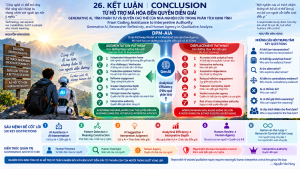
Trong augmentation pathway, researcher xây dựng independent interpretive frame trước khi AI tham gia. AI sau đó đóng vai trò challenger hoặc interlocutor, tạo productive epistemic friction. Quá trình này thúc đẩy Reflexive Engagement, tăng khả năng quay lại evidence, tạo alternative và kiểm tra assumptions. RE tạo điều kiện cho Interpretive Depth; ID củng cố Interpretive Researcher Agency; IRA cung cấp nền tảng cho Interpretive Authority.
Trong displacement pathway, AI tạo initial analytical frame. Researcher tiếp xúc sớm với một architecture có vẻ coherent và có thể chuyển từ generation mode sang evaluation mode. Interpretive Anchoring làm tăng nguy cơ Automation Dependence; dependence làm giảm reflexive challenge; Reflexive Engagement suy giảm có thể kéo theo Interpretive Depth và IRA thấp hơn. Researcher vẫn có thể xuất hiện ở cuối workflow, nhưng presence không chứng minh substantive control.
Song song với cả hai pathways, GenAI có thể tăng Analytical Efficiency.
Chính điều này tạo ra nghịch lý trung tâm:
Một workflow có thể nhanh hơn nhưng không sâu hơn; tiện hơn nhưng không phản tư hơn; có human reviewer nhưng không có meaningful human agency.
Từ toàn bộ argument architecture, sáu mệnh đề được xác lập:
AI Assistance ≠ AI Interpretation.
Pattern Detection ≠ Meaning Construction.
AI Suggestion ≠ Interpretive Judgment.
Analytical Efficiency ≠ Interpretive Depth.
Human Review ≠ Human Agency.
Human-in-the-Loop ≠ Human-in-Control-of-the-Loop.
Mệnh đề cuối cùng là kết luận lý thuyết trung tâm.
Một hệ thống nghiên cứu có trách nhiệm không thể chỉ hỏi liệu con người có xuất hiện tại một checkpoint hay không. Nó phải hỏi liệu researcher có đủ access, competence, alternatives, challenge capacity, modification power, veto power và justification capacity để thực sự kiểm soát những claims mà họ chịu trách nhiệm.
Do đó, mục tiêu của qualitative research trong kỷ nguyên GenAI không phải bảo vệ một mô hình “human-only” đã lỗi thời, cũng không phải chuyển interpretive work sang AI vì hiệu quả.
Mục tiêu là xây dựng một kiến trúc cộng tác trong đó khả năng tính toán và tạo sinh của AI mở rộng nhưng không thay thế những hoạt động nhận thức tạo nên tính phản tư, chiều sâu và trách nhiệm khoa học của researcher.
Nguyên tắc cuối cùng vì vậy là:
Responsible AI-assisted qualitative inquiry requires meaningful human interpretive control throughout the loop.
CÁC TUYÊN BỐ
Tuyên bố về đóng góp của tác giả theo CRediT
Nguyễn Văn Hùng: Xây dựng ý tưởng nghiên cứu (Conceptualization); Phương pháp luận (Methodology); Phát triển lý thuyết (Theoretical Development); Thiết kế nghiên cứu (Investigation Design); Viết bản thảo ban đầu (Writing – Original Draft); Rà soát và hiệu chỉnh bản thảo (Writing – Review & Editing).
Tuyên bố về việc sử dụng AI tạo sinh và các công nghệ hỗ trợ bằng AI
AI tạo sinh (Generative AI – GenAI) và các công nghệ hỗ trợ bằng AI được sử dụng trong quá trình chuẩn bị bản thảo nhằm hỗ trợ hiệu chỉnh ngôn ngữ, rà soát cấu trúc, hỗ trợ tìm kiếm và tổ chức tài liệu tham khảo, cũng như biên tập học thuật. Tác giả chịu hoàn toàn trách nhiệm đối với các lập luận học thuật cốt lõi, các mệnh đề lý thuyết, diễn giải, việc kiểm chứng nguồn tài liệu và toàn bộ nội dung cuối cùng của bản thảo. Tuyên bố chính thức khi nộp bài cần được điều chỉnh phù hợp với chính sách và cách diễn đạt bắt buộc của tạp chí được lựa chọn.
Tuyên bố về tính sẵn có của dữ liệu
Bản thảo hiện tại là một nghiên cứu phát triển lý thuyết và đề xuất giao thức nghiên cứu; do đó, chưa báo cáo bộ dữ liệu thực nghiệm. Thông tin về tính sẵn có của dữ liệu cần được bổ sung sau khi nghiên cứu thực nghiệm đề xuất được triển khai và hoàn tất.
Tuyên bố về đạo đức nghiên cứu
Nghiên cứu thực nghiệm được đề xuất phải được cơ quan hoặc hội đồng đạo đức có thẩm quyền của cơ sở nghiên cứu phê duyệt hoặc xác nhận miễn xem xét, nếu thuộc trường hợp áp dụng, trước khi tiến hành tuyển chọn người tham gia. Khi báo cáo nghiên cứu thực nghiệm, bản thảo cần nêu rõ cơ quan phê duyệt, mã số hoặc số quyết định phê duyệt nếu có, quy trình lấy ý kiến đồng thuận có hiểu biết của người tham gia, các biện pháp bảo vệ quyền riêng tư, phương án xử lý và quản trị dữ liệu, cũng như các biện pháp bảo vệ liên quan đến việc sử dụng dữ liệu định tính trong các hệ thống AI.
Xung đột lợi ích
Tác giả cần công bố đầy đủ mọi xung đột lợi ích tài chính và phi tài chính có liên quan theo chính sách của tạp chí được lựa chọn. Trường hợp không có xung đột lợi ích, tuyên bố cuối cùng cần sử dụng cách diễn đạt chính thức theo yêu cầu của tạp chí mục tiêu.
Nguồn tài trợ
Thông tin về nguồn tài trợ cần được khai báo và trình bày phù hợp với yêu cầu của tạp chí mục tiêu. Trường hợp nghiên cứu không nhận tài trợ bên ngoài, cần sử dụng tuyên bố tương ứng theo mẫu hoặc hướng dẫn dành cho tác giả của tạp chí được lựa chọn.
DECLARATIONS
CRediT Author Statement
Nguyen Van Hung: Conceptualization; Methodology; Theoretical Development; Investigation Design; Writing – Original Draft; Writing – Review & Editing.
Declaration of Generative AI and AI-Assisted Technologies
Generative AI and AI-assisted technologies were used during manuscript preparation for language refinement, structural review, literature support, and scholarly editing. All substantive arguments, theoretical propositions, interpretations, source verification, and final manuscript content remain the responsibility of the author. The final declaration should be adapted to the specific policy and required wording of the journal selected for submission.
Data Availability Statement
No empirical dataset is reported in the present theoretical-development and research-protocol manuscript. Data availability information should be added following implementation of the proposed empirical study.
Ethics Statement
The proposed empirical study must obtain appropriate institutional ethics approval or exemption before participant recruitment where required. The empirical manuscript should report the approving body, approval identifier where applicable, informed-consent procedures, privacy safeguards, data-processing arrangements, and protections governing the use of qualitative data with AI systems.
Conflict of Interest
The author should disclose all applicable financial and non-financial competing interests according to the policy of the selected journal.
Funding
Funding information should be completed in accordance with the target journal’s requirements.
TÀI LIỆU THAM KHẢO
Berger, R. (2015). Now I see it, now I don’t: Researcher’s position and reflexivity in qualitative research. Qualitative Research, 15(2), 219–234.
Braun, V., & Clarke, V. (2006). Using thematic analysis in psychology. Qualitative Research in Psychology, 3(2), 77–101.
Braun, V., & Clarke, V. (2019). Reflecting on reflexive thematic analysis. Qualitative Research in Sport, Exercise and Health, 11(4), 589–597.
Braun, V., & Clarke, V. (2021). Thematic Analysis: A Practical Guide. SAGE.
Braun, V., & Clarke, V. (2022). Conceptual and design thinking for thematic analysis. Qualitative Psychology, 9(1), 3–26.
Creswell, J. W., & Plano Clark, V. L. (2018). Designing and Conducting Mixed Methods Research (3rd ed.). SAGE.
Finlay, L. (2002). “Outing” the researcher: The provenance, process, and practice of reflexivity. Qualitative Health Research, 12(4), 531–545.
Goyanes, M., Lopezosa, C., & Jordá, B. (2025). Thematic analysis of interview data with ChatGPT: Designing and testing a reliable research protocol for qualitative research. Quality & Quantity, 59, 5491–5510.
Guest, G., MacQueen, K. M., & Namey, E. E. (2012). Applied Thematic Analysis. SAGE.
Ibrahim, E. I., & Voyer, A. (2026). Qualitative research with LLM chatbots: Technological reflexivity for interpretative technology. Qualitative Research, 26(1), 133–159.
Jowsey, T., Stapleton, P., Campbell, S., Davidson, A., McGillivray, C., Maugeri, I., Lee, M., & Keogh, J. (2025). Frankenstein, thematic analysis and generative artificial intelligence: Quality appraisal methods and considerations for qualitative research. PLOS ONE, 20(9), e0330217.
King, N., & Brooks, J. M. (2017). Template Analysis for Business and Management Students. SAGE.
Lincoln, Y. S., & Guba, E. G. (1985). Naturalistic Inquiry. SAGE.
Maxwell, J. A. (2013). Qualitative Research Design: An Interactive Approach (3rd ed.). SAGE.
Miles, M. B., Huberman, A. M., & Saldaña, J. (2020). Qualitative Data Analysis: A Methods Sourcebook (4th ed.). SAGE.
Nguyen-Trung, K. (2025). ChatGPT in thematic analysis: Can AI become a research assistant in qualitative research? Quality & Quantity, 59, 4945–4978.
Nowell, L. S., Norris, J. M., White, D. E., & Moules, N. J. (2017). Thematic analysis: Striving to meet the trustworthiness criteria. International Journal of Qualitative Methods, 16, 1–13.
Paulus, T. M., & Lester, J. N. (2022). Doing Qualitative Research in a Digital World. SAGE.
Perkins, M., & Roe, J. (2024). The use of generative AI in qualitative analysis: Inductive thematic analysis with ChatGPT. Journal of Applied Learning & Teaching, 7(1).
Saldaña, J. (2021). The Coding Manual for Qualitative Researchers (4th ed.). SAGE.
Tracy, S. J. (2010). Qualitative quality: Eight “big-tent” criteria for excellent qualitative research. Qualitative Inquiry, 16(10), 837–851.
Xu, W. (2026). Doing thematic analysis in the age of generative AI: Practices, ethics and reflexivity. International Journal of Qualitative Methods, 25.
KIẾN TRÚC LẬP LUẬN TỔNG HỢP
LUẬN ĐIỂM 1
GenAI có năng lực phân tích ngày càng cao.
↓
LUẬN CỨ
Các nghiên cứu cho thấy AI có thể tạo codes/themes nhanh và hỗ trợ qualitative analysis.
↓
PHẢN LUẬN
Tốc độ, similarity và linguistic plausibility không bảo đảm contextual validity hoặc interpretive depth.
↓
LUẬN ĐIỂM 2
Qualitative analysis là meaning construction chứ không chỉ pattern detection.
↓
HỆ QUẢ
AI capability không tự tạo epistemic legitimacy.
↓
LUẬN ĐIỂM 3
Biến quan trọng không chỉ là “AI used/not used” mà là:
Who establishes the initial interpretive frame?
↓
PATHWAY A
Human-First AI Augmentation
→ Productive Epistemic Friction
→ RE ↑
→ ID ↑
→ IRA ↑
→ IA ↑
PATHWAY B
AI-First Framing
→ Interpretive Anchoring
→ AD ↑
→ RE ↓
→ ID ↓
→ IRA ↓
→ IA ↓
PARALLEL PATHWAY
AI Assistance → AE ↑
nhưng:
AE ≠ ID
↓
GOVERNANCE CONSEQUENCE
Human Presence
≠ Human Oversight
≠ Human Agency
≠ Meaningful Human Interpretive Control
≠ Interpretive Authority
↓
KẾT LUẬN
Human-in-the-Loop ≠ Human-in-Control-of-the-Loop.
↓
NGUYÊN TẮC CUỐI CÙNG
Responsible AI-assisted qualitative inquiry requires meaningful human interpretive control throughout the loop.
