
FROM SCHOOL AUTONOMY TO EDUCATIONAL OUTCOMES: THE ROLES OF RESOURCES AND ACCOUNTABILITY IN SCHOOL GOVERNANCE
Nguyễn Văn Hùng
HIGHLIGHTS
- Tái khái niệm hóa tự chủ trường học (school autonomy) như không gian quyết định có điều kiện (conditional decision space) thay vì một kết quả quản trị tự thân.
- Phát triển Khung Tự chủ–Nguồn lực–Năng lực–Trách nhiệm giải trình–Kết quả (Autonomy–Resources–Capability–Accountability–Outcomes Framework – ARCAO).
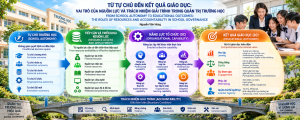
- Đề xuất cơ chế trung tâm: Tự chủ (Autonomy) → Tiếp cận và triển khai nguồn lực (Resource Access and Deployment) → Năng lực tổ chức (Organizational Capability) → Kết quả giáo dục (Educational Outcomes).
- Phân biệt quyền được quyết định (authority to decide) với khả năng hành động (capacity to act); nguồn lực sẵn có (resource availability) với triển khai nguồn lực (resource deployment); và triển khai nguồn lực (resource deployment) với năng lực tổ chức (organizational capability).
- Định vị trách nhiệm giải trình (accountability) như điều kiện biên (boundary condition) và kiểm định hai vị trí điều tiết cạnh tranh.
- Đề xuất thiết kế dọc–đa nguồn–đa cấp (longitudinal multi-source multilevel design) nhằm giảm sai lệch phương pháp chung (common-method bias) và tăng khả năng phân biệt các giải thích cạnh tranh.
TÓM TẮT (ABSTRACT)
Bối cảnh (Background)
Tự chủ trường học (school autonomy) là một thành tố quan trọng của các cải cách quản trị giáo dục (educational governance) theo hướng phân quyền, dựa trên lập luận rằng việc đưa thẩm quyền quyết định (decision authority) đến gần nhà trường có thể nâng cao tính đáp ứng, khả năng thích ứng và mức độ phù hợp của quyết định với nhu cầu người học và bối cảnh địa phương. Tuy nhiên, quyền quyết định không tự động chuyển thành kết quả giáo dục (educational outcomes). Một nhà trường có thể được trao quyền tự chủ nhưng vẫn thiếu nguồn lực hoặc thiếu năng lực tổ chức để chuyển quyền đó thành hành động giáo dục có chất lượng.
Vấn đề nghiên cứu (Research Problem)
Bốn hạn chế liên kết vẫn tồn tại. Thứ nhất, quan hệ Tự chủ → Kết quả (Autonomy → Outcomes) thường được kiểm định như một tác động trực tiếp, trong khi cơ chế trung gian chưa được giải thích đầy đủ. Thứ hai, literature chưa luôn phân biệt nguồn lực sẵn có (resource availability) với khả năng triển khai nguồn lực (resource deployment). Thứ ba, năng lực tổ chức (organizational capability) chưa được định vị rõ như cơ chế chuyển resources thành collective action. Thứ tư, trách nhiệm giải trình (accountability) thường được xem như một predictor độc lập thay vì một điều kiện biên (boundary condition) của quá trình chuyển hóa autonomy thành educational value.
Mục tiêu (Purpose)
Nghiên cứu phát triển ARCAO với cơ chế trung tâm phối hợp: TỰ CHỦ (AUTONOMY) → TIẾP CẬN VÀ TRIỂN KHAI NGUỒN LỰC (RESOURCE ACCESS AND DEPLOYMENT) → NĂNG LỰC TỔ CHỨC (ORGANIZATIONAL CAPABILITY) → KẾT QUẢ GIÁO DỤC (EDUCATIONAL OUTCOMES). Trong đó, trách nhiệm giải trình (accountability) được kiểm định như điều kiện biên (boundary condition).
Luận đề lý thuyết (Theoretical Thesis)
ARCAO lập luận rằng tự chủ (autonomy) tạo không gian quyết định nhưng không tự tạo giá trị giáo dục; nguồn lực (resources) xác định tập hợp hành động khả thi nhưng không tự trở thành năng lực; năng lực tổ chức (organizational capability) chuyển resources thành hành động tập thể ổn định, có khả năng học hỏi và thích ứng; còn trách nhiệm giải trình (accountability) định hình mức độ quyền tự chủ được sử dụng minh bạch, có thể giải trình và có khả năng sửa sai.
Phương pháp đề xuất (Proposed Method)
Nghiên cứu đề xuất thiết kế dọc–đa nguồn–đa cấp (longitudinal multi-source multilevel design). Quy trình gồm xác định miền khái niệm (construct-domain specification), đánh giá giá trị nội dung (content validation), phỏng vấn nhận thức (cognitive interviewing), nghiên cứu thử nghiệm (pilot study), phân tích nhân tố khám phá (EFA), phân tích nhân tố khẳng định (CFA) và mô hình phương trình cấu trúc đa cấp (MSEM). Phân tích công suất Monte Carlo (Monte Carlo power analysis) được đề xuất cho chuỗi trung gian và hiệu ứng điều tiết. Các mô hình cạnh tranh (competing models) và mô hình đảo chiều (reverse-ordering models) được kiểm định nhằm xử lý các giải thích thay thế.
Đóng góp (Contribution)
Nghiên cứu chuyển câu hỏi từ “Tự chủ có tạo kết quả tốt hơn không?” sang “Tự chủ tạo giá trị giáo dục thông qua nguồn lực và năng lực tổ chức nào, dưới kiến trúc trách nhiệm giải trình nào?”. Qua đó, ARCAO kết nối quản trị thể chế (institutional governance), triển khai nguồn lực (resource deployment) và năng lực tổ chức (organizational capability) trong một cơ chế có thể kiểm định và bác bỏ.
Từ khóa (Keywords): tự chủ trường học (school autonomy); nguồn lực trường học (school resources); triển khai nguồn lực (resource deployment); năng lực tổ chức (organizational capability); trách nhiệm giải trình (accountability); quản trị trường học (school governance); kết quả giáo dục (educational outcomes); ARCAO.
ABSTRACT
Background
School autonomy has become a prominent component of decentralization-oriented reforms in educational governance, reflecting the premise that locating decision authority closer to schools can enhance responsiveness, adaptability, and the contextual alignment of decisions with learner needs and local conditions. Yet decision authority does not automatically translate into improved educational outcomes. Schools may be granted substantial autonomy while lacking the resources or organizational capability required to convert discretionary authority into effective and sustainable educational action. Understanding school autonomy therefore requires moving beyond the amount of authority delegated to schools toward examining the organizational mechanisms through which that authority can generate educational value.
Research Problem
Four interrelated limitations remain in the literature. First, the relationship between school autonomy and educational outcomes is often examined as a direct effect, leaving the mechanisms through which autonomy may generate educational value insufficiently specified. Second, existing research does not always distinguish clearly between resource availability and resource deployment, despite their different theoretical functions. Third, organizational capability has not been sufficiently positioned as the mechanism through which available and deployable resources are transformed into coordinated collective action. Fourth, accountability is frequently treated as an independent predictor rather than as a boundary condition that may determine when and how autonomy is translated into educational value.
Purpose
This study develops the Autonomy–Resources–Capability–Accountability–Outcomes (ARCAO) Framework, organized around the following central mechanism: SCHOOL AUTONOMY → RESOURCE ACCESS AND DEPLOYMENT → ORGANIZATIONAL CAPABILITY → EDUCATIONAL OUTCOMES. Within this framework, accountability is theorized and tested as a boundary condition rather than assumed to exert a uniformly positive independent effect.
Theoretical Thesis
ARCAO advances four interconnected propositions. School autonomy creates decision space but does not, by itself, create educational value. Resources define the feasible set of organizational actions but do not automatically constitute capability. Organizational capability transforms resources into coordinated, sustained, learning-oriented, and adaptive collective action. Accountability, in turn, shapes the conditions under which discretionary authority is exercised transparently, actors can be required to provide reasoned accounts of their decisions, and ineffective or inappropriate actions can be identified and corrected. Educational value therefore depends not simply on whether schools possess autonomy, but on whether authority can be converted into appropriately deployed resources and organizational capability within a proportionate accountability architecture.
Proposed Method
The study proposes a longitudinal, multi-source, multilevel design. The validation process comprises construct-domain specification, content validation, cognitive interviewing, pilot testing, exploratory factor analysis (EFA), confirmatory factor analysis (CFA), and multilevel structural equation modelling (MSEM). Monte Carlo power analysis is proposed to determine the sample requirements for the hypothesized serial indirect effect and moderation effects. The empirical protocol further incorporates competing models, reverse-ordering models, measurement-invariance testing, and robustness analyses to evaluate alternative explanations and reduce the risk of theoretically predetermined model confirmation.
Contribution
The study reframes the central question from “Does school autonomy improve educational outcomes?” to “Through what resource and organizational-capability mechanisms, and under what accountability conditions, can school autonomy generate educational value?” In doing so, ARCAO connects institutional governance, resource deployment, organizational capability, and educational outcomes within an integrated mechanism that is empirically testable and theoretically falsifiable. The framework contributes to school-governance research by distinguishing authority to decide from capacity to act, and by positioning accountability as a contingent governance condition shaping the conversion of autonomy into educational value.
Keywords: school autonomy; school resources; resource deployment; organizational capability; accountability; school governance; educational outcomes; ARCAO.
- GIỚI THIỆU (INTRODUCTION)
1.1. Từ phân quyền đến giá trị giáo dục (From Decentralization to Educational Value)
Các cải cách phân quyền giáo dục (educational decentralization) thường dựa trên giả định rằng những chủ thể gần quá trình dạy học có nhiều thông tin bối cảnh hơn và do đó có khả năng đưa ra quyết định phù hợp hơn. Theo logic này, tự chủ trường học (school autonomy) có thể giúp nhà trường phản ứng nhanh hơn trước nhu cầu của người học, điều chỉnh nguồn lực phù hợp hơn với ưu tiên địa phương và tạo không gian cho đổi mới.
Tuy nhiên, autonomy trước hết là một cấu trúc phân bổ quyền quyết định. Nó xác định ai được quyết định và trong phạm vi nào; nó không tự xác định tổ chức có đủ resources, expertise hoặc implementation capacity để biến quyết định thành practice. Vì vậy, cần phân biệt rõ: THẨM QUYỀN QUYẾT ĐỊNH (DECISION AUTHORITY) không đồng nhất với KHẢ NĂNG HÀNH ĐỘNG (CAPACITY TO ACT).
Một trường có thể có tự chủ nhân sự (personnel autonomy) nhưng không tiếp cận được giáo viên phù hợp; có tự chủ tài chính (financial autonomy) nhưng ngân sách quá hạn chế; có tự chủ chương trình (curricular autonomy) nhưng thiếu expertise; hoặc có data nhưng thiếu năng lực sử dụng bằng chứng (evidence-use capability). Do đó: TỰ CHỦ (AUTONOMY) không đồng nhất với NĂNG LỰC (CAPABILITY) và cũng không đồng nhất với KẾT QUẢ (OUTCOMES).
1.2. Vấn đề “hộp đen” của tự chủ (The Autonomy Black Box)
Mô hình giản lược TỰ CHỦ (AUTONOMY) → KẾT QUẢ GIÁO DỤC (EDUCATIONAL OUTCOMES) không giải thích đầy đủ những gì xảy ra giữa quyền quyết định và educational value.
ARCAO mở “hộp đen” này bằng hai tầng chuyển hóa. Tầng thứ nhất là TỰ CHỦ (AUTONOMY) → TRIỂN KHAI NGUỒN LỰC (RESOURCE DEPLOYMENT): Autonomy có thể cho phép school actors ưu tiên, huy động, tái phân bổ và kết hợp resources phù hợp hơn với local needs. Tầng thứ hai là NGUỒN LỰC (RESOURCES) → NĂNG LỰC TỔ CHỨC (ORGANIZATIONAL CAPABILITY): Resources chỉ là potential inputs; chúng phải được kết hợp thành professional routines, collaborative practices, evidence-use processes, implementation capability và organizational learning trước khi có thể tạo outcomes.
1.3. Vấn đề trách nhiệm giải trình (The Accountability Problem)
Nếu autonomy tạo discretion, một câu hỏi tiếp theo xuất hiện: Điều gì bảo đảm quyền tùy nghi được sử dụng cho mục đích giáo dục có thể giải trình? Câu trả lời không thể chỉ là “nhiều accountability hơn”.
Trách nhiệm giải trình (accountability) có thể hỗ trợ responsible autonomy nếu nó tạo transparency, answerability, evidence use, oversight và corrective capacity. Nhưng accountability mang tính trừng phạt, cứng nhắc hoặc quá phụ thuộc vào narrow metrics có thể làm giảm experimentation và professional judgment. Do đó: ACCOUNTABILITY QUALITY không đồng nhất với ACCOUNTABILITY QUANTITY.
1.4. Câu hỏi nghiên cứu (Research Questions)
RQ1: Tự chủ trường học (school autonomy) có liên hệ như thế nào với tiếp cận và triển khai nguồn lực (resource access and deployment)?
RQ2: Triển khai nguồn lực (resource deployment) được chuyển thành năng lực tổ chức (organizational capability) như thế nào?
RQ3: Resources và OC có tạo thành chuỗi trung gian nối tiếp (serial mediation) giữa autonomy và educational outcomes hay không?
RQ4: Trách nhiệm giải trình (accountability) điều kiện hóa quá trình chuyển autonomy thành educational value ở giai đoạn nào?
- CƠ SỞ LÝ THUYẾT TÍCH HỢP (INTEGRATED THEORETICAL FOUNDATIONS)
2.1. Tự chủ như không gian quyết định (Autonomy as Decision Space)
Nghiên cứu định nghĩa tự chủ trường học (school autonomy) là mức độ nhà trường và các chủ thể được ủy quyền có thẩm quyền chính thức và thực tế để đưa ra các quyết định có ý nghĩa trong những miền được xác định và trong giới hạn của institutional framework.
Các miền gồm: Tự chủ nhân sự (Personnel Autonomy), Tự chủ tài chính (Financial Autonomy), Tự chủ chương trình (Curricular Autonomy), Tự chủ sư phạm (Pedagogical Autonomy) và Tự chủ tổ chức (Organizational Autonomy).
Đặc biệt cần phân biệt TỰ CHỦ CHÍNH THỨC (FORMAL AUTONOMY) với TỰ CHỦ THỰC CHẤT (ENACTED AUTONOMY). Formal autonomy là authority được quy định; enacted autonomy là mức độ authority thực sự được sử dụng. Hai khái niệm này không đồng nhất với nhau.
2.2. Nguồn lực sẵn có và triển khai nguồn lực (Resource Availability and Resource Deployment)
Một refinement quan trọng của ARCAO là không giả định AUTONOMY → MORE RESOURCES. Autonomy không tự sản sinh tiền, nhân lực, expertise hoặc technology. Cơ chế hợp lý hơn là: AUTONOMY → GREATER CAPACITY TO PRIORITIZE, MOBILIZE, REALLOCATE, COMBINE AND DEPLOY RESOURCES.
Nguồn lực gồm Nguồn lực tài chính (Financial Resources), Nguồn nhân lực (Human Resources), Nguồn lực chuyên môn (Professional Resources), Nguồn lực dữ liệu và thông tin (Data and Information Resources), Nguồn lực công nghệ (Technological Resources), Nguồn lực thời gian (Time Resources) và Nguồn lực quan hệ (Relational Resources).
Ba tầng phải được tách biệt: NGUỒN LỰC SẴN CÓ (RESOURCE AVAILABILITY) → TRIỂN KHAI NGUỒN LỰC (RESOURCE DEPLOYMENT) → NĂNG LỰC TỔ CHỨC (ORGANIZATIONAL CAPABILITY).
2.3. Năng lực tổ chức (Organizational Capability)
Năng lực tổ chức (organizational capability – OC) là khả năng tập thể của nhà trường trong việc huy động, kết hợp, sử dụng và tái cấu hình kiến thức, chuyên môn, quan hệ, resources và routines để thực hiện mục tiêu giáo dục, giải quyết problems và duy trì improvement.
OC bao gồm Năng lực chuyên môn (Professional Capability), Năng lực hợp tác (Collaborative Capability), Năng lực sử dụng bằng chứng (Evidence-Use Capability), Năng lực thực thi (Implementation Capability), Năng lực học tập tổ chức (Organizational Learning Capability) và Năng lực thích ứng (Adaptive Capability).
Hai ranh giới đặc biệt quan trọng là: NGUỒN LỰC CHUYÊN MÔN (PROFESSIONAL RESOURCES) không đồng nhất với NĂNG LỰC CHUYÊN MÔN (PROFESSIONAL CAPABILITY); và TRIỂN KHAI NGUỒN LỰC (RESOURCE DEPLOYMENT) không đồng nhất với NĂNG LỰC THỰC THI (IMPLEMENTATION CAPABILITY). Resource deployment mô tả cách resources được căn chỉnh và sử dụng; implementation capability mô tả khả năng tập thể của tổ chức biến quyết định thành practice ổn định.
2.4. Trách nhiệm giải trình như điều kiện biên (Accountability as a Boundary Condition)
Trách nhiệm giải trình (accountability) được định nghĩa như một architecture phối hợp: KỲ VỌNG (EXPECTATIONS) → MINH BẠCH (TRANSPARENCY) → BẰNG CHỨNG (EVIDENCE) → KHẢ NĂNG GIẢI TRÌNH (ANSWERABILITY) → GIÁM SÁT (OVERSIGHT) → KHẢ NĂNG SỬA SAI (CORRECTIVE CAPACITY).
Hai failure modes được dự đoán: TỰ CHỦ KHÔNG TRÁCH NHIỆM GIẢI TRÌNH (AUTONOMY WITHOUT ACCOUNTABILITY) dẫn đến RỦI RO QUẢN TRỊ (GOVERNANCE RISK); và TRÁCH NHIỆM GIẢI TRÌNH KHÔNG TỰ CHỦ (ACCOUNTABILITY WITHOUT AUTONOMY) dẫn đến BẪY TUÂN THỦ (COMPLIANCE TRAP).
- KHOẢNG TRỐNG NGHIÊN CỨU (RESEARCH GAPS)
Nghiên cứu xác định năm khoảng trống. Khoảng trống 1 – Tác động trực tiếp (Direct-Effect Gap): literature chưa giải thích đầy đủ mechanism giữa autonomy và outcomes. Khoảng trống 2 – Nguồn lực (Resource Gap): chưa phân biệt đủ authority over resources, resource availability và resource deployment. Khoảng trống 3 – Năng lực tổ chức (Organizational Capability Gap): chưa xác định rõ mechanism chuyển resources thành coordinated educational action. Khoảng trống 4 – Trách nhiệm giải trình (Accountability Gap): accountability thường được xem như predictor thay vì boundary condition. Khoảng trống 5 – Cấu hình và nội sinh (Configuration and Endogeneity Gap): cùng mức autonomy có thể tạo outcomes khác nhau do resources, prior performance, socioeconomic composition, organizational capability và institutional context.
- KHUNG ARCAO (THE ARCAO FRAMEWORK)
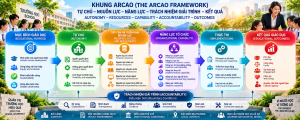
TỰ CHỦ–NGUỒN LỰC–NĂNG LỰC–TRÁCH NHIỆM GIẢI TRÌNH–KẾT QUẢ
AUTONOMY–RESOURCES–CAPABILITY–ACCOUNTABILITY–OUTCOMES
Cơ chế trung tâm phối hợp: MỤC ĐÍCH GIÁO DỤC (EDUCATIONAL PURPOSE) → TỰ CHỦ (AUTONOMY) → TIẾP CẬN VÀ TRIỂN KHAI NGUỒN LỰC (RESOURCE ACCESS AND DEPLOYMENT) → NĂNG LỰC TỔ CHỨC (ORGANIZATIONAL CAPABILITY) → THỰC THI (IMPLEMENTATION) → KẾT QUẢ GIÁO DỤC (EDUCATIONAL OUTCOMES), với TRÁCH NHIỆM GIẢI TRÌNH (ACCOUNTABILITY) là ĐIỀU KIỆN BIÊN (BOUNDARY CONDITION).
- PHÁT TRIỂN GIẢ THUYẾT (HYPOTHESIS DEVELOPMENT)
H1: Tự chủ trường học (school autonomy) có quan hệ tích cực với tiếp cận và triển khai nguồn lực phù hợp bối cảnh (context-responsive resource access and deployment).
H2: Triển khai nguồn lực (resource deployment) có quan hệ tích cực với năng lực tổ chức (organizational capability).
H3: Năng lực tổ chức (organizational capability) có quan hệ tích cực với kết quả giáo dục (educational outcomes).
H4: Tự chủ trường học (school autonomy) có quan hệ với kết quả giáo dục (educational outcomes) sau khi tính đến các đặc điểm quan trọng của nhà trường và bối cảnh.
H5: Tiếp cận và triển khai nguồn lực (resource access and deployment) trung gian hóa mối quan hệ giữa tự chủ trường học (school autonomy) và năng lực tổ chức (organizational capability).
H6 – Giả thuyết cơ chế trung tâm (Primary Mechanism Hypothesis): Tiếp cận và triển khai nguồn lực (resource access and deployment) và năng lực tổ chức (organizational capability) tạo thành chuỗi trung gian nối tiếp (serial mediation) giữa tự chủ trường học (school autonomy) và kết quả giáo dục (educational outcomes): AUTONOMY → RESOURCES → OC → EO.
H7 – Đặc tả điều tiết 1 (Moderation Specification 1): Trách nhiệm giải trình (accountability) điều tiết quan hệ Tự chủ → Triển khai nguồn lực (Autonomy → Resource Deployment).
H8 – Đặc tả điều tiết cạnh tranh 2 (Competing Moderation Specification 2): Trách nhiệm giải trình (accountability) điều tiết quan hệ Năng lực tổ chức → Kết quả giáo dục (Organizational Capability → Educational Outcomes).
H7 và H8 phải được kiểm định cạnh tranh; không mặc định cả hai đều tồn tại. Đây cũng là logic đã được xác định trong bản nguồn.
- MÔ HÌNH CẠNH TRANH (COMPETING MODELS)
Mô hình A (Model A): Autonomy → EO. Mô hình B (Model B): Autonomy → Resources → EO. Mô hình C (Model C): Autonomy → OC → EO. Mô hình D (Model D): Autonomy → Resources → OC → EO. Mô hình E (Model E): Autonomy × Accountability → Resources → OC → EO. Mô hình F (Model F): Autonomy → Resources → OC × Accountability → EO. Mô hình G (Model G): Resources → Autonomy → OC → EO.
Bổ sung mô hình lựa chọn dựa trên thành tích trước đó (prior-performance selection model): PRIOR PERFORMANCE → AUTONOMY để kiểm tra khả năng các trường vốn có kết quả tốt hơn được trao autonomy lớn hơn.
- MA TRẬN RANH GIỚI CẤU TRÚC (CONSTRUCT-BOUNDARY MATRIX)
| Cấu trúc (Construct) | Câu hỏi | Bản chất | Vị trí |
| Tự chủ (Autonomy) | Ai được quyền quyết định? | Decision authority | Antecedent |
| Nguồn lực sẵn có (Resource Availability) | Nhà trường có gì? | Inputs/assets | Context/input |
| Triển khai nguồn lực (Resource Deployment) | Resources được huy động và căn chỉnh ra sao? | Resource-use process | Mediator 1 |
| Năng lực tổ chức (Organizational Capability) | Tổ chức có khả năng làm gì ổn định? | Collective capability | Mediator 2 |
| Trách nhiệm giải trình (Accountability) | Ai phải giải trình và sửa sai? | Governance architecture | Boundary condition |
| Kết quả giáo dục (Educational Outcomes) | Giá trị giáo dục nào được tạo ra? | Student/system outcomes | Outcome |
Ba discriminant tests bắt buộc: AUTONOMY ≠ ACCOUNTABILITY; RESOURCE DEPLOYMENT ≠ ORGANIZATIONAL CAPABILITY; RESOURCE AVAILABILITY ≠ RESOURCE DEPLOYMENT.
- KIẾN TRÚC ĐO LƯỜNG (MEASUREMENT ARCHITECTURE)
8.1. Tự chủ (Autonomy) được đo theo personnel, finance, curriculum, pedagogy và organization; đồng thời phân biệt tự chủ chính thức (formal autonomy) và tự chủ thực chất (enacted autonomy).
8.2. Nguồn lực (Resources) được đo cả mức độ sẵn có (availability) và khả năng triển khai (deployment) của financial, human, professional, technological, informational, time và relational resources.
8.3. Năng lực tổ chức (Organizational Capability) được đo sáu domains: professional, collaborative, evidence-use, implementation, organizational learning và adaptive capability.
8.4. Trách nhiệm giải trình (Accountability) được đo khả năng giải trình (answerability), minh bạch (transparency), giám sát (oversight) và khả năng sửa sai (corrective capacity).
8.5. Kết quả giáo dục (Educational Outcomes) được đo: học tập (learning); công bằng (equity); sự tham gia (engagement); phúc lợi (well-being); quyền chủ thể người học (learner agency). So sánh MÔ HÌNH KẾT QUẢ BẬC CAO (HIGHER-ORDER EO MODEL) với MÔ HÌNH KẾT QUẢ TƯƠNG QUAN (CORRELATED-OUTCOMES MODEL).
- THIẾT KẾ NGHIÊN CỨU (RESEARCH DESIGN)
Thiết kế ưu tiên: DỌC – ĐA NGUỒN – ĐA CẤP (LONGITUDINAL – MULTI-SOURCE – MULTILEVEL).
Temporal ordering: T1 → TỰ CHỦ + TRÁCH NHIỆM GIẢI TRÌNH (AUTONOMY + ACCOUNTABILITY); T2 → TRIỂN KHAI NGUỒN LỰC (RESOURCE DEPLOYMENT); T3 → NĂNG LỰC TỔ CHỨC (ORGANIZATIONAL CAPABILITY); T4 → KẾT QUẢ GIÁO DỤC (EDUCATIONAL OUTCOMES).
Kiến trúc nguồn dữ liệu: Lãnh đạo trường học (School Leaders) → Autonomy; Hồ sơ hành chính + lãnh đạo (Administrative Records + Leaders) → Resource Availability; Giáo viên/lãnh đạo trung gian (Teachers/Middle Leaders) → Resource Deployment + OC; Nhiều chủ thể (Multiple Actors) → Accountability; Học sinh + hồ sơ hành chính (Students + Administrative Records) → EO.
- CẤP ĐỘ PHÂN TÍCH VÀ TÍNH HỢP LỆ ĐO LƯỜNG (LEVELS OF ANALYSIS AND MEASUREMENT VALIDITY)
Nếu constructs được diễn giải ở school level: NHẬN THỨC CÁ NHÂN (INDIVIDUAL PERCEPTION) không đồng nhất với CẤU TRÚC CẤP TRƯỜNG (SCHOOL-LEVEL CONSTRUCT).
Aggregation cần: ICC(1), ICC(2), độ đồng thuận trong nhóm (within-group agreement), phương sai giữa trường (between-school variance).
Measurement evaluation gồm: Cronbach’s α; McDonald’s ω; độ tin cậy tổng hợp (composite reliability – CR); phương sai trích trung bình (average variance extracted – AVE); HTMT; giá trị hội tụ (convergent validity); giá trị phân biệt (discriminant validity). Bất biến đo lường (measurement invariance) cần được kiểm định theo cấp học, loại trường, khu vực và bối cảnh đô thị–nông thôn khi sample cho phép.
- CỠ MẪU VÀ CÔNG SUẤT THỐNG KÊ (SAMPLE SIZE AND STATISTICAL POWER)
Không sử dụng quy tắc “10 respondents/item”. Ưu tiên PHÂN TÍCH CÔNG SUẤT MONTE CARLO (MONTE CARLO POWER ANALYSIS). Simulation phải xét: hệ số tải nhân tố (factor loadings); hệ số tương quan nội cụm (intraclass correlation – ICC); số trường; cluster size; structural path coefficients; interaction effects; missingness; estimator; serial indirect effect. Primary power target là AUTONOMY → RESOURCES → OC → EO và không chỉ từng direct coefficient riêng lẻ.
- NỘI SINH VÀ GIẢI THÍCH CẠNH TRANH (ENDOGENEITY AND ALTERNATIVE EXPLANATIONS)
Đây là phần cần được xem như một thành tố cốt lõi của design. Ít nhất năm threats phải được kiểm tra: LỰA CHỌN DỰA TRÊN THÀNH TÍCH (PERFORMANCE-BASED SELECTION) — high-performing schools có thể được trao autonomy lớn hơn; LỢI THẾ NGUỒN LỰC (RESOURCE ADVANTAGE) — resource-rich schools có thể đồng thời có autonomy và outcomes cao; NHÂN QUẢ ĐẢO CHIỀU (REVERSE CAUSALITY) — OC mạnh có thể giúp school actors thương lượng hoặc thực thi autonomy tốt hơn; BIẾN BỊ BỎ SÓT (OMITTED-VARIABLE BIAS) — socioeconomic composition, school size, leadership quality hoặc institutional support có thể tác động nhiều constructs; NỘI SINH TRONG NHẬN THỨC (PERCEPTUAL ENDOGENEITY) — respondents ở successful schools có thể đánh giá autonomy, resources và accountability tích cực hơn.
Vì vậy robustness protocol cần bao gồm: prior outcomes; school socioeconomic composition; school size; educational level; geographic context; resource advantage; alternative temporal ordering; reverse models. Nếu có policy reform tạo variation ngoại sinh, các thiết kế sai biệt trong sai biệt (difference-in-differences) hoặc thí nghiệm tự nhiên (natural experiments) nên được ưu tiên.
- CHIẾN LƯỢC PHÂN TÍCH (ANALYTICAL STRATEGY)
Trình tự phối hợp: EFA → CFA → RELIABILITY → CONVERGENT VALIDITY → DISCRIMINANT VALIDITY → MEASUREMENT INVARIANCE → SEM/MSEM → SERIAL MEDIATION → MODERATION → MODERATED MEDIATION → COMPETING MODELS → ROBUSTNESS TESTS.
H6 kiểm định: A → R → OC → EO. H7 kiểm định interaction: AUTONOMY × ACCOUNTABILITY → RESOURCE DEPLOYMENT. H8 kiểm định competing interaction: OC × ACCOUNTABILITY → EO.
Indirect effects phải được đánh giá bằng khoảng tin cậy bootstrap (bootstrap confidence intervals) hoặc simulation-based intervals thích hợp với multilevel design.
- KHUNG DIỄN GIẢI KẾT QUẢ (RESULTS INTERPRETATION FRAMEWORK)
Phiên bản lý thuyết hiện tại không báo cáo empirical results. Nếu H6 được hỗ trợ, kết luận phù hợp là: “Kết quả phù hợp với một cơ chế trong đó tự chủ trường học liên hệ với khả năng triển khai nguồn lực phù hợp bối cảnh; triển khai nguồn lực liên hệ với năng lực tổ chức; và năng lực tổ chức tiếp tục liên hệ với kết quả giáo dục.”
Không viết: “Autonomy causes educational outcomes” trừ khi research design thực sự hỗ trợ causal identification.
Nếu H7 mạnh hơn H8, accountability có thể chủ yếu hoạt động ở giai đoạn chuyển quyền tự chủ thành triển khai nguồn lực (autonomy-to-resource conversion stage). Nếu H8 mạnh hơn H7, accountability có thể chủ yếu hoạt động ở giai đoạn chuyển năng lực thành kết quả (capability-to-outcome conversion stage). Nếu cả hai không được hỗ trợ, theoretical claim về accountability như boundary condition phải được sửa đổi. Nếu reverse model vượt ARCAO, causal ordering ban đầu phải được xem xét lại. Đây là KHẢ NĂNG BÁC BỎ (FALSIFIABILITY).
- THẢO LUẬN (DISCUSSION)
15.1. Tự chủ là không gian quyết định, không phải kết quả (Autonomy Is Decision Space, Not an Outcome)
ARCAO tái định vị autonomy như decision space. Nó mở khả năng hành động nhưng không bảo đảm action quality. Logic phối hợp là: THẨM QUYỀN (AUTHORITY) → NGUỒN LỰC (RESOURCES) → NĂNG LỰC (CAPABILITY) → HÀNH ĐỘNG (ACTION) → KẾT QUẢ (OUTCOMES) trong KIẾN TRÚC TRÁCH NHIỆM GIẢI TRÌNH (ACCOUNTABILITY ARCHITECTURE).
15.2. Quyền lực không đồng nghĩa với năng lực (Authority Does Not Equal Capability)
Một policy có thể decentralize authority nhưng không decentralize expertise, funding, information hoặc implementation capacity. Do đó: AUTHORITY TO ACT không đồng nhất với CAPACITY TO ACT. Policy evaluation phải đồng thời hỏi: Bao nhiêu quyền được chuyển giao? Và: Nhà trường có đủ khả năng sử dụng quyền đó hay không?
15.3. Nguồn lực không đồng nghĩa với năng lực (Resources Do Not Equal Capability)
Resources là potential. Capability là organized capacity for action. HAVING RESOURCES không đồng nhất với BEING CAPABLE. Hai schools có nguồn lực tương đương vẫn có thể tạo outcomes khác nhau vì khác nhau về collaboration, evidence use, implementation, learning và adaptation.
15.4. Accountability không đồng nghĩa với kiểm soát (Accountability Does Not Equal Control)
Accountability tốt phải tạo: minh bạch mà không tạo giám sát quá mức (transparency without surveillance overload); giải trình mà không tạo văn hóa đổ lỗi (answerability without blame culture); giám sát mà không vi mô hóa quản lý (oversight without micromanagement); sửa sai mà không triệt tiêu phán đoán nghề nghiệp (correction without suppressing professional judgment). Do đó: CHẤT LƯỢNG TRÁCH NHIỆM GIẢI TRÌNH (ACCOUNTABILITY QUALITY) lớn hơn SỐ LƯỢNG CƠ CHẾ TRÁCH NHIỆM GIẢI TRÌNH (ACCOUNTABILITY QUANTITY).
15.5. Công bằng là điều kiện của tự chủ (Equity as a Condition of Autonomy)
Nếu advantaged schools có nhiều professional, technological và relational resources hơn, cùng một autonomy reform có thể tạo unequal benefits. TỰ CHỦ BÌNH ĐẲNG (EQUAL AUTONOMY) không đồng nhất với KHẢ NĂNG HƯỞNG LỢI BÌNH ĐẲNG (EQUAL CAPACITY TO BENEFIT). Vì vậy resource equity phải là một phần của governance design, không chỉ là control variable.
- ĐÓNG GÓP LÝ THUYẾT (THEORETICAL CONTRIBUTIONS)
Nghiên cứu tạo bảy đóng góp. Thứ nhất, chuyển từ tác động của tự chủ (autonomy effect) sang cơ chế của tự chủ (autonomy mechanism). Thứ hai, phân biệt thẩm quyền (authority) và năng lực (capability). Thứ ba, phân biệt nguồn lực sẵn có (resource availability), triển khai nguồn lực (resource deployment) và năng lực tổ chức (organizational capability). Thứ tư, phân biệt tự chủ chính thức (formal autonomy) và tự chủ thực chất (enacted autonomy). Thứ năm, định vị trách nhiệm giải trình (accountability) như điều kiện biên (boundary condition) thay vì universal positive predictor. Thứ sáu, kết nối QUẢN TRỊ THỂ CHẾ (INSTITUTIONAL GOVERNANCE) → TRIỂN KHAI NGUỒN LỰC (RESOURCE DEPLOYMENT) → NĂNG LỰC TỔ CHỨC (ORGANIZATIONAL CAPABILITY) → GIÁ TRỊ GIÁO DỤC (EDUCATIONAL VALUE). Thứ bảy, tăng khả năng bác bỏ (falsifiability) thông qua competing, reverse và resource-confounding models.
- HÀM Ý THỰC TIỄN VÀ CHÍNH SÁCH (PRACTICAL AND POLICY IMPLICATIONS)
ARCAO xác định bốn failure modes: TỰ CHỦ KHÔNG NGUỒN LỰC (AUTONOMY WITHOUT RESOURCES) dẫn đến QUYỀN TÙY NGHI KHÔNG ĐƯỢC BẢO ĐẢM NGUỒN LỰC (UNFUNDED DISCRETION); NGUỒN LỰC KHÔNG NĂNG LỰC (RESOURCES WITHOUT CAPABILITY) dẫn đến TIỀM NĂNG KHÔNG ĐƯỢC KHAI THÁC (UNDERUTILIZED POTENTIAL); TỰ CHỦ KHÔNG TRÁCH NHIỆM GIẢI TRÌNH (AUTONOMY WITHOUT ACCOUNTABILITY) dẫn đến RỦI RO QUẢN TRỊ (GOVERNANCE RISK); TRÁCH NHIỆM GIẢI TRÌNH KHÔNG TỰ CHỦ (ACCOUNTABILITY WITHOUT AUTONOMY) dẫn đến BẪY TUÂN THỦ (COMPLIANCE TRAP).
Do đó, sự phối hợp TỰ CHỦ (AUTONOMY) + NGUỒN LỰC ĐẦY ĐỦ VÀ CÔNG BẰNG (ADEQUATE AND EQUITABLE RESOURCES) + NĂNG LỰC TỔ CHỨC (ORGANIZATIONAL CAPABILITY) + TRÁCH NHIỆM GIẢI TRÌNH TƯƠNG XỨNG (PROPORTIONATE ACCOUNTABILITY) tạo thành một mệnh đề về quản trị trường học có trách nhiệm (proposition of responsible school governance) cần được kiểm định thực nghiệm.
- HẠN CHẾ VÀ HƯỚNG NGHIÊN CỨU TƯƠNG LAI (LIMITATIONS AND FUTURE RESEARCH)
ARCAO vẫn có tám giới hạn. Thứ nhất, autonomy là multidimensional. Thứ hai, formal autonomy có thể khác enacted autonomy. Thứ ba, resources và autonomy có thể đồng thời endogenous. Thứ tư, accountability có thể phi tuyến. Thứ năm, cross-sectional SEM không xác lập causal ordering. Thứ sáu, EO có thể phù hợp với correlated-outcome model hơn higher-order model. Thứ bảy, institutional context có thể thay đổi mechanisms. Thứ tám, autonomy có thể tạo tác động không đồng nhất (heterogeneous effects) theo socioeconomic conditions.
Nghiên cứu tương lai cần ưu tiên MSEM theo thời gian (longitudinal MSEM), thiết kế chéo trễ (cross-lagged designs), thí nghiệm tự nhiên (natural experiments), sai biệt trong sai biệt (difference-in-differences), kiểm định xuyên quốc gia (cross-national validation), fsQCA và theo dấu cơ chế bằng phương pháp hỗn hợp (mixed-methods process tracing).
- KẾT LUẬN (CONCLUSION)
Nghiên cứu này đặt lại vấn đề của school autonomy. Câu hỏi không chỉ là nhà trường được trao bao nhiêu quyền, mà là quyền đó được chuyển thành educational value bằng cách nào.
ARCAO đề xuất sự phối hợp: MỤC ĐÍCH GIÁO DỤC (EDUCATIONAL PURPOSE) → TỰ CHỦ (AUTONOMY) → TIẾP CẬN VÀ TRIỂN KHAI NGUỒN LỰC (RESOURCE ACCESS AND DEPLOYMENT) → NĂNG LỰC TỔ CHỨC (ORGANIZATIONAL CAPABILITY) → THỰC THI (IMPLEMENTATION) → KẾT QUẢ GIÁO DỤC (EDUCATIONAL OUTCOMES) trong KIẾN TRÚC TRÁCH NHIỆM GIẢI TRÌNH (ACCOUNTABILITY ARCHITECTURE).
Luận đề trung tâm là: “Tự chủ mở rộng không gian quyết định, nhưng không tự tạo ra giá trị giáo dục; giá trị xuất hiện khi quyền quyết định được hỗ trợ bởi nguồn lực phù hợp, chuyển hóa thành năng lực tổ chức và được đặt trong một kiến trúc trách nhiệm giải trình tương xứng.” — Nguyễn Văn Hùng (2026)
Câu hỏi nghiên cứu vì vậy chuyển từ: “NHÀ TRƯỜNG CÓ BAO NHIÊU QUYỀN TỰ CHỦ? (HOW MUCH AUTONOMY?)” sang: “TỰ CHỦ ĐỂ LÀM GÌ, VỚI NHỮNG NGUỒN LỰC NÀO, THÔNG QUA NĂNG LỰC TỔ CHỨC NÀO, DƯỚI CƠ CHẾ TRÁCH NHIỆM GIẢI TRÌNH NÀO, VÀ TẠO RA NHỮNG KẾT QUẢ GIÁO DỤC NÀO? (AUTONOMY FOR WHAT, WITH WHAT RESOURCES, THROUGH WHAT ORGANIZATIONAL CAPABILITY, UNDER WHAT ACCOUNTABILITY, AND WITH WHAT EDUCATIONAL OUTCOMES?)“
Đây là bước chuyển từ tự chủ như cấu trúc thẩm quyền (autonomy as an authority structure) sang tự chủ có trách nhiệm như kiến trúc tạo giá trị giáo dục (responsible autonomy as an architecture for educational value creation).
- TUYÊN BỐ ĐÓNG GÓP TÁC GIẢ (CRediT AUTHORSHIP CONTRIBUTION STATEMENT)
Nguyễn Văn Hùng: Conceptualization; Methodology; Theoretical Development; Framework Development; Investigation Design; Writing – Original Draft; Writing – Review & Editing; Visualization; Project Administration.
Nguyễn Văn Hùng chịu trách nhiệm hình thành vấn đề nghiên cứu (research problem); phát triển Khung ARCAO (ARCAO Framework); xác lập ranh giới giữa tự chủ (autonomy), nguồn lực (resources), triển khai nguồn lực (resource deployment), năng lực tổ chức (organizational capability) và trách nhiệm giải trình (accountability); xây dựng H1–H8, các mô hình cạnh tranh (competing models) và protocol kiểm định đa nguồn–đa cấp. Tác giả đồng thời chịu trách nhiệm đối với tính nhất quán lý thuyết, thiết kế phương pháp, kiểm chứng nguồn và trích dẫn, diễn giải bằng chứng, chuẩn hóa bản thảo và nội dung cuối cùng được nộp.
TÀI LIỆU THAM KHẢO
Aron, L., Botella, M., & Lubart, T. (2019). Culinary arts: Talent and their development. In R. F. Subotnik, P. Olszewski-Kubilius, & F. C. Worrell (Eds.), The psychology of high performance: Developing human potential into domain-specific talent (pp. 345–359). American Psychological Association. https://doi.org/10.1037/0000120-016
American Psychological Association. (2020). Publication manual of the American Psychological Association (7th ed.). https://doi.org/10.1037/0000165-000
American Psychological Association. (2024). Reference list setup. https://apastyle.apa.org/style-grammar-guidelines/paper-format/reference-list
Baral, P., Larsen, M., & Archer, M. (2019). Does money grow on trees? Restoration financing in Southeast Asia. Atlantic Council. https://www.atlanticcouncil.org/in-depth-research-reports/report/does-money-grow-on-trees-restoring-financing-in-southeast-asia/
Baynton, D. C. (2013). Disability and the justification of inequality in American history. In L. J. Davis (Ed.), The disability studies reader (4th ed., pp. 17–34). Routledge.
BC Hydro. (2013). Environmental impact statement executive summary. Canadian Environmental Assessment Agency. http://www.ceaa-acee.gc.ca/050/documents_staticpost/63919/85328/Executive_Summary.pdf
Bronfenbrenner, U. (2005). The social ecology of human development: A retrospective conclusion. In U. Bronfenbrenner (Ed.), Making human beings human: Bioecological perspectives on human development (pp. 27–40). SAGE Publications. (Reprinted from Brain and intelligence: The ecology of child development, pp. 113–123, by F. Richardson, Ed., 1973, National Educational Press)
Burchum, J. R., & Rosenthal, L. D. (2022). Lehne’s pharmacology for nursing care (11th ed.). Elsevier.
Bush, E., & Lemmen, D. S. (Eds.). (2019). Canada’s changing climate report. Natural Resources Canada. https://www.nrcan.gc.ca/sites/www.nrcan.gc.ca/files/energy/Climate-change/pdf/CCCR_FULLREPORT-EN-FINAL.pdf
Canadian Solar. (2018). 2018 annual report. http://investors.canadiansolar.com/static-files/f5df404b-6f97-4027-8be3-db57c5bb35d6
Carrega, P. (2004). Heavy rainfall hazards. In R. Casale & C. Margottini (Eds.), Natural disasters and sustainable development (pp. 127–139). Springer. https://doi.org/10.1007/978-3-662-08905-7_8
Comerford, K. C., & Durkin, M. T. (Eds.). (2020). Nursing 2020 drug handbook (40th ed.). Wolters Kluwer.
Cook, S. (2007). Palliative care. Blackwell.
Coote, D. R., & Gregorich, L. R. (Eds.). (2007). The health of our water: Toward sustainable agriculture in Canada (Catalogue No. A15-2020/2000E). Agriculture and Agri-Food Canada.
Dillard, J. P. (2020). Currents in the study of persuasion. In M. B. Oliver, A. A. Raney, & J. Bryant (Eds.), Media effects: Advances in theory and research (4th ed., pp. 115–129). Routledge.
Fagan, J. (2025, February 7). Nursing clinical brain. OER Commons. Retrieved April 8, 2025, from https://www.oercommons.org/authoring/53029-nursing-clinical-brain/view
Frey, A., & Ruppert, J. J. (2013). Structuring and detecting competence. In K. Beck & O. Zlatkin-Troitschanskaia (Eds.), From diagnostics to learning success: Professional and VET learning (Vol. 1, pp. 185–198). Sense Publishers. https://doi.org/10.1007/978-94-6209-191-7_14
Garnevska, E., Joseph, H., & Kingi, T. (2014). Development and challenges of cocoa cooperatives in Papua New Guinea: Case of Manus province. Asia Pacific Business Review, *20*(3), 419–438. https://doi.org/10.1080/13602381.2014.931046
Grissom, J. A., Egalite, A. J., & Lindsay, C. A. (2021). How principals affect students and schools: A systematic synthesis of two decades of research. The Wallace Foundation.
Guthrie, J., & Kunkel, A. (2013). Tell me sweet (and not-so-sweet) little lies: Deception in romantic relationships. Communication Studies, *64*(2), 141–157. https://doi.org/10.1080/10510974.2012.727941
Kader, S. (2014). Avec vue sous la mer [With a sea view]. Allary Éditions.
Leithwood, K., Harris, A., & Hopkins, D. (2020). Seven strong claims about successful school leadership revisited. School Leadership & Management, *40*(1), 5–22. https://doi.org/10.1080/13632434.2019.1596077
Leithwood, K., Sun, J., & Pollock, K. (Eds.). (2017). How school leaders contribute to student success: The four paths framework. Springer.
Lillie, N., Bontenbal, I., & Ndomo, Q. (2023). Welfare regimes and labour market integration policies in Europe. In S. Baglioni & F. Calò (Eds.), Migrants and refugees in Europe: Work integration in comparative perspective (pp. 55–82). Policy Press. https://directory.doabooks.org/handle/20.500.12854/95402
Lumen Learning. (n.d.). English composition II. Retrieved March 27, 2025, from https://courses.lumenlearning.com/wm-englishcomp2/
Martínez-Alarcón, L., Ríos, A., Santainés-Borredá, E., Agras-Suarez, M. C., Cañadas-De la Fuente, G. A., Hurtado-Pardos, B., Bárcena-Calvo, C., Perelló-Campaner, C., Arribas-Marin, J. M., García-Mayor, S., Soto-Ruíz, M. N., Navalón, J. C., Bertran-Noguer, C., Peña-Amaro, M. P., Jiménez-Herrera, M. F., Blanco-Sánchez, R., Calvo-Sánchez, M. D., Prado-Laguna, M. C., González-García, A., … Parrilla, P. (2019). Nursing students’ knowledge about organ donation and transplantation: A Spanish multicenter study. Transplantation Proceedings, *51*(9), 3008–3011. https://doi.org/10.1016/j.transproceed.2019.08.019
Maughan, P. D. (2003). Focus groups. In E. A. Dupuis (Ed.), Developing web-based instruction: Planning, designing, managing, and evaluating for results (pp. 107–127). Neal-Schuman.
Nguyễn, V. H. (2026). Từ tự chủ đến kết quả giáo dục: Vai trò của nguồn lực và trách nhiệm giải trình trong quản trị trường học [From school autonomy to educational outcomes: The roles of resources and accountability in school governance]. [Manuscript in preparation].
O’Connor, C., & Weatherall, J. O. (2019). The misinformation age: How false beliefs spread. Yale University Press. https://doi.org/10.2307/j.ctv8jp0hk.11
Ogden, D. (2021). The werewolf in the ancient world. Oxford University Press.
Protein Industries Canada. (2025, September 10). Canadian start-up Phytokana developing new fava-based ingredients [Press release]. https://www.proteinindustriescanada.ca/news-releases/phytokana-maiafarms
Rhodes, B. (2020, December 21). How Black women changed the face of education in America. National Trust for Historic Preservation.
Ronningstam, E. (2012). Narcissistic vulnerability to suicide. In M. Pompili (Ed.), Exploring the phenomenon of suicide (2nd ed., pp. 211–251). Nova Science.
Russ, J. (2017). The image of women in science fiction. In R. Lantham (Ed.), Science fiction criticism: An anthology of essential writings (pp. 200–210). Bloomsbury.
Sharma, A. (2009). Postcolonial racism: White paranoia and the terrors of multiculturalism. In G. Huggan & I. Law (Eds.), Racism postcolonialism Europe (pp. 119–130). Liverpool University Press. https://www.jstor.org/stable/j.ctt5vjc6k
Shuker, C., Bohm, G., Bramley, D., Frost, S., Galler, D., Hamblin, R., Henderson, R., Jansen, P., Martin, G., Orsborn, K., Penny, A., Wilson, J., & Merry, A. F. (2015). The health quality and safety commission: Making good health care better. New Zealand Medical Journal, *128*(1408), 97–109.
Siemens, G., Marmolejo-Ramos, F., Gabriel, F., Medeiros, K., Marrone, R., Joksimovic, S., & de Laat, M. (2022). Human and artificial cognition. Computers and Education: Artificial Intelligence, *3*, Article 100107. https://doi.org/10.1016/j.caeai.2022.100107
Spielman, R. M., Jenkins, W. J., & Lovett, M. D. (2024). Psychology 2e. OpenStax. https://openstax.org/details/books/psychology-2e
Statistics Canada. (2024). International women’s day 2024 (Catalogue No. 89-28-0001). https://www150.statcan.gc.ca/n1/pub/89-28-0001/2022001/article/00009-eng.htm
Stoker, B. (1995). Dracula. https://www.gutenberg.org/ebooks/345
Stuster, J., Adolf, J., Byrne, V., & Greene, M. (2018). Human exploration of Mars: Preliminary lists of crew tasks (Report No. NASA/CR-2018-220043). National Aeronautics and Space Administration. https://ntrs.nasa.gov/archive/nasa/casi.ntrs.nasa.gov/20190001401.pdf
Tan, C. Y., Dimmock, C., & Walker, A. (2024). School leadership and student outcomes: A three-level meta-analysis. Educational Research Review, *42*, Article 100586.
Thestrup, K. (2010). To transform, to communicate, to play—The experimenting community in action. In E. Hygum & P. M. Pedersen (Eds.), Early childhood education: Values and practices in Denmark. Hans Reitzels Forlag. https://earlychildhoodeducation.digi.hansreitzel.dk/?id=192
Thiyagu, K. (2024, September 25). Psychological experiments – Practicum [Lecture slides]. OER Commons. https://oercommons.org/courseware/related-resource/116919/view
Treas, L. S., Wilkinson, J. M., Barnett, K. L., & Smith, M. H. (2022). Davis advantage for basic nursing: Thinking, doing and caring (3rd ed.). F. A. Davis.
United Nations Development Programme. (2014). Human development report 2014: Sustaining human progress: Reducing vulnerabilities and building resilience. http://hdr.undp.org/sites/default/files/hdr14-report-en-1.pdf
UNESCO Global Education Monitoring Report Team. (2024). Global education monitoring report 2024: Leadership in education. UNESCO.
Väyrynen, S., Kesälahti, E., Pynninen, T., Siivola, J., Flotskaya, N., Bulanova, S., Volskaya, O., Usova, Z., Kuzmicheva, T., & Afonkina, Y. (2016). Finnish and Russian teachers supporting the development of social skills. European Journal of Teacher Education, *39*(4), 437–451.
Vogel, C. G. (1999). Legends of landforms: Native American lore and the geology of the land. Millbook Press.
Wattenspül, S. (2018). Inszeniert? Zum Verhältnis von physikalischer und visueller Akkuratesse im Film [Staged? On the relationship of physical and visual accuracy in film]. In L. Feiersinger (Ed.), Scientific fiction: Inszenierungen der Wissenschaft zwischen Film, Fakt und Fiktion. De Gruyter.
Weiss, K. J., & Dube, A. R. (2016). Rational psychiatric care of jail inmates: It happened in Monterey. Psychiatric Services, *67*(1), 4–6. https://doi.org/10.1176/appi.ps.201500432
Wegst, C., & Wegst, M. (2013). Stahlschlüssel [Key to steels] (2013 ed.). Verlag Stahlschlüssel Wegst GmbH.
